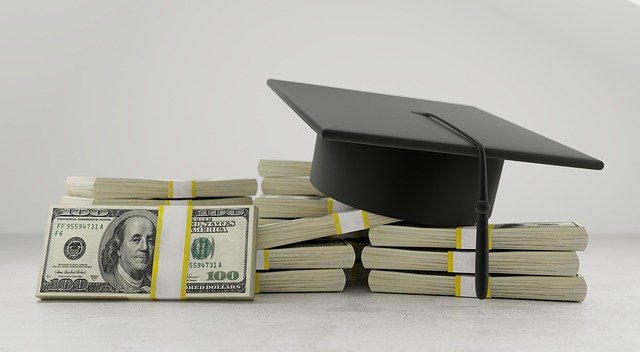
Since it’s the time of year when graduates march and families are proud, it’s a good time to reflect on student debt. Student loans make up the second-highest form of household debt after mortgages, totaling $1.38 trillion at the end of 2017, according to WalletHub, a personal finance website.
How much of a burden are student loans? The share of students graduating with $50,000 or more in student loan debt has more than tripled since 2000. High balances along with a payoff timeline that can extend into middle age force many graduates to delay or give up on other financial goals such as saving for retirement or buying a home.
Many student loan borrowers can’t keep up with their payments, according to a study based on data from the U.S. Department of Education. Two in five student loan borrowers have a high chance of defaulting in the next five years. Students with smaller debts are more likely to default than those with larger ones.
Student loan debts are more unsustainable in some places than others. WalletHub compared the median student loan balance against the median earnings of adults aged 25 and older with a bachelor’s degree in 2,515 U.S. cities to determine where Americans are most overleveraged on their college-related debts.
| Most Overleveraged Cities | Least Overleveraged Cities | |
| Oxford, Mississippi | Stanwood, Washington | |
| Ypsilanti, Michigan | Nederland, Texas | |
| Loma Linda, California | Willis, Texas | |
| Athens, Georgia | Sunnyvale, California | |
| Great Neck, New York | Southlake, Texas | |
| Bloomington, Indiana | Ferndale, Washington | |
| Sun City, Arizona | Los Gatos, California | |
| Orangeburg, South Carolina | Woodinville, Washington | |
| Lewes, Delaware | Los Banos, California | |
| East Liverpool, Ohio | Sparta, Tennessee | |
In a “Student Money Survey,” WalletHub found:
- One in three college students thinks they’ll be worse off financially than their parents.
- 62 percent of students say a parent is their personal finance role model.
- 35 percent say a parent’s debt has negatively affected them.
- 63 percent of college students say their school isn’t doing enough to educate them about personal finance.
WalletHub offers the following money tips for college students:
- Don’t use credit cards if you don’t trust yourself to spend responsibly.
- Make a budget.
- Take advantage of campus resources such as classes on personal money management.
- Approach student loans with caution.
- Use a Student Loan Calculator to determine an affordable payment amount and realistic payoff timeline.