Drowning is the leading cause of death for children aged 1–4 and the second leading cause of unintentional injury death for kids aged 5–14.
Drowning can happen in seconds and is often silent. It can happen to anyone, any time there is access to water. This includes pools and lakes, and also smaller amounts of water such as bathtubs and water-filled buckets.
Drowning is preventable. Follow these tips from the Centers for Disease Control and Prevention:
Learn how to swim and teach children how to swim. Keep in mind that children who have had swimming lessons still need close and constant supervision in or around water, even when a lifeguard is present.
Supervise closely. An adult should always be within an arm’s length from a child who is in or near water, including bathtubs. You can assign a specific adult to supervise each child. When supervising children, a responsible adult should avoid distracting activities such as reading, using the phone, and consuming alcohol or drugs because drowning happens quickly and quietly.
Install a four-sided fence in home swimming pools. The fence, at least four feet high, needs to fully enclose the pool and separate it from the house. It must have a self-closing and self-latching gate. All toys that might attract a child need to be removed from the pool when no one is using it.
Be proactive and learn about any risks when visiting another home or unfamiliar location with a swimming pool. Adults should supervise children closely even when lifeguards are present.
Don’t rely on “floaties,” inflated arm bands, or water wings to prevent children from drowning. They can easily slip off, especially when kids jump into the water. Water wings can produce a false sense of safety for parents and children.
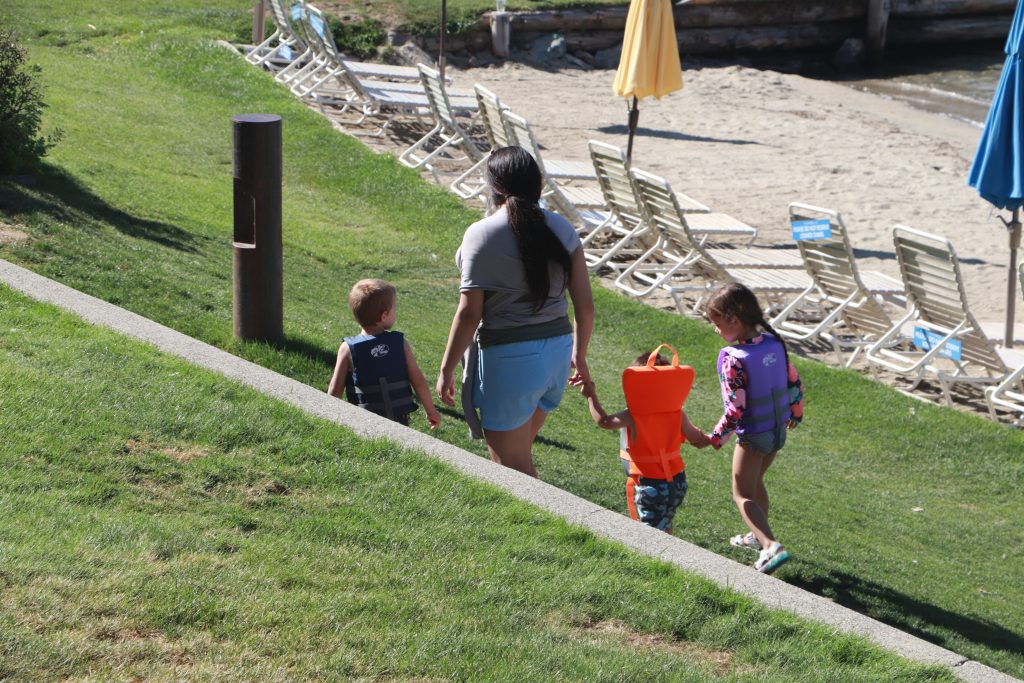
Wear a properly fitted life jacket. Children and adults are best protected by wearing U.S. Coast Guard-approved life jackets. They’re beneficial for activities in and around natural water, not just boating. About 85 percent of people who drowned while boating in 2022 weren’t wearing a life jacket.
Learn CPR. Your CPR skills could save someone’s life in the time it takes for paramedics to arrive. Many organizations such as American Red Cross and American Heart Association offer CPR training courses, both online and in-person.
Know the risks of natural water. Lakes, rivers, and oceans have hidden hazards such as dangerous currents or waves, rocks or vegetation, and limited visibility. Rivers and lakes also may be dangerously cold well into summer. Check the forecast before activities in, on, or near water. Local weather conditions can change quickly and cause dangerous flash floods, strong winds, and thunderstorms with lightning strikes.
Consider the effects of medications. Avoid swimming if you take medications that impair your balance, coordination, or judgement. These side effects increase the risk of drowning. Several medications can produce these side effects, such as those used for anxiety and other mental health conditions.
Don’t hyperventilate or hold your breath for a long time. This can cause you to pass out and drown. This is sometimes called “hypoxic blackout” or “shallow water blackout.”
Don’t drink alcohol. Avoid drinking alcohol before or during swimming, boating, or other water activities. Alcohol impairs judgment, balance, and coordination. Don’t drink alcohol while supervising children.
Even non-fatal drowning can result in long-term health problems and costly hospital stays, the CDC says. Drowning injuries can cause brain damage and other serious outcomes, including long-term disability.
For every child under age 18 who dies from drowning, another seven receive emergency department care for non-fatal drowning. Nearly 40 percent of non-fatal drownings treated in emergency departments require a hospital stay or transfer for further care. This is three times higher than the number of other unintentional injuries that require follow-up care.