The U.S. Food and Drug Administration is proposing to update the nutrition labels for packaged foods.
The FDA said it wants to have the labels include more information about the link between diet and chronic diseases such as obesity and heart disease.
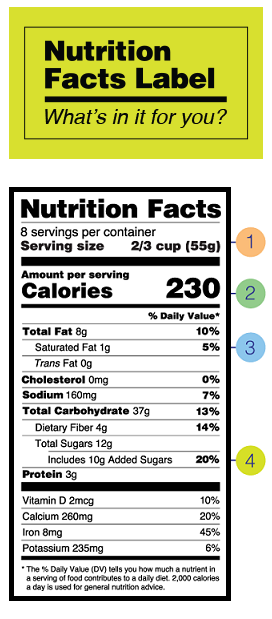
The proposed label also would include new information about serving sizes to better reflect how much people really eat. In addition, it would feature a design to highlight key parts of the label such as calories and serving sizes.
Proposed revisions receive mostly high marks from the Center for Science in the Public Interest, a consumer advocacy organization.
The center likes the new emphasis on calories, revision of certain foods’ serving sizes, and new line for added sugars. But the group says the agency should revise its proposal to include a Daily Value for added sugars and to further lower the Daily Value for sodium to 1,500 milligrams.
“Nutrition Facts labels have helped millions of Americans select healthier diets and have spurred food companies to compete more on the basis of nutrition,” said Michael F. Jacobson, executive director of the center.
But industry practices and understanding about nutrition have changed since the labels first appeared on packages 20 years ago, Jacobson said.
“While the FDA is off to a strong start, the agency must do more to ensure that these labels communicate better advice on sugar and salt,” he said.
Some of the changes to the label the FDA is proposing would:
- Require information about the amount of “added sugars” in a food product to help consumers know how much sugar has been added to the product.
- Update serving size requirements to reflect the amounts people currently eat. What and how much people eat and drink has changed since the serving sizes were first put in place in 1994.
- Present “dual column” labels to indicate both “per serving” and “per package” calorie and nutrition information for larger packages that could be consumed in one sitting or multiple sittings.
- Require information about potassium and vitamin D, nutrients that some in the U.S. population aren’t getting enough of, which puts them at higher risk for chronic disease.
- Revise the Daily Values for nutrients such as sodium, dietary fiber, and vitamin D. Daily Values help consumers see the nutrition information of the product as part of the total daily diet.
- Remove “Calories from Fat” and keep “Total Fat,” “Saturated Fat,” and “Trans Fat” because research shows the type of fat is more important than the amount of fat.
- Refresh the format to emphasize information – such as calories, serving sizes and Percent Daily Value – which are important in addressing current public health problems such as obesity and heart disease.
Food labels haven’t changed significantly since 2006 when information on trans fat was added to the label.
The proposed changes affect all packaged foods except certain meat, poultry, and processed egg products, which are regulated by the U.S. Department of Agriculture’s Food Safety and Inspection Service.
For more information, see:
- Nutrition Facts at a Glance
- Questions and Answers
- Consumer Update: Food Serving Sizes Getting a Reality Check
- Sound bites