![4666452990_c90747a118[1]](https://ritarrobison.com/wp-content/uploads/2025/09/TPImport/6a00e550081576883401348548924f970c.jpg)
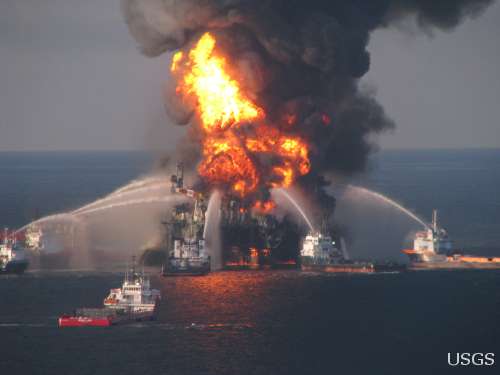
Consumers and businesses need to be on the lookout for frauds related to the BP Deepwater Horizon oil spill and to report scam artists to federal and state authorities.
It’s likely that scammers will use e-mails, websites, door-to-door collections, flyers, mailings, and telephone calls to solicit money, warns the Federal Trade Commission. Do some homework before making a donation or entering into an agreement for services.
Here are tips from the commission on how to avoid being ripped off:
Claims
- Expect some scam artists to pose as authorized adjusters and ask for fees to expedite services. ESIS, BP’s authorized claims administrator, isn’t charging individuals or companies any fee to process claims. If you make a claim, you’re assigned a claims number through the BP hotline at 800-440-0858. An authorized ESIS adjuster will contact you to verify and process the claim. If you aren’t satisfied with the resolution, you can call the U.S. Coast Guard’s National Pollution Funds Center at 800-280-7118, or visit the center’s website for more information at www.uscg.mil/npfc/Claims/default.asp.
- Expect other scam artists to pretend to be government officials – and then require a bogus processing fee to provide services.
Insurance
- Verify that you are dealing with authorized representatives of BP, and don’t sign waivers of liability too quickly without getting adequate legal and financial advice.
- Report anyone who is making false or exaggerated insurance claims to your state insurance commissioner.
- Report anyone who is making insurance claims but lives outside the disaster zone.
Contractors
- Don’t do business with contractors who require up-front payment for services: You’ll be out the money if they fail to perform the work or finish the job to your specifications or satisfaction.
- Require any contractors you use to describe the services they’ll perform on a written contract.
- Use only licensed contractors.
Donations
- Some people may misrepresent an affiliation with an environmental organization when they ask for donations via e-mail or social networking sites. If you’re tempted to contribute, check out the charity at the Better Business Bureau, www.bbb.org/us/charity.
- Some sham organizations may use copy-cat names to cash in on the reputations of older, more established charities.
- Rather than clicking on a link to a website you don’t know, do research online to confirm the group’s existence, history, mission, and nonprofit status.
- To ensure your contributions are received and used for what you want, contribute directly to organizations you know rather than relying on others to make a donation on your behalf.
- If you get pressure to make a contribution, look for another charity.
- Avoid donating cash. Pay by debit or credit card, or write a check to the charity.
- If an organization suggests you wire your donation, cross it off your list.
- Most legitimate charities websites end in .org rather than .com. For more information on charity scams, visit www.ftc.gov/charityfraud.
Employment and volunteer opportunities
- Avoid any job or volunteer opportunity that requires you to pay a fee before the job begins.
For more information
For updates on the oil spill, visit usa.gov. Enter "Gulf Oil Spill" in the search field.
Complaints
If you think someone is committing an oil spill fraud, contact the National Center for Disaster Fraud. Call 866-720-5721, e-mail disaster@leo.gov, or fax 225-334-4707.