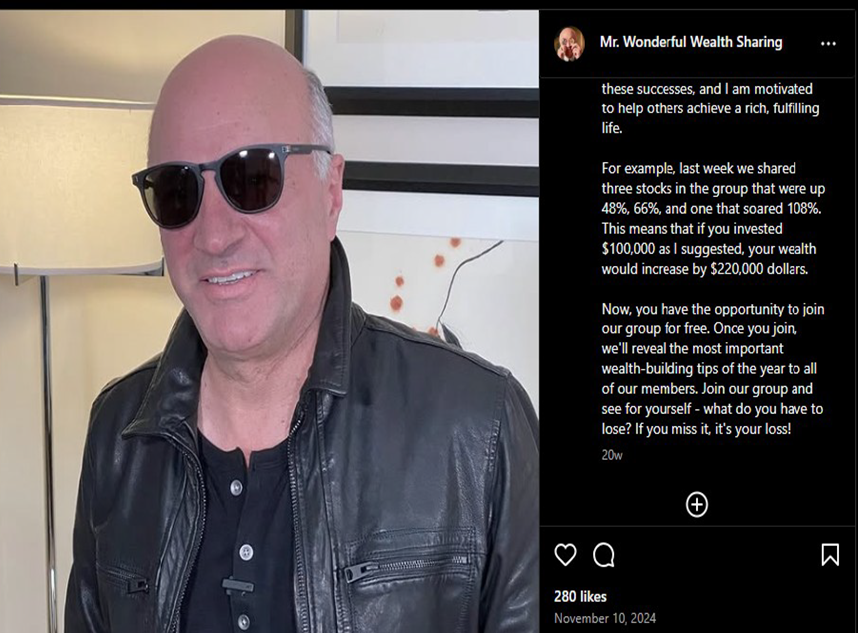
The photo above is a fake investment advertisement using Kevin O’Leary’s photo without his permission.
Fraudulent investment schemes are rapidly increasing across Meta platforms, including on Facebook, Instagram, and WhatsApp, according to New York Attorney General Letitia James.
Scammers are increasingly using deceptive advertisements and “deepfake” technology to lure investors into high-stakes scams to defraud them of their savings, James said in a statement. These scams include “pump and dump” scams, confidence scams, and fraudulent cryptocurrency schemes that take advantage of victims to extract as much money from them as possible.
Most reputable broker-dealers and investment advisors don’t post specific investment advice on social media platforms, she said.
“Scammers are using social media to exploit the names of trusted financial leaders and celebrities to steal New Yorkers’ hard-earned savings,” said James. “From fake investment platforms to deepfake celebrity endorsements to fraudulent cryptocurrencies, these schemes are becoming more sophisticated.
She urges everyone to remain vigilant, be skeptical of any social media investment ads, and remember: if an investment sounds too good to be true, it’s probably a scam.
How pump and dump social media scams work
In a pump and dump scheme, victims are lured into investment groups and convinced to invest in cryptocurrencies or low-priced stocks. The scammers advertise, hype, and recommend buying the stocks or cryptocurrencies, increasing their prices, and then sell when the price is high, while the victims lose their money. Pump and dump schemes usually follow a three-step process:
- The bait: Scam ads appear on Facebook or Instagram featuring recognizable figures, such as Cathie Wood, Ark Invest; Joe Kernen, CNBC; or Kevin O’Leary, Shark Tank, without their permission. Other ads may feature less well-known financial advisors, also without their permission, especially those trusted by members of specific cultural or geographic communities. The ads often promise exclusive “insider” memberships or “guaranteed” high-return investment tips.
- The shift: Once a user clicks the ad, they’re pressured to move the conversation to WhatsApp or other encrypted platforms such as Telegram. This allows scammers to operate away from platform moderators.
- The hook: Victims are funneled into group chats where they receive so-called “expert” advice and false testimonials. Eventually, victims are coerced into buying stocks or crypto, with the initial fraudulent tips sometimes appearing successful and generating a profit. Victims are convinced to invest large amounts in a stock or cryptocurrency, which then goes up in price and which the scammers sell off at this inflated price, leaving the victims to lose their money once the price plummets.
How confidence scams work
In confidence scams, fraudsters develop trusting relationships with their victims and convince them to “invest” using fake investment platforms that drain the victims’ money. These scams can also follow a three-step process:
- The bait: Scammers post ads suggesting that investors can make money using an investment platform or strategy. These ads may also feature well-known figures or institutions. When the user clicks on an ad, they may be asked to enter their contact information. Other times, they’ll be taken to a different website that further describes the investment strategy or platform – often resembling a news article – where they’re then asked to enter their contact information.
- The investment: After the user provides their account information, they’ll be contacted by scammers who develop a relationship of trust and confidence with the victim. The scammers may offer to “teach” the user how to trade on a fake investing platform or even connect the victim with their own personal advisor who will speak with the user on a daily basis. The scammers will then guide their victims to a professional-looking website or app, which is often a clone of a real trading platform. Often victims will be asked to invest a small amount at first and the app will show the investment making significant profits over the course of a few days. To prove it’s “real,” the scammers may allow the victim withdraw some of the initial profit back to their bank account. Believing the platform is legitimate and having developed a close connection with the scammers who are providing the investment advice, victims will, over time, invest large amounts of money and may even take out loans from friends or family to fund their investments.
- The scam: Once the victims seek to withdraw their profits, they’re told they need to pay a fee, such as a commission or tax. Even if the victims pay, the scammers will find other excuses not to return the money. Once the victim stops paying these fees or making more investments, the scammers will disappear along with the victim’s investment.
Protect Yourself from Social Media Investment Scams
Investors should be very cautious before responding to any social media investment ads and making any related investments, James said. Remember that social media sites may be hosting billions of scam ads each day, and reputable broker-dealers and investment advisors, especially individuals, usually don’t advertise their investment strategies on social media.
Consumers need to stay vigilant to avoid falling victim to predatory investment schemes on social media and take the following steps to protect themselves, the New York Attorney General’s Office recommends:
1. Identify “red flags”
When browsing social media sites such as Facebook and Instagram and interacting with supposed investment professionals online, be highly skeptical if you see:
- Promises of guaranteed returns: No legitimate investment is “risk-free” or offers a guaranteed return.
- High-pressure tactics: Warnings are given that you will “miss out” or demands are given to invest immediately.
- Celebrity endorsements: Scammers often use AI-generated images or videos of famous entrepreneurs to lure victims.
- Cryptocurrency demands: Requests made to use crypto ATMs or to send crypto to private wallets or platforms should be regarded with suspicion.
- Requests to accept other people’s money: Scammers will sometimes ask victims to accept other people’s funds in their bank accounts and convert them to cryptocurrency.
- Platform hopping: Requests are made to move the conversation from Facebook to encrypted apps such WhatsApp or Telegram.
2. Verify before you invest
Never take an ad or salesperson’s word at face value. Remember that a salesperson’s job is to be persuasive and paint a rosy picture. Conduct your own independent research:
- Verify credentials: Use FINRA’s BrokerCheck to confirm if a professional is registered. But be wary, scams may often impersonate people, firms, and their credentials.
- Search for reviews: Search the name of the company or salesperson alongside words such as “scam” or “complaint.”
- Check email addresses: Verify that you’re communicating with a real email associated with a real advisor’s company. Remember that scammers may register email addresses that are slightly different or may change one letter from a legitimate domain.
- Look for spelling errors: Given that many scams sometimes originate overseas, ads and other communications may have spelling mistakes.
- Consult with a trusted advisor: Before investing, consult a trusted legal professional or financial advisor who can advise you if the investment is proper.
- Follow warnings from current advisors: If your bank or investment/financial advisor cautions you about your new investment, take time to further investigate the new “investment opportunity” and don’t simply dismiss their concerns.
- Trust your instincts and think twice before investing: If an investment seems fishy or too good to be true, it probably is.
3. Beware of “deepfakes” and AI
Scam ads now use sophisticated technology to mimic real people in videos or livestreams.
- Spot the fake: If a video seems slightly “off” or the audio doesn’t perfectly match the lip movements, it may be a deepfake.
- Reverse search: If you see a video of a famous figure, search for the original footage online. Fraudsters often repurpose old interviews.
- Beware of financial advice: Famous figures don’t usually provide financial advice online or advertise investments in obscure cryptocurrency trading platforms.
4. Protect your identity and network
Your Facebook, Instagram, and WhatsApp profiles are gold mines for scammers looking to build a relationship with you.
- Lock down your profile: Change your settings to keep your friends list, photos, and posts private. This prevents scammers from seeing who you know.
- Verify friends: If a friend suddenly messages you about a “great investment opportunity,” contact them outside of Facebook via phone call or text to ensure their account hasn’t been hacked.
- Never share credentials: Don’t provide login info, Social Security numbers, or financial details to anyone you met online.
- Don’t provide strangers access to your devices: Don’t allow anyone you don’t know well to access your computer or mobile phone remotely to help you with your existing investment account or open a new account. Often times, scammers will pose as a representative of the company you have an account with and ask for a password or answers to the security questions and – within seconds – empty everything in your account.
Consumers should keep in mind that most fraudulent transactions, especially those involving cryptocurrency, are irreversible. If you choose to invest, always keep a paper trail and archive all communications.
After you lose your money, you may hear from a supposed asset recovery specialist or attorney who promises to retrieve the money you lost for a fee. Be wary of these people as some of them may have no interest or qualification to help you and are just taking advantage of your situation to make money – and may even be scammers themselves.
Anyone who may have been a victim of these types of scams should report it to the Attorney General’s Office in their state. You can also report investment scams to the U.S. Securities and Exchange Commission and the securities regulator in your state.