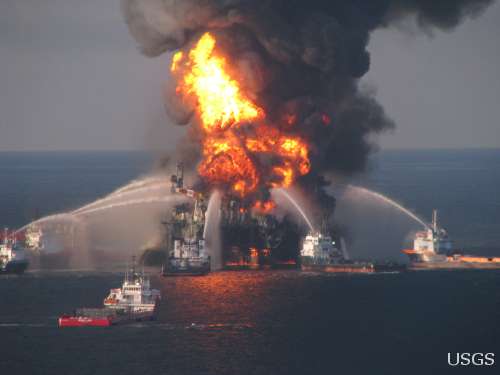
Transocean Deepwater Inc. pleaded guilty Thursday to a violation of the
Clean Water Act for its illegal conduct leading to the 2010 Deepwater Horizon disaster
and was sentenced to pay $400 million in criminal fines and penalties, Attorney
General Holder said in a statement.
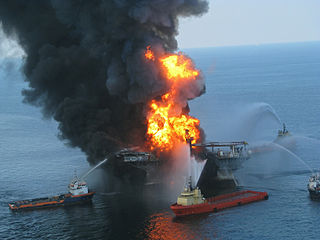 In total, the amount of fines and other criminal penalties imposed on
Transocean are the second-largest environmental crime recovery in U.S. history
– following the $4 billion criminal sentence imposed on BP Exploration and
Production Inc. in connection with the same disaster.
“Transocean’s guilty plea and sentencing are the latest steps in the
department’s ongoing efforts to seek justice on behalf of the victims of the
Deepwater Horizon disaster,” said Holder.
Most of the $400 million will go toward protecting, restoring, and rebuilding
the Gulf Coast region, he said.
BP and Transocean have now both been held criminally accountable for
their roles in this disaster, said Assistant Attorney General Lanny A. Breuer
of the Justice Department’s Criminal Division.
During the guilty plea proceeding Thursday in federal court, Transocean
admitted that members of its crew onboard the Deepwater Horizon, acting at the
direction of BP’s well site leaders, were negligent in failing to investigate
clear indications that the Macondo well was not secure and that oil and gas
were flowing into the well.
Under the court order, $150 million of the $400 million criminal
recovery is dedicated to acquiring, restoring, preserving, and conserving – in
consultation with state and other resource managers – the marine and coastal
environments, ecosystems, and bird and wildlife habitat in the Gulf of Mexico
and bordering states that were harmed by the Deepwater Horizon oil spill.
This portion of the criminal recovery will also be directed to
significant barrier island restoration and/or river diversion off the coast of
Louisiana to benefit and improve coastal wetlands affected by the spill.
An additional $150 million will be used to fund improved oil spill
prevention and response efforts in the Gulf through research, development,
education and training.
Transocean was also sentenced, according to the plea agreement, to five
years of probation – the maximum term of probation permitted by law.
A separate proposed civil agreement, which would resolve the United
States’ civil Clean Water Act penalty claims, would impose a record $1 billion
civil penalty and require measures to improve performance and prevent
recurrence. The proposal is pending in federal court.