
In the Pacific Northwest, more people aren’t watering their lawns in the hot weather months due to concerns about water conservation and costs.
The problem is when you don’t water your lawn and it turns yellow, the weeds take over. Then, you might be tempted to use pesticides to kill them. Pesticides are harmful to your health and the health of your children, grandchildren, and pets.
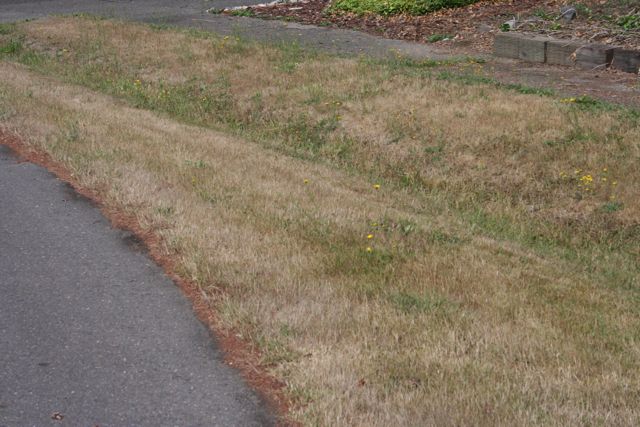
A friend of mine doesn’t water his lawn during the summer months, and his lawn isn’t healthy. It’s dry with lots of tall dandelions.

The key things that need to be done to have a healthy organic lawn are:
- Mow high. Tall grass encourages a thicker lawn that will prevent weed seeds from getting to the soil. Also, with thicker higher grass, the blades crowd out weeds by taking their sunlight.
- Leave the grass clippings on the lawn. It provides fertilizer.
- Give the lawn about an inch of water per week. Water deeply and infrequently. The morning is the best time to water. Avoid lawn disease by not watering after 3 p.m.
- Remove weeds by hand rather than using pesticides. Studies show that children and pets have higher rates of cancer when pesticides are used on lawns.
If you’re not convinced, here are some guidelines from PureLawn-Organic Lawncare Experts on letting your lawn go semi-dormant:
Lawns are resilient, but still need an inch of water per month or they will die. During droughts, like in 2007, make sure the lawn is getting at least an inch of water per month so it will bounce back in the fall.
I hope this helps with the great yellow lawn debate.




Interesting. However in many areas of the country (like the South) lawn experts will tell you to water in the early evening during the summer months because less water evaporates than during the day and water plus the heat promotes the growth of certain pests.
Hi Scott,
Thanks for your comment on lawn watering. I think it would be a good idea for consumers to check with their Extension service’s master gardeners for the best recommendation for their area.
Rita
I let my grass die last fall because it was over 15-years old and had lots of weeds in it.
The funny thing is, I stopped watering in September and the grass did not actually start to dry up until the end of April. It remained green even though I was not watering it. This made me think of all the years of wasted watering.
It’s now September again and it has been one year since I stopped watering the grass. All of the weeds are dead and gone, but the grass is still present and brown. I mowed over the dead grass a couple of times since April, first to shorten it and a second time just to pick up dead leaves.
Any way, the yard does not look all that bad with dead and brown dry grass. So now I’m thinking, what the heck, just leave it this way and let only Mother Nature water it. I can save money by not watering or mowing and the ground is covered so that it is not simply dirt. People can still play on the dead grass without stirring up dust or getting muddy if the area becomes wet.
My hunch is that the grass will probably re-grow and become green when the rains return. I live in So Calif where there is a drought, but hopefully there will be enough rain. Otherwise, I could resume watering only once a week and I bet that the roots will remain viable since I have a perennial grass. But I wonder if an annual grass would suffice better. I also wonder if there are less bugs with dead grass–or no difference.
Hi Brewser,
Thanks for letting me know about your grass. That’s very interesting.
I can’t figure out why the weeds didn’t take over. Maybe in California everything gets crispy because it’s so hot.
Here in the Pacific Northwest weeds just grow and grow and grow.
Rita
What is the correct way to manage my lawn?
Do you agree that travel must one day revert to being a luxury