
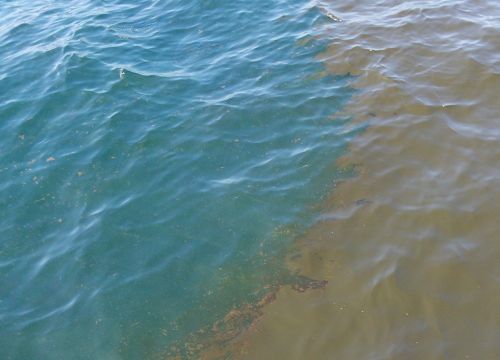
Princess Cruise Lines has agreed to plead guilty to seven felony charges for illegally discharging oily waste into the sea and lying about it. It also will pay a $40 million penalty – the largest criminal penalty ever levied for deliberate vessel pollution, the U.S. Department of Justice said Thursday.
Princess is a subsidiary of Carnival Corp., the world’s largest cruise company. As part of the plea agreement with Princess, cruise ships from eight Carnival cruise line companies will be under a court supervised Environmental Compliance Program for five years.
The U.S. investigation began after information was provided to the U.S. Coast Guard by the British Maritime and Coastguard Agency that a newly hired engineer on the Caribbean Princess reported a so-called “magic pipe” had been used on Aug. 23, 2013, to illegally discharge oily waste off the coast of England.
The whistleblowing engineer quit his job when the ship reached Southampton, England. The chief engineer and senior first engineer ordered a cover-up, including removal of the magic pipe and directing their staff to lie, according to court documents filed by the department.
The Coast Guard checked the Caribbean Princess when it arrived in New York City on Sept. 14, 2013, and some crew members continued to lie under orders they’d received from Princess employees, the department said.
The Caribbean Princess had been making illegal discharges through bypass equipment since 2005, one year after the ship began operations, according to the department. The discharge on Aug. 26, 2013, involved about 4,227 gallons of oily waste.
Caribbean Princess used different methods to pollute the seas, the department said. Before installation of the bypass pipe used to make the discharge off the coast of England, a different unauthorized valve was used. When the department’s investigative team boarded the ship in Houston, Texas, on March 8, 2014, they found the valve that crew members had described. When it was removed by Princess at the department’s request, it was found to contain black oil.
In addition to using the magic pipe, the U.S. investigation uncovered two other illegal practices which were found to have taken place on the Caribbean Princess as well as four other Princess ships – Star Princess, Grand Princess, Coral Princess, and Golden Princess.
“The pollution in this case was the result of more than just bad actors on one ship,” said Assistant Attorney General Cruden. “It reflects very poorly on Princess’s culture and management. This is a company that knew better and should have done better.”
“The conduct being addressed today is particularly troubling because the Carnival family of companies has a documented history of environmental violations, including in the Southern District of Florida,” said U.S. Attorney Ferrer.
The motive for the crimes was financial, according to court documents. The chief engineer that ordered the dumping off the coast of England told other engineers that it cost too much to properly offload the waste in port and that the shore-side superintendent who he reported to wouldn’t want to pay the expense.
Princess engineers on the Caribbean Princess said that the chief engineer responsible for the discharge on Aug. 26, 2013, was known as “broccino corto,” a person with short arms, an Italian expression for a cheap person whose arms are too short to reach his wallet, according to court documents. Some said the same about the shore-side superintendent.
If approved by the court, $10 million of the $40 million criminal penalty will be devoted to community service projects to benefit the maritime environment, with $3 million for projects in South Florida and $1 million in United Kingdom.



![A-cruise-ship-childrens-museum-iguana-0291-300x176[1]](https://ritarrobison.com/wp-content/uploads/2025/09/TPImport/6a00e55008157688340134866bf925970c.jpg "Cruise ships contributing to degradation of ocean, other waterways")