

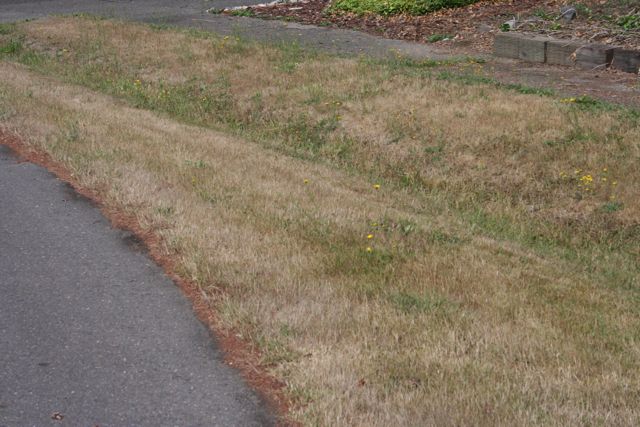
It’s one of life’s persistent questions. Should the lawn be watered during the summer? A lot of people where I live in the Pacific Northwest don’t water much or at all during summer months. They let their lawn go dormant. I do water my grass some
I water so that the grass roots go deep. I also cut the grass high, which fosters deep root growth, too.
Both these techniques help keep the weeds down.
Here are tips for watering your lawn from University of Minnesota Extension:
Pay attention to the weather
Many areas like mine, see some rainfall during the summer. Don’t put your sprinkler on a “set it and forget it” irrigation schedule that is often programmed into automatic systems.
Use the manual mode to solve this issue: use automatic only when your lawn shows signs of drought.
Select lawn grasses that use less water and can tolerate drought
Whether you’re establishing a new lawn or renovating an existing lawn, your choice of grass species will impact irrigation requirements.
Research which grass is best for your area. For example, cool-season grasses include fescue and Kentucky bluegrass and warm-season grasses include Bermuda grass and St. Augustine grass.
Adjust irrigation programs to conserve water
Adjust your irrigation system so water isn’t wasted
To encourage rooting and drought tolerance, you should irrigate your lawn infrequently – one time or less per week – with a sufficient volume of water to wet soils to a depth of six inches. Depending on your soil type, your lawn may only need as little as a half-inch of water.
Water during the morning hours or set irrigation programs to water then. Watering during the heat of the day reduces the amount of water absorbed by the soil and made available to plants.
Audit your irrigation system
Auditing your irrigation system is a good step toward water conservation. Irrigation contractors will perform this service for you if you contract with them.
There are three basic steps:
- Check system components including sprinklers, valves, and controllers.
- Conduct a performance test.
- Program the controller.
Use water-saving technologies
Rain sensors connected to irrigation controllers are common water-saving devices. Over the past decade, “smart” irrigation controllers, soil moisture sensors, and more efficient sprinklers have also been developed.
Smart irrigation controllers save water by automatically adjusting irrigation programs based on water use estimates or stored historical data. You also can buy inexpensive, $150 or less, soil moisture sensors to put into your lawn. These sensors won’t allow an irrigation system to run if soil moisture levels are adequate.
Many municipalities offer rebates, as much as $250, for installing smart irrigation devices on your home irrigation system.
Improve soils and lawn quality through good maintenance
Your lawn care practices have a direct impact on irrigation requirements. High mowing heights, 3 inches or greater, and fertilizer use will improve lawn quality and reduce irrigation requirements.
Aerating your lawn followed by adding compost can lessen compaction and add organic matter to soil. This will improve water infiltration in heavy soils, as well as increase the moisture-holding capacity of sandy soils that drain rapidly.
Recycle water when possible
Recycling water for irrigation requires proper design of water storage and separation to supply the water to irrigation sprinklers.
You can buy rain barrels from local municipalities and companies to reuse rainwater to irrigate your landscape plants.
Change expectations
Consider changing your lawn expectations to allow for temporary discoloration during drought periods. It’s very rare to have extended droughts that completely compromise the integrity of a lawn.
Final thoughts
Get rid of your lawn. Remove it and turn your lawn into a meadow. That way, you won’t need to use harmful pesticides to kill weeds. Studies show children and pets have higher rates of cancer and other diseases when pesticides are used on lawns.

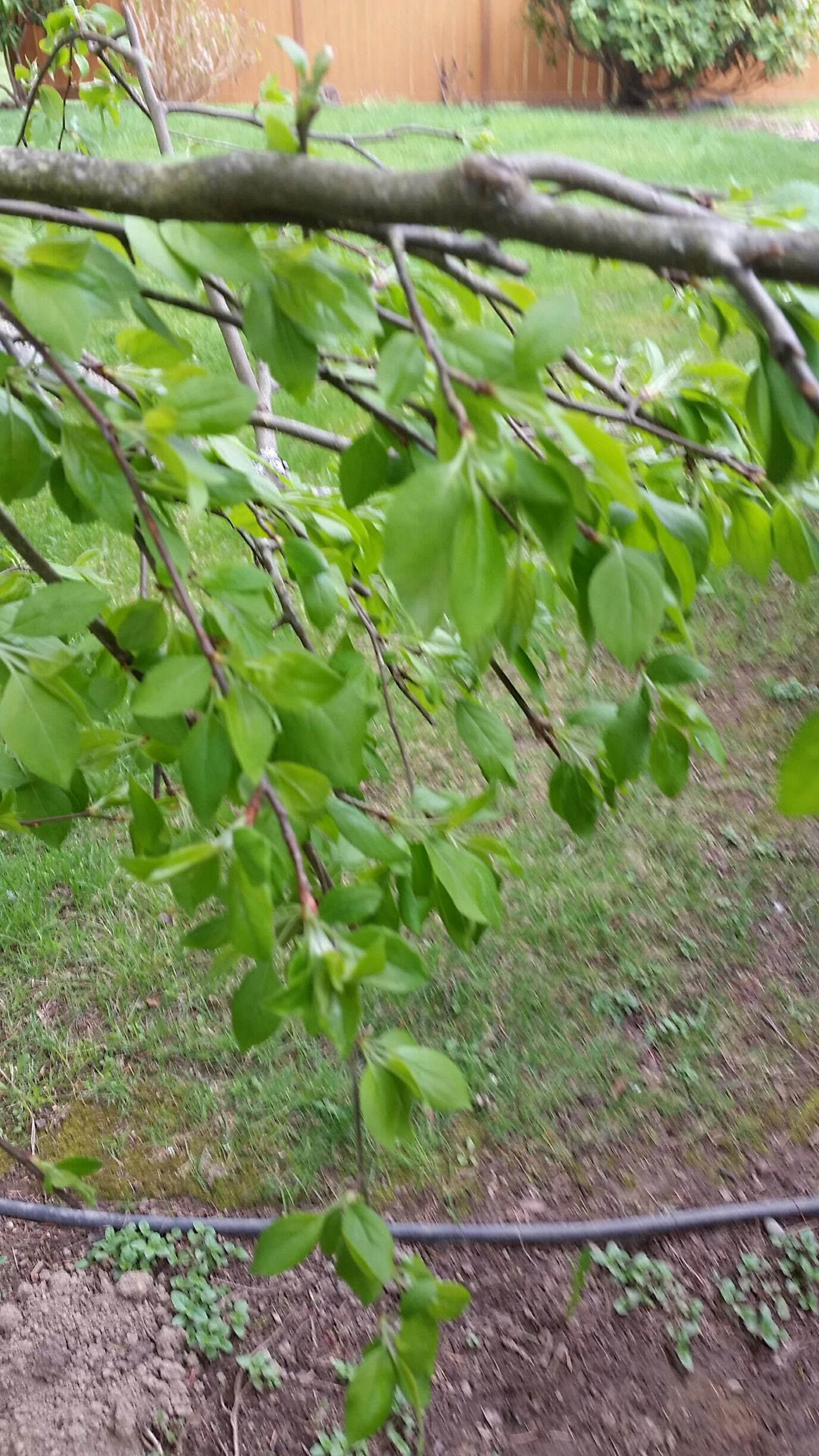

I have 3 rainwater barrels, not sure how many gallons they each hold, at least 50, I think. My county is in severe drought–the water in the barrels lasted until the beginning of August for watering my container plants & 4 blueberry bushes in my back yard. I use city water to hand water (a watering can) my front yard container plants & front border.
Ever since I’ve owned my own home, I’ve let the grass die in the summer, I never water it. when I first moved to this area, few people seemed to water their lawns/grass, which I liked, having spent part of my life in an area where many seemed to want a golf course lawn. Grass grows again when the rainy season arrives.
This area (OR coast) got about a night & part of a day of light rain/drizzle/really heavy fog) & now there seems to be enough water in two of the barrels to last another two weeks of backyard watering. The only grass that’s green right now is the grass underneath a native alder & a small strip on the north side of my house that’s shaded most of the day & probably gets some water from a row of 8 or 9 containers (w/plants) nearby. Dock, some native plants in the “lawn” are doing fine–one variety is still flowering & providing pollen for native bumble bees. A native, salal grows in part of my backyard too, it’s still green w/a few brown leaf edges, the state extension service has salal on its list of “Iire” plants or plants that are fire resistant. Sometimes this neighborhood gets fairly heavy fog which keeps the area moister then 1/2 mile inland but it’s still way too dry here. Not fun given how careles some people, tourists & partiers can be w/fire, beach fires, fires built in wooded areas part way up a beach bluff (it’s illegall to camp or build a fire off of the beach & outside of a state park campground or amother area w/ safe firepits to use & running water nearby. Good luck to anyone who asks local or state police to act/i.e,. tell illegal beach fluff campers to leave. Usually only the locaql firefighers will show up & tell people they’ve built an illegal campfire–if they’re called.
Thanks for telling us about your rain barrels. In researching for the article, I thought I might try them. There’s lots of rain here in the Seattle area.
They’re useful, although mine aren’t mounted high enough to allow me to use a hose, so I use a watering can. Less convenient & might be a deal breaker for some people, if they aren’t able to place them far enough above the ground (or, ie someone had hilly property, at the top of a hill, to create enough water pressure to use a hose. I’ve also had to flush them after they run out of water–even w/a mesh filter over the inpipe, there’s still some sediment that settles out, so when a barrel runs dry, I’ll pour in enough water, tip the barrel at an angle, to flush out the sediment.
Thanks. It sounds like you need to do some research before you place them and that you need to do maintenance.