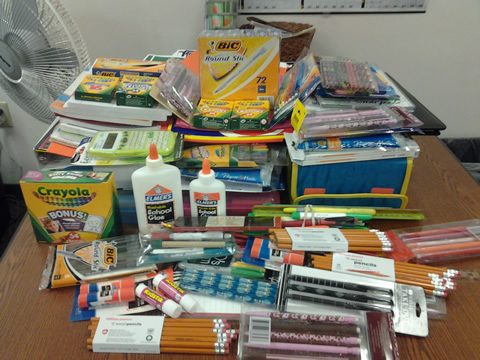
It’s time for back-to-school shopping. Many parents and teachers buying school supplies look for a “non-toxic” label on the products. However, many products don’t have that label. U.S. PIRG Education Fund is releasing a guide that advises consumers which products are actually non-toxic and which to avoid.
“This fall, parents, and teachers can use our safe shopping guide to help them purchase school supplies,” said Dev Gowda, campaign director for the U.S. PIRG Education Fund’s Campaign for Toxic-Free Products. “We should feel safe knowing we’re sending our kids off to school with supplies that don’t contain toxic chemicals.”
U.S. PIRG Education Fund tested dozens of school supplies including markers, crayons, dry erase markers, glue, 3-ring binders, spiral notebooks, lunchboxes, and water bottles. It found several supplies containing asbestos, lead, benzene, and other dangerous chemicals. The “School Supplies Safe Shopping Guide” warns consumers about those products, and offers suggestions for safer alternatives.
Out of the dozens of products that tested, most didn’t contain toxic chemicals. However, the tests and investigation found the following:
- Asbestos in Playskool crayons sold at Dollar Tree. Asbestos, which can cause lung cancer and mesothelioma, has recently been found in other children’s products, such as makeup.
- Lead in recently-recalled children’s water bottles (Base Brands children’s Reduce Hydro Pro Furry Friends water bottle, once sold by Costco, and GSI Outdoors children’s water bottle, once sold by L.L. Bean). The Consumer Product Safety Commission recalled both of these items because they contained high levels of lead. Lead can cause severe developmental and behavioral problems.
- Phthalates in Jot brand blue 3-ring binder. The levels of phthalates in the binder are considered unsafe for children by the commission. High levels of phthalates can lead to birth defects, hyperactivity, and reproductive problems.
- Benzene in Board Dudes brand markers. Benzene is a known carcinogen linked to leukemia and disruptions in sexual reproduction and liver, kidney, and immune system function.
“Based on our testing, we know that most manufacturers make safe school supplies,” said Kara Cook-Schultz, toxics director of the U.S. PIRG Education Fund. “We’re calling on the makers of unsafe products to get rid of toxic chemicals and protect American schoolchildren.”