 Tonight at 7 p.m. ET, PBS’s Frontline will air the second in its two-part series on the mounting crisis of antibiotics resistance – now among the top five health threats facing the nation, according to the Centers for Disease Control and Prevention.
The series follows last October’s account of the misuses of antibiotics in human medicine and how they’ve contributed to the rise of resistant bacteria – known as “superbugs.”
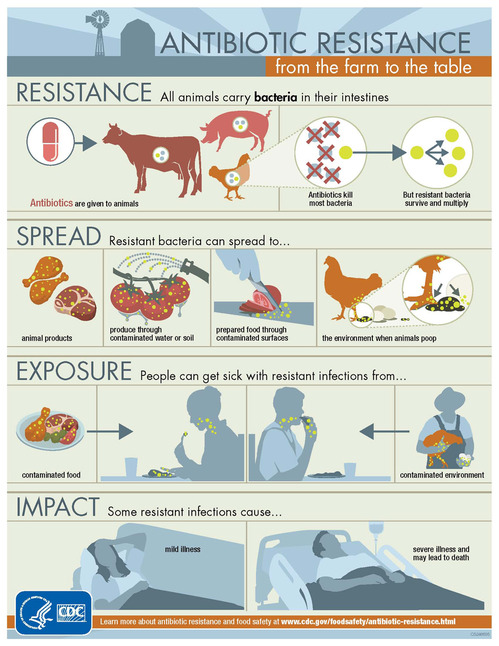
Eighty percent of antibiotics sold in the U.S. are for use in livestock, not humans. The majority is used on industrial farms to speed up animals’ growth and compensate for crowded, stressful, and unsanitary conditions. When antibiotics are used day after day to raise the animals that people eat, some bacteria become resistant, multiply, and spread, threatening all humans, whether they eat meat or not.
Each year, an estimated 2 million people in the U.S. are infected with antibiotic-resistant bacteria — and at least 23,000 die.
Doctors, scientists, and public health officials are on record stating that overuse and misuses of antibiotics by both humans and in food animals contributes to this threat. We simply won’t turn the tide unless we address both sides, said Sasha Lyutse, policy analyst for the Natural Resources Defense Council.
Lyutse said common talking points from the industry stress that administering antibiotics is just one-way livestock producers manage disease; that they only use FDA-approved antibiotics; and that scientists haven’t tied antibiotics use in animal agriculture to specific cases of superbug infections in humans.
“It’s disappointing to see the conventional meat industry stick their heads in the proverbial sand instead of marshaling their resources towards helping address this major public health threat,” she said.
But, Lyutse added, it’s exciting to see a program like Frontline tackle this important issue in such depth and call all the relevant communities – in human medicine and in animal agriculture – to action.