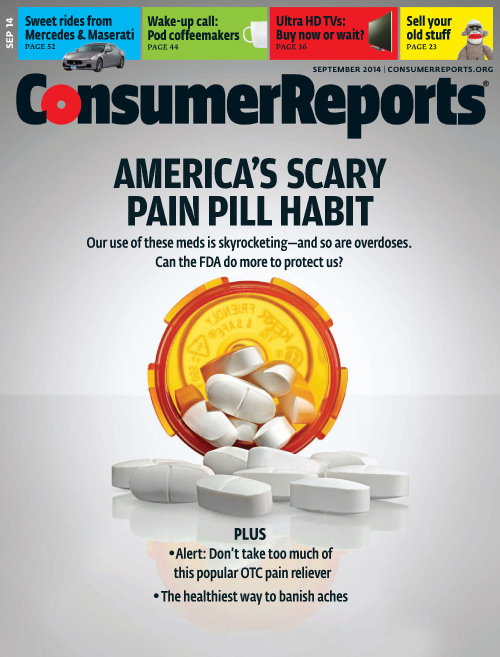
This week, the U.S. Food and Drug Administration announced it’s asking makers of prescription acetaminophen combination products to limit the amount of acetaminophen in these products to a maximum of 325 mg per tablet or pill.
The FDA believes the limit will reduce the risk of severe liver injury from acetaminophen overdosing, which can lead to liver failure, liver transplant, and death.
The FDA also is requiring manufacturers to update labels of all prescription combination acetaminophen products to warn of the potential risk for severe liver injury.
Acetaminophen, also called APAP, is a drug that relieves pain and fever and can be found in both prescription and over-the-counter products. It’s combined in many prescription products with other ingredients, usually opioids such as codeine (Tylenol with Codeine), oxycodone (Percocet), and hydrocodone (Vicodin).
"FDA is taking this action to make prescription combination pain medications containing acetaminophen safer for patients to use," said Sandra Kweder, M.D., deputy director of the Office of New Drugs in the FDA’s Center for Drug Evaluation and Research. "Overdose from prescription combination products containing acetaminophen account for nearly half of all cases of acetaminophen-related liver failure in the United States; many of which result in liver transplant or death."
Over-the-counter acetaminophen products aren’t affected by this week’s action.
A consumer advocacy group thinks the measures announced this week by the FDA on acetaminophen in prescription drug products fail to address the greater issue of over-the-counter use of this drug.
"It is inexcusably poor judgment on the part of the FDA to have failed to take action concerning this major source of acetaminophen consumption and, consequently, acetaminophen toxicity," said Sidney Wolfe, M.D., director of Public Citizen’s Health Research Group.
Acetaminophen is combined with other over-the-counter ingredients, such as cough and cold ingredients.
More than 370 million bottles and packets or 24.6 billion doses of acetaminophen were sold in 2008 in the U.S. and nearly 80 percent of these sales is over-counter-the medications.
Wolfe believes the FDA should have addressed the larger, over-the-counter category of acetaminophen products first, as recommended by 24 of the 37 members of an FDA advisory committee.
The FDA says there is no immediate danger to patients who take the combination pain medications. The risk of liver injury primarily occurs when patients take multiple products containing acetaminophen at one time, exceed the current maximum dose of 4,000 milligrams within a 24-hour period, or drink alcohol while taking acetaminophen products, according to the agency.
Overdoses accounted for 56,000 hospital emergency room visits and were linked to an average of 458 deaths annually during the 1990s, FDA data shows.
The elimination of versions of drugs containing up to 750 milligrams of acetaminophen will be phased in over three years and isn’t expected to create shortages of pain medication.
For more information and a list of affected products, visit www.fda.gov/acetaminophen.