Consumer retail sales during the holiday season are expected to decline 1 percent this year to $437.6 billion.
 This number falls below the 10-year average of 3.39 percent holiday season growth, reports the National Retail Federation.
The decline isn’t expected to be as dramatic as last year’s 3.4 percent drop in holiday retail sales nor as severe as the 3 percent decline in annual retail industry sales expected for 2009.
U.S. households are expected to spend an average of $390 on Christmas gifts this holiday season, down from last year's estimate of $418, The Conference Board indicated in its report on holiday spending.
About 87.7 million Americans will travel 50 miles or more during the year-end holidays, predicts AAA. That’s a 3.8 percent increase from the 84.5 million who traveled over the Christmas/New Year's period a year ago, and the largest projected increase for any major holiday this year.
About 16.6 billion cards, letters, and packages will be delivered by the U.S. Postal Service between Dec. 1 and Christmas this year. The busiest mailing day will be Dec. 14, and Dec. 16 will be the busiest delivery day, reports the U.S. Census Bureau.
Other statistics from the bureau:
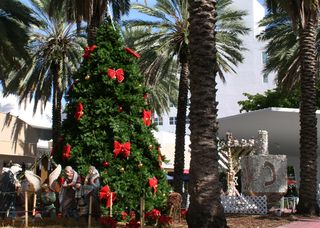
- Christmas trees sales are big business in America during the holidays, with $410 million sold by U.S. Christmas tree farmers in 2007. Oregon leads the nation with $109.3 million in sales by Christmas tree farmers in 2007.
- Christmas tree ornaments from China are big sellers with $470.3 million worth of ornaments imported of between January and August 2009. China is leading country selling the ornaments in the U.S. of origin for such items. China also was the leading foreign source of artificial Christmas trees shipped to the United States – $28.6 million worth – during the same period.
Eighty-three percent of Americans said they would celebrate Christmas in 2007, while 3 percent said say they would celebrate Hanukkah and 3 percent said they would recognize the Winter Solstice, according to a 2007 Rasmussen Reports national telephone survey of 1,000 people.
Most Americans – 67 percent – said they intended to decorate, and 24 percent said they don’t plan on decorating, according to the survey.
Sixty-one percent planned on attending a religious service during the holidays, while 31 percent didn’t.
The celebration of Kwanzaa, created in 1966 by professor Maulana Ron Karenga as a way for African Americans to honor their culture, is declining, reports the Miami Herald’s "Kwanzaa Celebrations Continue, But Boom Is Over."
Karenga estimates a half-million to two million people in the U.S. celebrate Kwanzaa, out of about 40 million Americans identified by the U.S. Census as black, including those who are multiracial.
Whatever your tradition, I hope you enjoy your holiday celebrations.