
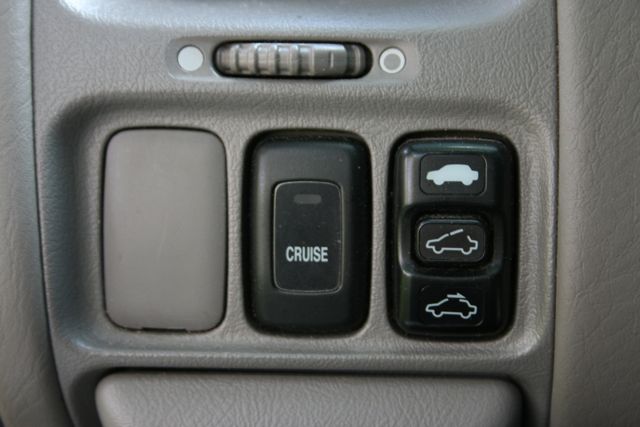
Although cruise control allows consumers to save money and avoid traffic tickets, it shouldn’t be used when it’s raining.
 When water stands on the road, it can become deep enough that the tires can’t squeeze the water through the tread fast enough. The tires can actually rise up on top of the water and ride across the water like water skis creating "hydroplaning."
Hydroplaning can start at speeds as low as 35 mph and becomes especially dangerous at speeds above 55 mph. The higher the speed, the greater the chance of hydroplaning.
The first step a driver should take to work against skidding is to remove his or her foot from the gas pedal to slow down, recommends The National Safety Commission in the article “Hazards of Driving in the Rain With Cruise Control.” Unless you have anti-lock brakes, you shouldn't apply the brakes until you have the car under control, and the speed is reduced.
Applying the brakes in a car without anti-lock brakes adds to the problem. Using both hands, steer toward the direction of the skid and then steer to keep your car centered in your lane.
In this situation, cruise control presents a problem. It will keep your vehicle going at a constant speed, and speed adds to the problem.
When you step on the brakes, cruise control is disabled. However, that’s exactly what you don’t want to do in a skidding situation unless your car is equipped with anti-lock brakes.
The safest thing to do when it starts to rain is to turn off the cruise control and slow down. Save the cruise control for good weather.



Madilyn Litteral
Thanks again for the post.Really looking forward to read more. Great.