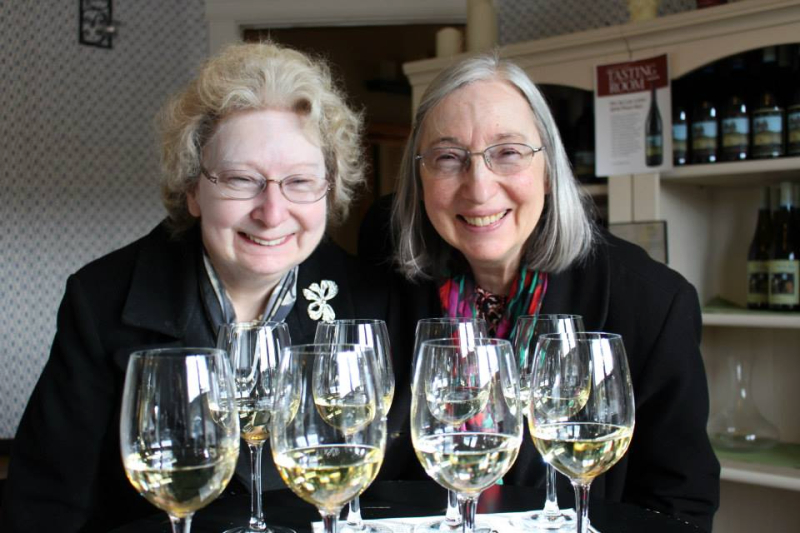
Recently, I was fortunate to visit my daughter in Madrid, and we had a wine-tasting road trip to the Castellón region on the Mediterranean south of Barcelona and north of Valencia.
The Castellón winemakers are working on rebuilding the wine industry of the region. In 1982, local producers were forced by law to uproot their hybrid vines. This seriously damaged the agrarian sector of villages such as Cabanes, Vilafamés, Vall d´Alba, Benlloch, and Les Useres.
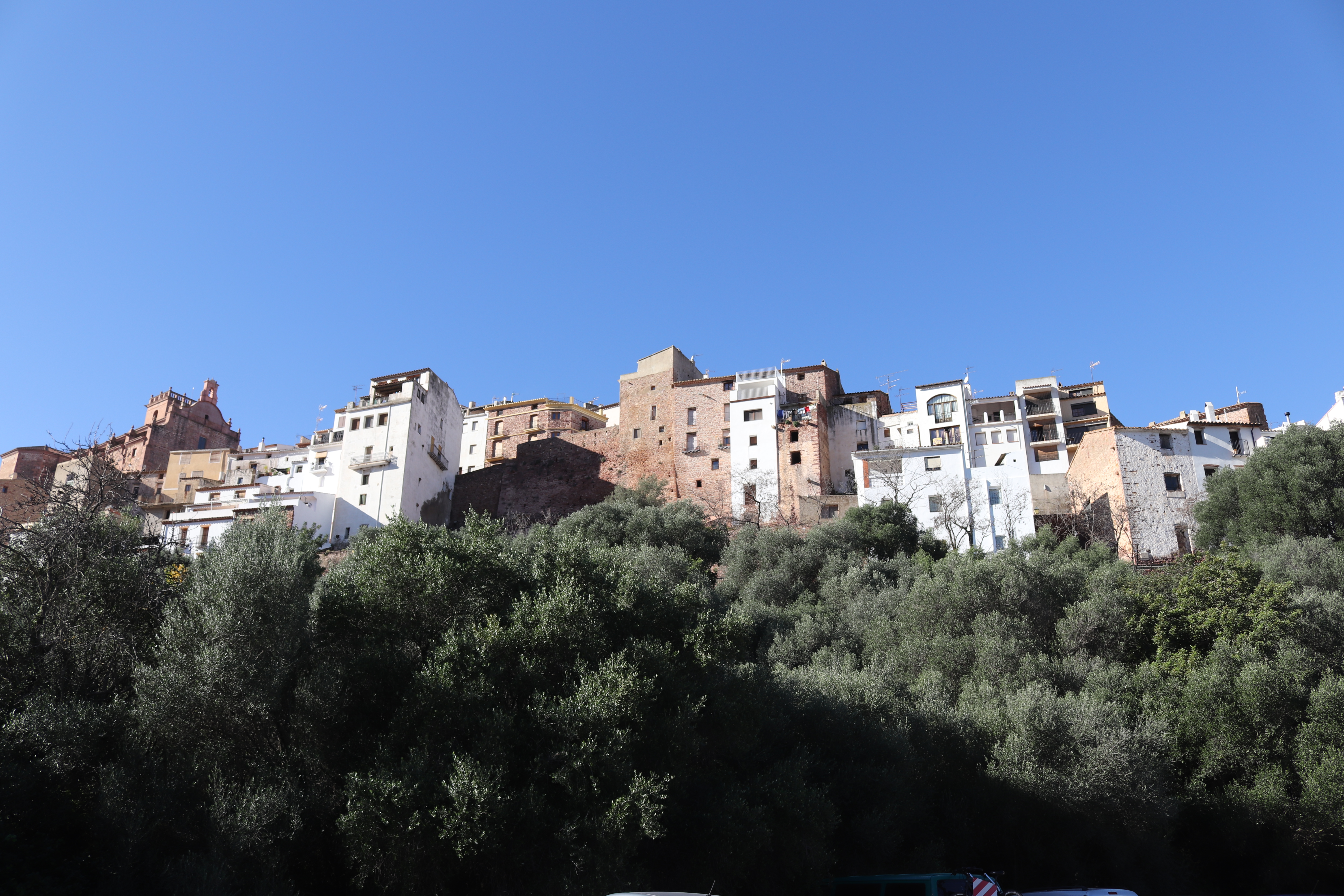
The first winery we visited was in Vilafamés, 16 miles northwest of Castellón. We had to park outside the town of 2,000 and walk up a hill because tourist cars aren’t allowed in the town, only local residents.
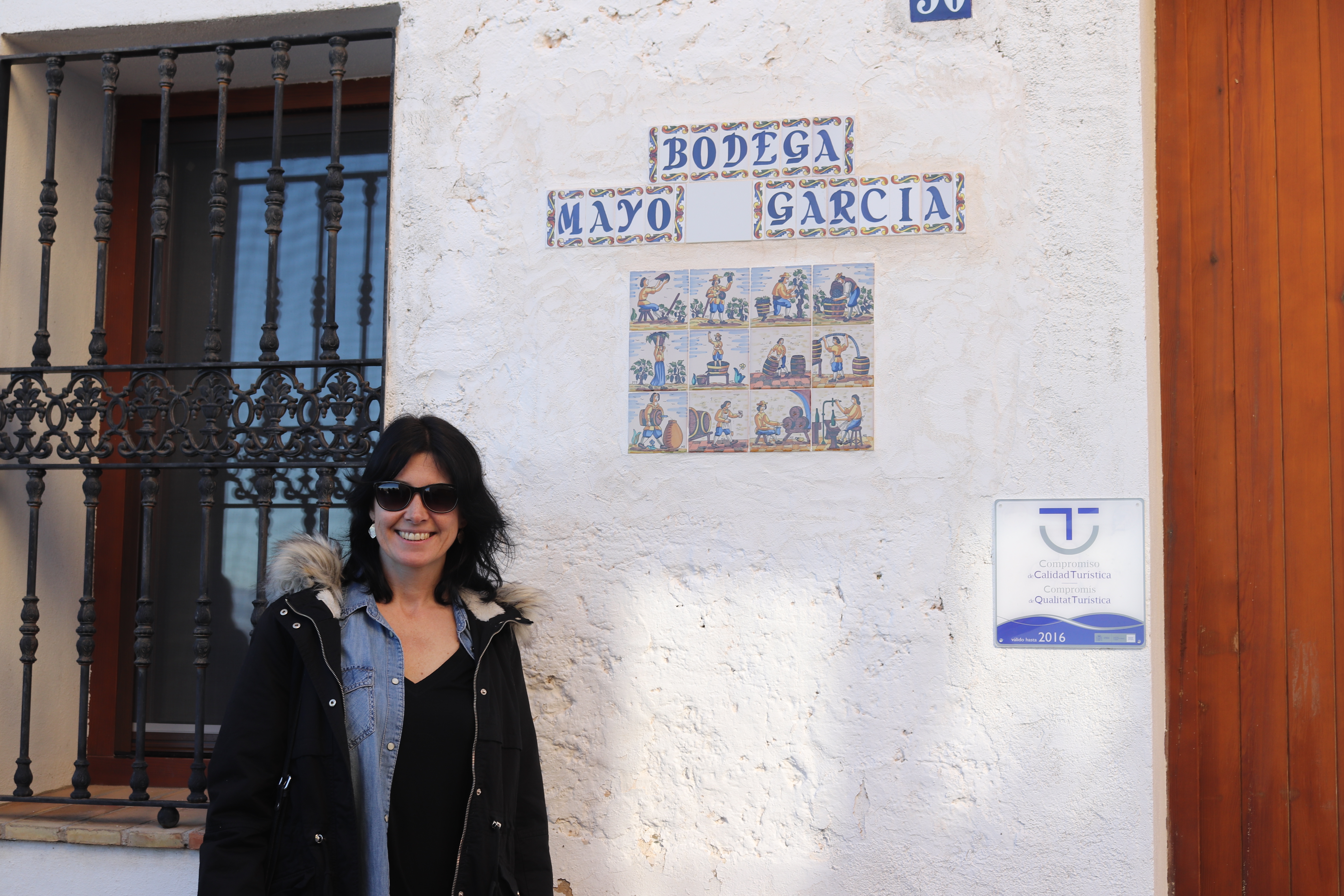
The Mayo Garcia winery is located in the heart of the Old Town of Vilafamés on the ground floor of a house built at the beginning of the 20th century.
For Mayo Garcia, the wine making tradition can be traced back to the great grandparents of the family, who made wine for their own consumption starting in 1912. Mayo Garcia began commercial production in 2003.
Organic methods are used to make the wine, but only their cava, Spain’s sparkling wine, has organic certification. The winery has vineyards in the area, but the grapes for cava come from another region.
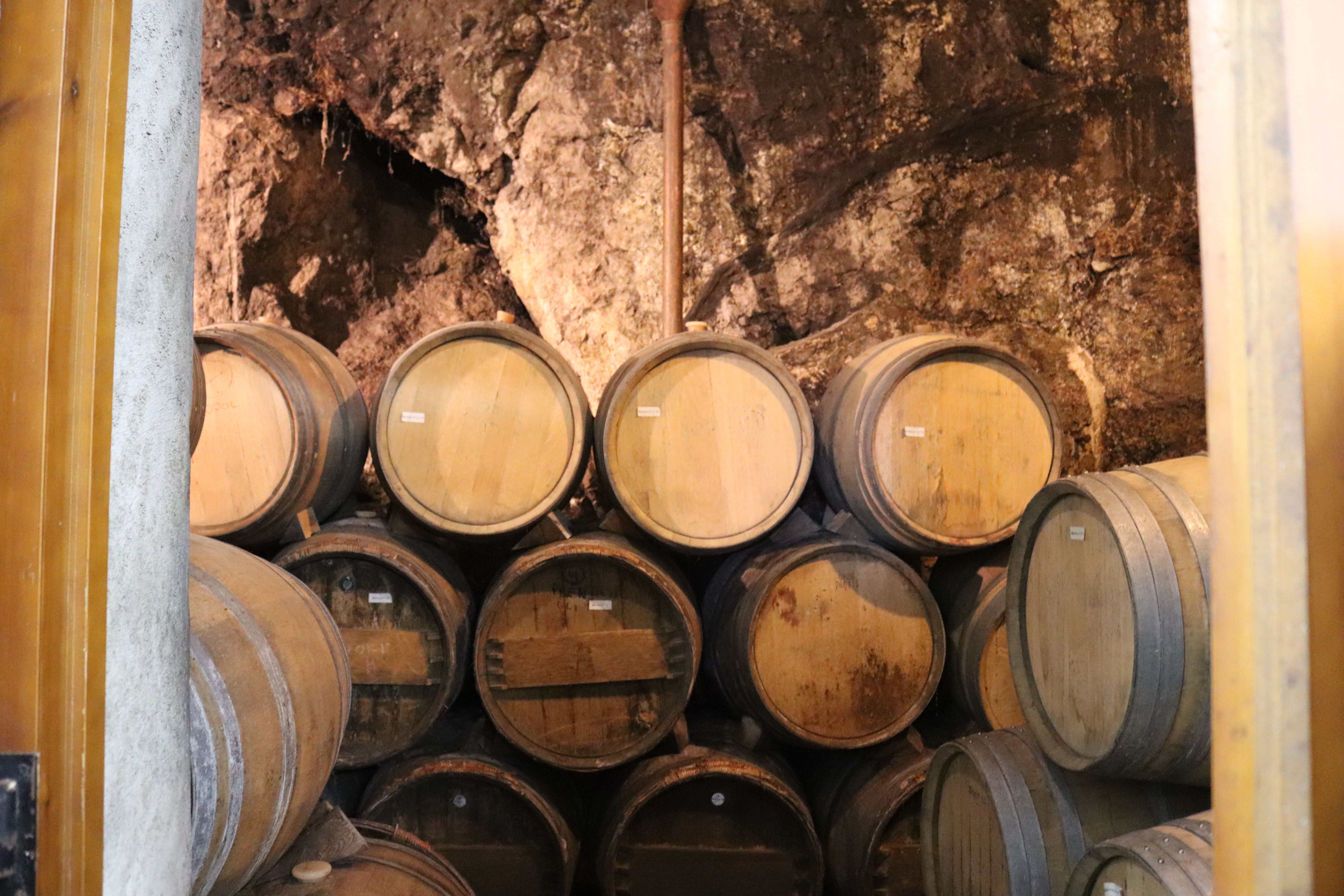
Mayo Garcia usually produces about 40,000 bottles of wine a year plus 12,000 bottles of cava. The winery doesn’t have automated bottling, so all the wines are hand bottled.
Mayo Garcia has three full-time employees with 12-14 during the harvest.
It hired a saxophone player to play for the grapes to see if it would increase production. Our tour guide said it didn’t work, but it was good public relations for the winery.
The winery uses Cabernet Sauvignon, Merlot, Syrah, Sauvignon Blanc, Chardonnay, and Muscat grapes for its wines.
We tasted three wines: Cava Magnanimvs, Magnanimvs Blanc, and Magnanimvs Plantino. All were quite good.
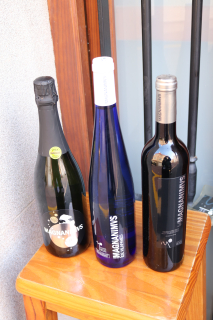
The Magnanimvs – or magnanimous in English – label on the bottles is a design chosen by the owner in memory of his mother.
The cost of the tour was 12 Euros, which included a bottle of wine.
After the tour, we climbed up the hill and visited…
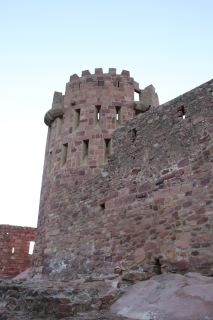
the castle…
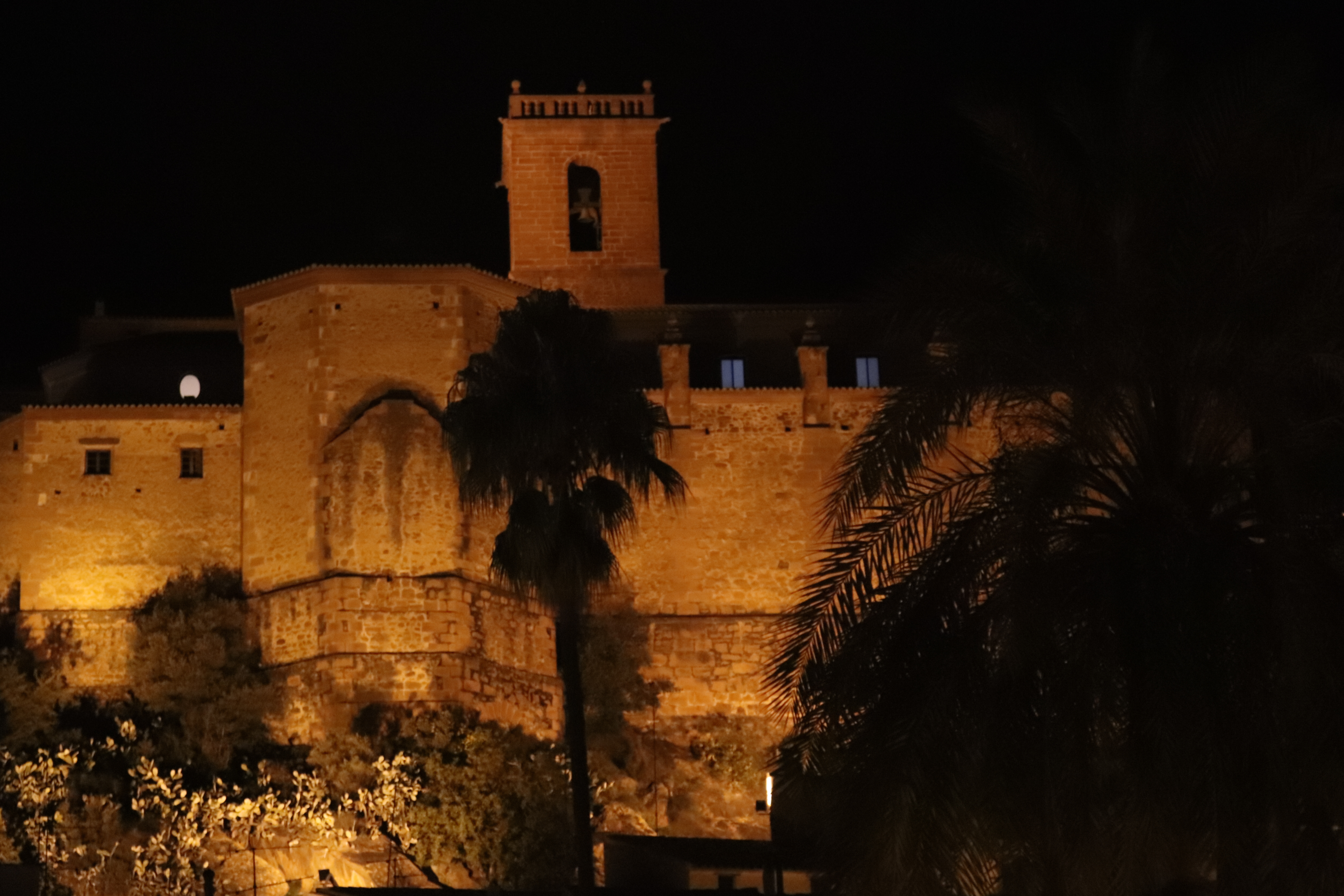
church…
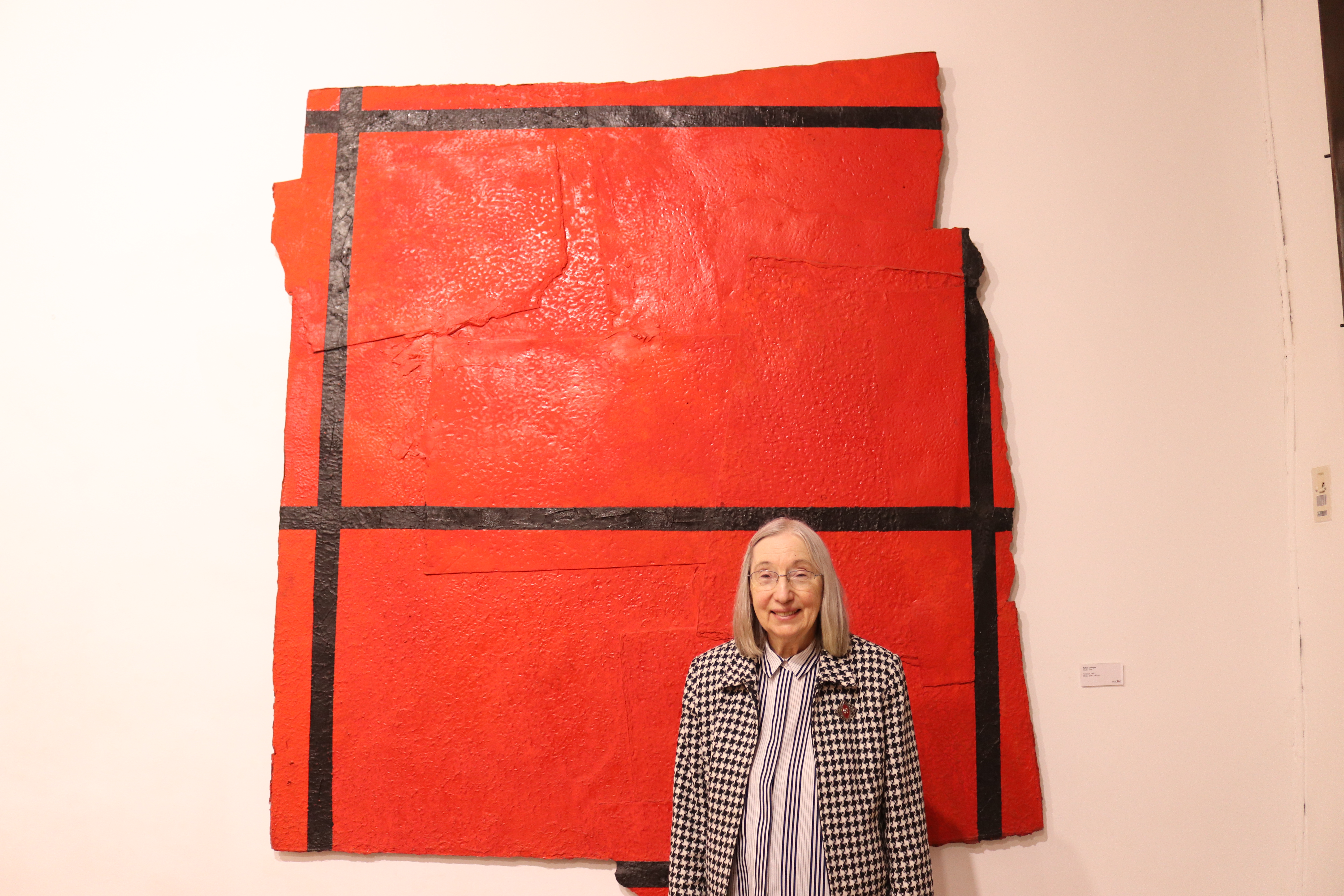
and Museum of Contemporary Art.
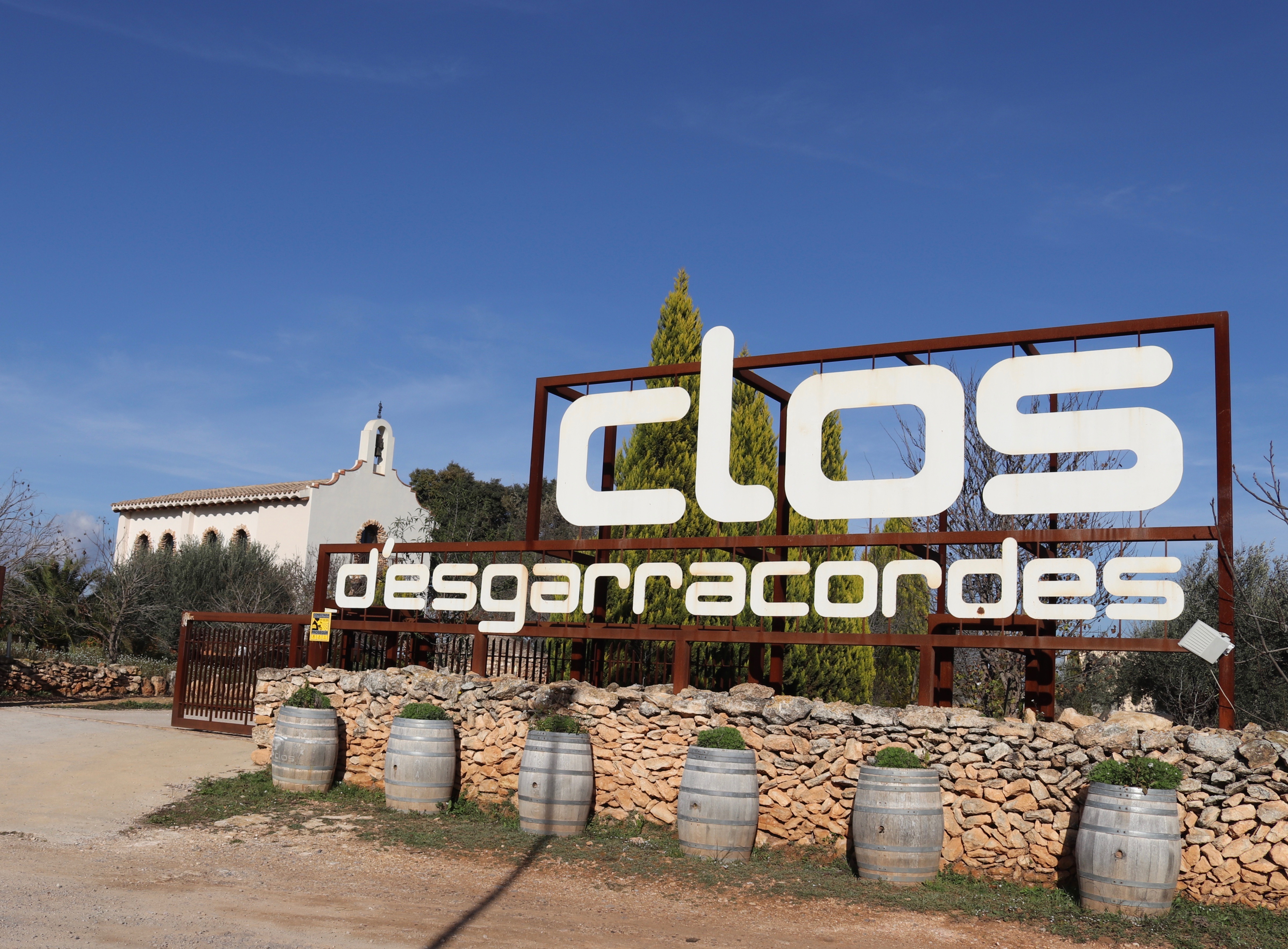
The next winery we visited was Clos d’esgarracordes near Les Useres, 22 miles northwest of Castellón. The winery also has another name, Baron d’Alba. The name comes from the combination of two neighboring towns, La Barona and Vall d’Alba. There is no baron.
The name Clos d’esgarracordes means broken ropes, so named because a who man lived on the property in the past was a bell ringer known to have a heavy hand with the ropes.
The property has been in the Garrido family for generations, growing a variety of crops including wine grapes. However, in the 1970s, when Spain joined the European Union, the vineyard was pulled out and an olive grove was planted in its place. No wine was produced until 2001, when Sergio, then 20, and his father chose a plot of 37 acres to plant a new vineyard. It has since grown to 50 acres.
The new varieties included French ones such as Cabernet Sauvignon, Merlot, and Syrah, in addition to the Spanish varieties Garnacha, Macabeo, Monastrell, and Tempranillo.
The family built a modern stone winery on the site, a large stone residence, and a stone chapel, which can be used for events, such as weddings and baptisms.
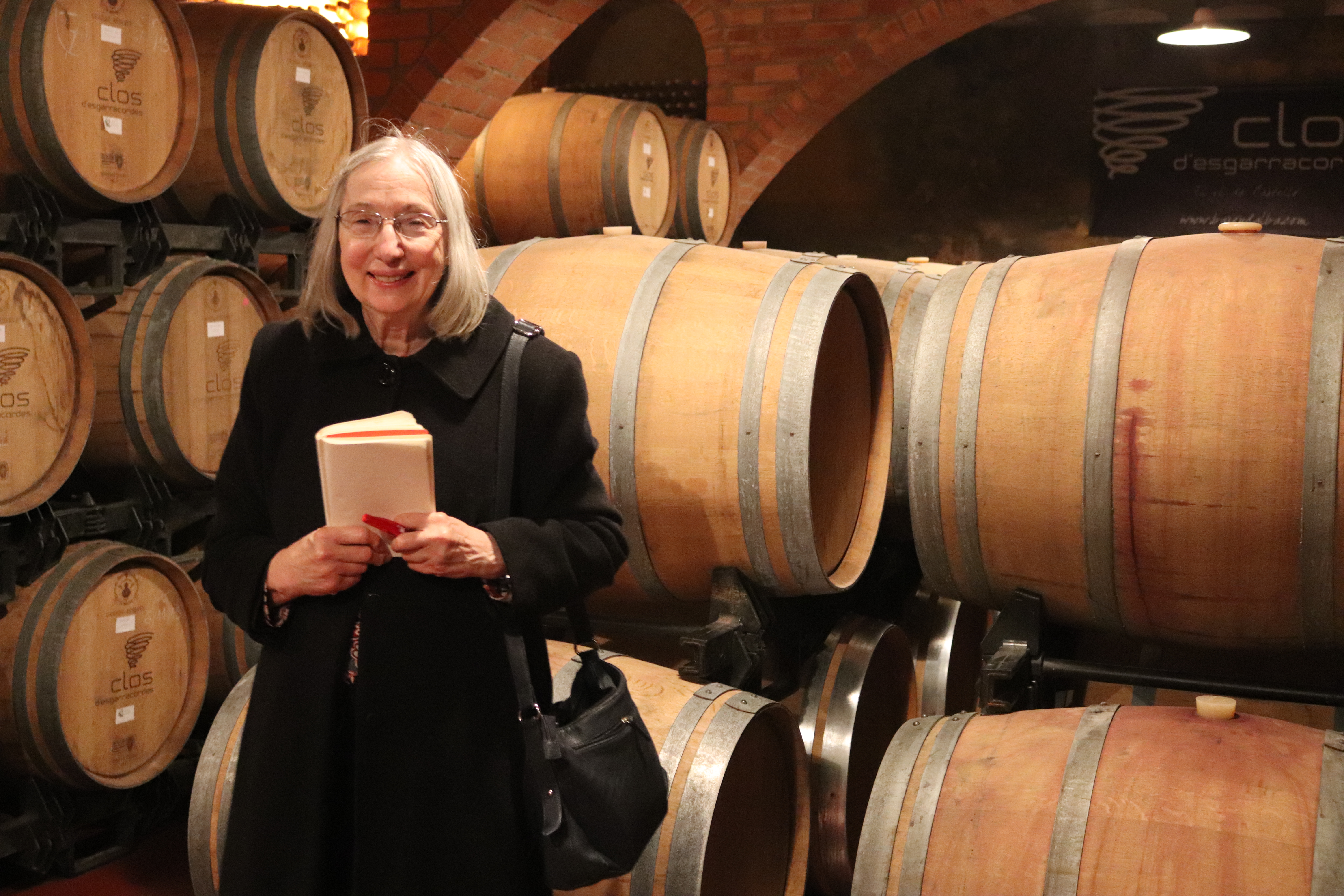
While organic methods are used in wine production, the winery doesn’t have organic certification because there are times, in the extreme climate, when they need to use chemicals to protect the vines and fruit.
The grapes are harvested and bottled by hand. The winery usually produces 60,000 to 70,000 bottles of wine a year.
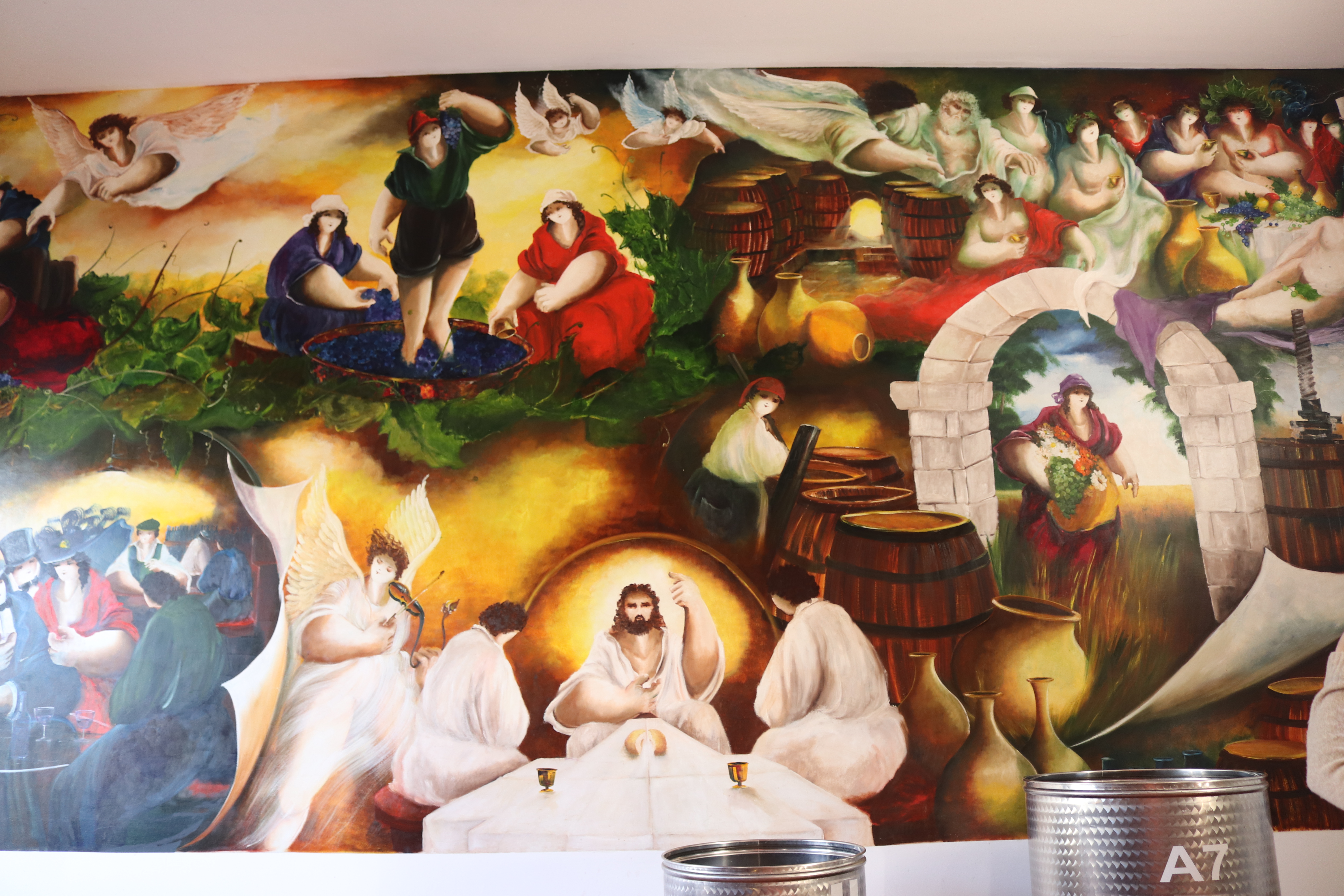
A famous Colombian artist who lives in Barcelona with ties to the region, Jaime Guevara, painted a mural for in the winery.
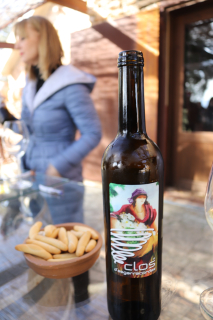
Parts of the mural are used on some of the wine bottles.
We tasted a white wine, which was very good. We also tasted two red blends, one with Tempranillo, Garnacha, Monastrell, and Merlot and one with Cabernet Sauvignon, Syrah, and Merlot. Both were tasty.
The cost of the wine tour was 10 Euros, which included a plate of cheese and cold cuts.
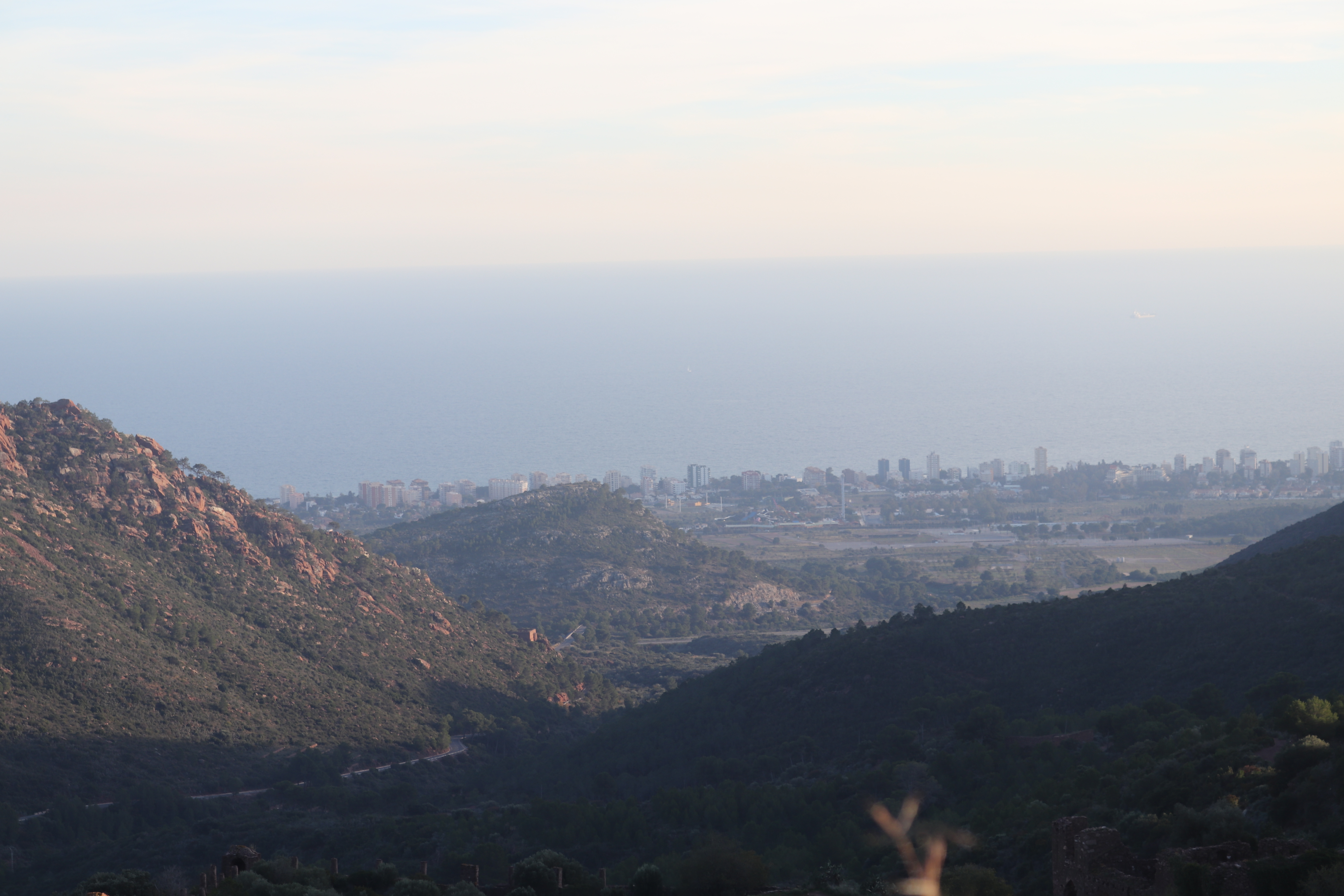
After wine tasting, we drove to a nearby hilltop viewpoint to check out views of the surrounding area and sea…
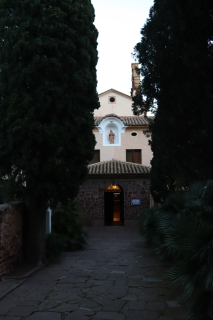
and to visit a monastery.