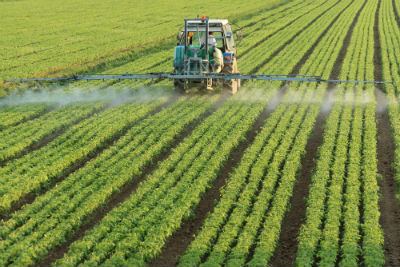
While people shouldn’t stop eating fruits and vegetables because they have pesticide residue, like what was found in a new report, there are ways you can reduce your pesticide consumption.
You can buy organic fruits and vegetables as often as possible and use guides for reducing pesticide consumption such as the Shopper’s Guide to Pesticides in Produce and Guide to Washing Produce for guidance by the Environmental Working Group, or EWG.
What the new review found
A new analysis by the EWG shows almost 40 percent of nonorganic fruits and vegetables grown in California – which supplies more than half the nation’s produce – had residues of pesticides that are “forever chemicals” known as PFAS.
Out of 930 samples of 78 types of nonorganic California-grown fruits and vegetables tested, 348 samples, or 37 percent, had traces of PFAS pesticides, based on state testing data the EWG reviewed.
Within those 78 produce categories, 40 individual types of fruits and vegetables, or 51 percent of the different categories, had some residue of PFAS pesticides, the analysis found.
More than 90 percent of nectarines, plums, and peaches sampled carried fludioxonil, a PFAS pesticide and fungicide.
Some of the California-grown produce types had no detectable PFAS pesticide residues in the analysis, including sweet potatoes, cauliflower, mushrooms, tomatoes, watermelon, cantaloupe, sweet corn, avocados, and summer and winter squash. Several of these frequently appear on the EWG’s Shopper’s Guide Clean Fifteen list of produce with the least pesticide residue.
Why PFAS are harmful
PFAS are a group of thousands of human-made chemicals used across a wide range of products, including pesticides. They’re called “forever chemicals” because of their extreme environmental persistence: the carbon-fluorine bond at their core is among the strongest in chemistry, making them resistant to breakdown in the environment and in the human body.
Some PFAS have been found to be highly toxic even at low doses, linked to immune suppression, cancer and reproductive and developmental harm. These forever chemicals are already known to have contaminated drinking water for millions of Americans.
PFAS’s presence on California-grown produce shows the pervasive spread of the forever chemicals in the environment, and it’s another way that people are exposed to the chemicals, Bernadette Del Chiaro, EWG’s senior vice president for California, said in a statement.
“Many consumers associate PFAS exposure with industrial sources or consumer products like Teflon-lined pots and pans,” Del Chiaro. “At a time when Americans are demanding a healthier food system, we’re finding that core staples of a healthy diet are contaminated with chemicals linked to serious health harms.
Del Chiaro said the report reveals a glaring hole in pesticide oversight, one that needs immediate regulatory action from California and the federal government.
PFAS pesticides warrant far greater regulatory and scientific scrutiny, including more rigorous toxicity assessments by the U.S. Environmental Protection Agency and the California Department of Pesticide Regulation, and a reconsideration of their use, she said.
Additional findings from the analysis
Strawberries carried the greatest variety of PFAS pesticides of any crop tested – 10 individual PFAS pesticides were detected – consistent with their longstanding status as one of the most heavily pesticide-treated crops in the country.
Grapes and cherries showed contamination rates of 80 percent or higher, frequently carrying four or more different PFAS pesticides on individual samples.
Other significantly affected crops include spinach, blueberries, and lemons. Many of these regularly appear on the EWG’s annual Dirty Dozen list – the fruits and vegetables with the highest overall pesticide residues in the EWG’s Shoppers’ Guide to Pesticides in Produce.
Final thoughts
“We deserve a food system that nourishes families without exposing them to chemicals that last a lifetime,” Del Chiaro said. “Feeding America should not mean contaminating it.”