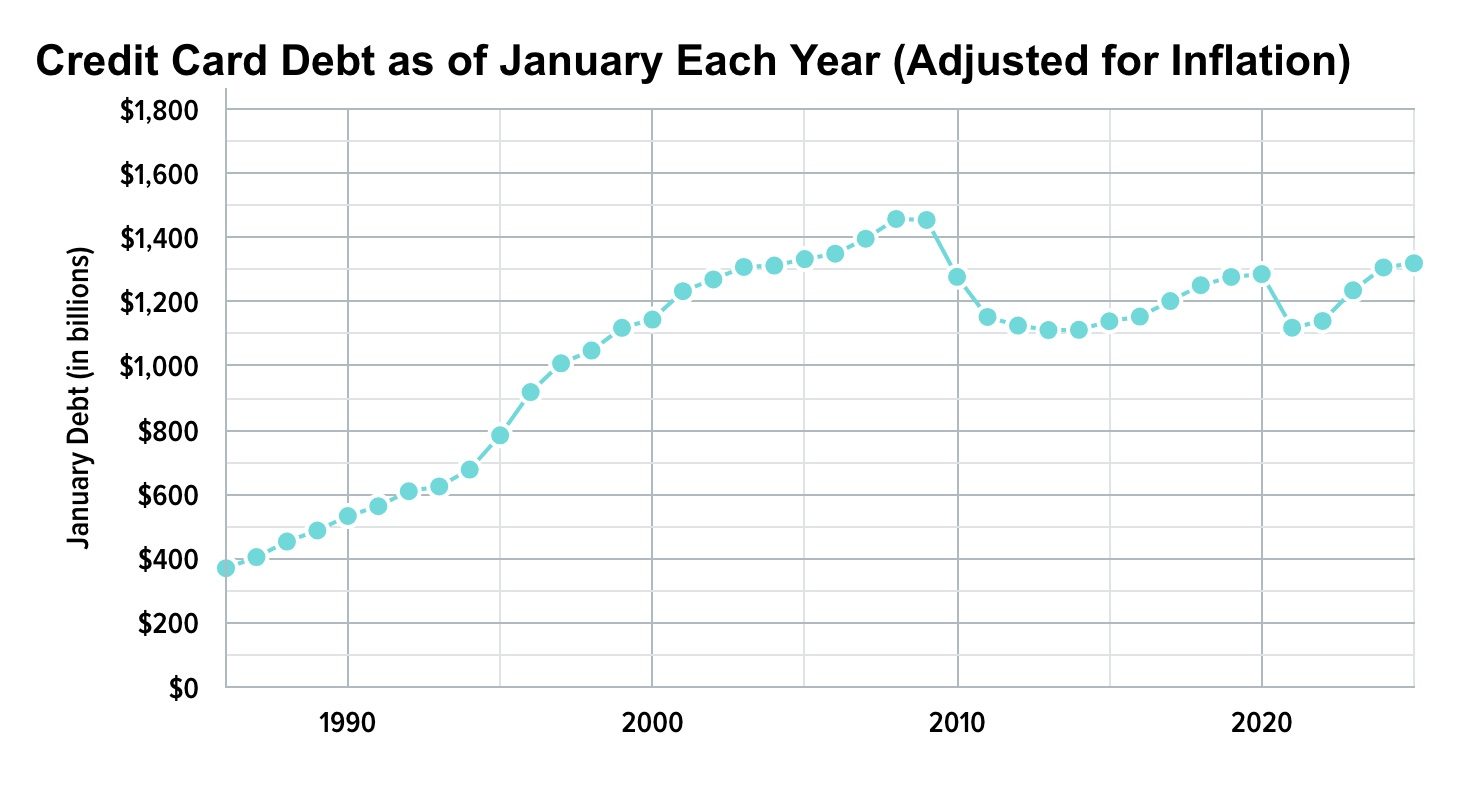
Consumers added $29 billion in credit card debt during the second quarter of 2026, according to a Federal Reserve consumer credit report released Tuesday. The increase was about 3 percent larger than the increase in the second quarter of 2025.
The average household credit card balance was about $11,313 at the end of the second quarter of 2026, after adjusting for inflation, according to WalletHub, a personal finance website. That’s $2,139 below the record high.
Credit card users will pay about $2 billion more in interest over the next 12 months if the Federal Reserve raises its target rate by .25 percent on Sept. 16, which is a 60 percent probability, WalletHub said in a credit card debt study.
“The credit card debt problem is getting worse at a slower rate,” John Kiernan, WalletHub editor, said in an email. “That’s progress but probably not at the pace most consumers are looking for.”
Kiernan said most of people could benefit from better budgeting habits.
“Careful budgeting is a tried and true method for achieving financial success, and we have some new tech to make things easier,” he said adding budgeting apps have come a long way.
However, Kiernan added at some point, people need to start consistently paying down what they owe.
“Slowing the rate of decline isn’t going to cut it, especially if the Fed starts increasing interest rates again,” he said.
WalletHub offers the following five tips for dealing with credit card debt:
- Separate your everyday expenses from your debt. When you carry a credit card balance from billing period to billing period, you lose your grace period for new purchases. That means interest starts applying to new purchases right away. But, if you use one card for ongoing debt and another for everyday purchases that you can pay off by the due date, the everyday purchases should never accrue interest charges.
- Use a balance transfer deal to lower the cost of existing debt. The best balance transfer credit cards can give you a break from interest charges for as long as 21 months, and attractive offers are accessible to individuals with fair credit or better. A longer 0 percent introductory period can result in significant savings on interest, helping you get out of debt faster.
- Improve your budgeting and saving efforts. There are several good budgeting apps available to consumers for free or at a low cost. Taking ownership of your budget can help you free up some room for emergency fund contributions and debt payments so you can get out of debt and stay there.
- Use a rewards card for everyday spending. You can save 1 percent to 2 percent-plus on every purchase with the right rewards card. You might also save a couple hundred dollars with an initial bonus. And if you plan to pay the bill in full monthly, the interest rate won’t matter.
- Work to improve your credit score. People with higher credit scores tend to pay lower interest rates. For example, the average APR among credit cards for people with fair credit is 27.01 percent, while the average for people with excellent credit is 17.09 percent. Having good or excellent credit also makes it easier to get credit cards with a 0 percent introductory APR.
Best wishes paying off you credit card debts. It took me years and I was finally successful when I paid off my off my house and had extra money available to pay off my credit cards quickly.