
 The U.S. Department of Agriculture has denied a three-year-old petition from the Center for Science in the Public Interest asking the department to declare dangerous strains of antibiotic-resistant Salmonella as adulterants.
The department also released its version of a poultry inspection proposal that has been criticized by labor, animal welfare, and food safety groups.
"USDA's failure to act on antibiotic-resistant strains of Salmonella in the meat supply ignores vital information about the public health risk posed by these pathogens," said Caroline Smith DeWaal, food safety director for the center.
"Despite numerous examples of outbreaks linked to resistant pathogens, USDA leaves consumers vulnerable to illnesses that carry a much greater risk of hard-to-treat infections leading to hospitalization," said DeWaal.
In the last year, public health agencies, such as the Centers for Disease Control and Prevention, the World Health Organization, and a presidential scientific advisory panel have said antibiotic resistance is reaching epidemic proportions.
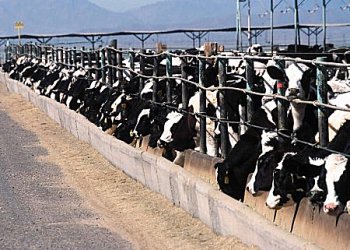
In 2013, a center report showed that 73 percent of antibiotics important for human medicine are used on the farm, with the majority being fed to animals.
"This widespread overuse of essential medicines allows antibiotic-resistant bacteria to invade our food supply and the water and environment near where the animals and poultry are raised," she said.
The department has also published a final rule advancing a new poultry inspection system.
Modeled on the HACCP Inspection Models Project, or HIMP, the new system privatizes many poultry inspection activities and reduces the number of government inspectors in the nation's poultry processing plants.
"In its desire to save some $9 million next year, the USDA missed the boat on designing a scientific approach to modernizing poultry inspection," she said. "With more than 600 people sick from the Foster Farms outbreak alone, this is hardly the time to reduce USDA's oversight of the poultry industry."



