For decades, I’ve been working to inform people about consumer and personal finance issues. It’s important, and having the knowledge myself has served me well.
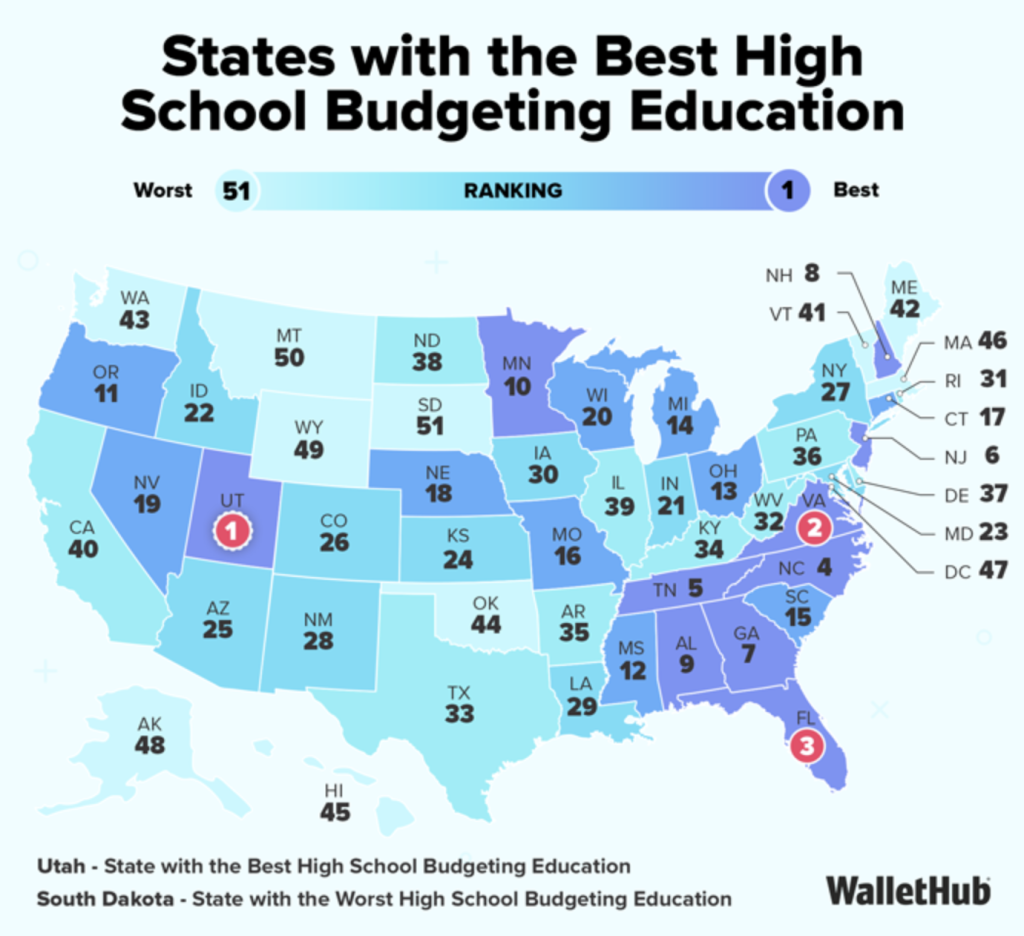
However, a recent analysis by WalletHub, a personal finance website, shows that my home state, Washington, isn’t very good at personal finance education. It ranked 43rd in a ranking of the 50 states and the District of Columbia.
More than nine in 10 Americans believe budgeting should be taught in schools, according to a recent WalletHub survey. However, only 17 out of 50 states earn an A rating from the American Public Education Foundation. To receive an A, a state needs to require high school students to complete a standalone personal-finance course and integrate financial literacy education throughout the K-12 curriculum.
To see which states are doing the best job teaching personal finance skills, WalletHub compared all 50 states and the District of Columbia using 11 metrics ranging from whether students are required to take a personal-finance course to financial literacy test scores and overall school rankings.
Top 10 states
1.Utah
2. Virginia
3. Florida
4. North Carolina
5. Tennessee
6. New Jersey
7. Georgia
8. New Hampshire
9. Alabama
10. Minnesota
Bottom 9 states and the District of Columbia
42.Maine
43. Washington
44. Oklahoma
45. Hawaii
46. Massachusetts
47. District of Columbia
48. Alaska
49. Wyoming
50. Montana
51. South Dakota
“All high schools should have mandatory personal-finance education, including instruction in budgeting,” said Chip Lupo, WalletHub analyst. “Students who learn to budget before they join the workforce will be able to make much better financial decisions.”
Lupo said students will also be able to save more for the future and will be likely to have higher credit scores than their peers who never learned how to budget or who had to figure things out for themselves.
I guess I’ll need to join the efforts to get a standalone personal finance course required for high school students in Washington state.