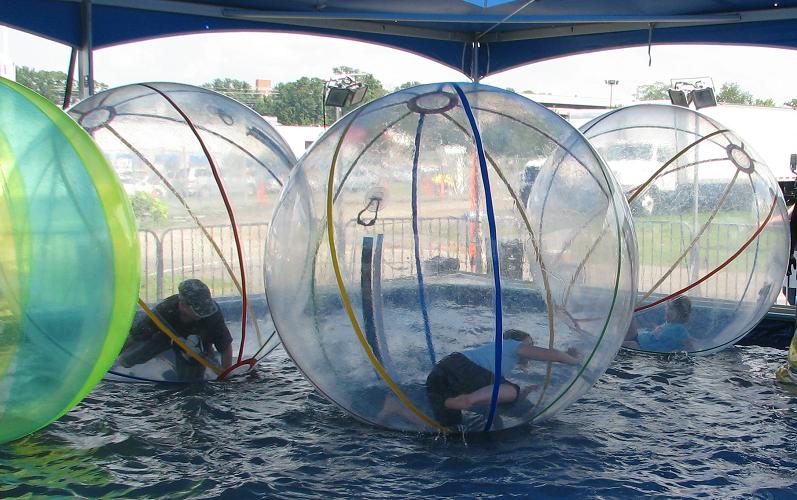
Consumers should stop taking part in water walking, a new type of water-related recreational activity, due to the potential risks of suffocation and drowning, according to the U.S. Consumer Product Safety Commission. The water-walking ball has many brand or ride names.
Since the product has no emergency exit and can be opened only by a person outside of the ball, the risk of injury or death when a person inside the ball experiences distress significantly is heightened. Pre-existing medical conditions – such as heart, lung, or breathing issues – can be made worse by use of this product.
An individual climbs into the large, see-through plastic ball, which is inflated with a blower through the zipper opening. The zipper is closed, making the ball airtight. The ball, with the person locked inside, then rolls around on water, ice, grass or other surface.
Water-walking balls are usually used by children and are mainly a ride at amusement parks, carnivals, malls, and sporting events. Water-walking balls also are sold to the consumers for personal use.
Several states have banned or refused to provide permits for rides that use water-walking balls.
Two incidents involving water-walking balls have been reported to the commission. In one, a child was found unresponsive after being inside the ball for a very brief period of time, and emergency medical treatment was sought. In the second incident, a person inside a ball suffered a fracture when the ball fell out of the shallow, aboveground pool onto the hard ground.
The commission is warning consumers about a combination of risks associated with this product, including the possibility of suffocation, drowning, and impact injuries.
Because the ball is airtight, an inadequate air supply can result when oxygen is depleted and carbon dioxide accumulates.
“Such a dangerous scenario can occur in as little as a few minutes,” the commission said in a statement. “Because the water-walking balls have no padding, impact injuries can occur if the balls collide with each other, or fall out of the pool onto concrete or other hard surfaces, such as ice or tile.”
Water-walking balls are also being used on open water, creating the potential for injuries if the ball is struck by a boat or strikes a solid object, such as a buoy or pier. In addition, the balls present a high risk of drowning if there is a leak or a puncture.
The commission has informed state amusement ride officials of the risks associated with water-walking balls and encourages state officials not to permit it in their states. The commission doesn’t know of any safe way to use the balls.