
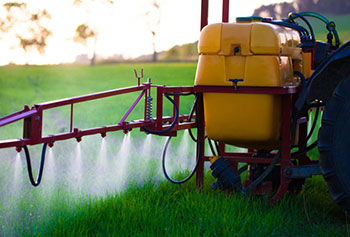
Agricultural pesticide use in California remains at a near-record high, according to data released recently by the California Department of Pesticide Regulation.
The department’s latest numbers show the state continues to rely on vast amounts of agricultural pesticides – 209 million pounds in 2016. That’s the third-highest since reporting began in 1990. The greatest use is in the San Joaquin Valley, with half, 106 million pounds, used in five counties – Fresno, Kern, Tulare, San Joaquin, and Madera.
“Given these bleak numbers, it is no surprise that DPR skipped their usual press announcement and quietly posted the data on their website without fanfare,” said Angel Garcia, a community organizer with the Tulare County Coalition Advocating for Pesticide Safety.
Among the top five most heavily used pesticides in 2016 were DowDuPont’s hazardous, drift-prone fumigant 1,3-dichloropropene (Telone) and Monsanto’s popular herbicide glyphosate (Roundup), both carcinogens.
Telone was found in the air at levels so hazardous it was banned in California in 1990. However, it was brought back in 1995 in a deal between the manufacturer and DPR in which DowDuPont was allowed to create special rules for its reintroduction and was given the authority to track its use. Last year, despite pressure to further restrict this widely used hazardous chemical, DPR actually increased allowed usage by 50 percent, said Sarah Aird, co-director of the statewide coalition Californians for Pesticide Reform.
“We are saddened but not surprised that Telone use continues unabated in California, given DPR’s unconscionable abdication of their regulatory authority to DowDuPont,” Aird said. “There can be no clearer example of putting the fox in charge of the henhouse.”
The use of one pesticide, the brain-harming organophosphate pesticide chlorpyrifos, is decreasing. It dropped to under a million pounds for the first time in a decade. Last year, a proposed national ban of chlorpyrifos was reversed by EPA Administrator Scott Pruitt. The overall downward trend in usage, from as much as 3.4 million pounds per year, comes as DPR is considering banning the pesticide in California.
The 2016 data continue to raise a concern about the risk to the health of children living and attending schools near pesticide use in California’s agricultural regions, said Aird. A 2014 report by the California Department of Public Health documented extensive use of hazardous pesticides within a quarter-mile of public schools, with Latino children almost twice as likely as white students to attend one of the most impacted schools.
DPR enacted a new rule earlier this year restricting the most drift-prone application methods within a quarter-mile of schools and daycares from 6 a.m. to 6 p.m. on weekdays. The regulation also requires growers to provide an annual list of the pesticides they intend to use within one-quarter mile of schools to school and daycare administrators as well as to County Agricultural Commissioners, which is responsible for carrying out local pesticide enforcement under DPR oversight. Despite community calls for this information to be made public, DPR has refused to allow it, said Lupe Martinez, assistant director of the Center on Race, Poverty & the Environment in Kern County.
“It’s very hard to understand why DPR would continue to place obstacles between the public and the information they need in order to protect themselves and their families,” Martinez said. “The 2016 data is a stark reminder of the magnitude of the pesticide exposure risk faced wherever food is grown in California, and especially the risk for children who are the most vulnerable to their devastating health impacts.”





““It’s very hard to understand why DPR would continue to place obstacles between the public and the information they need in order to protect themselves and their families,” Martinez said. “The 2016 data is a stark reminder of the magnitude of the pesticide exposure risk faced wherever food is grown in California, and especially the risk for children who are the most vulnerable to their devastating health impacts.”
Read, “A Bitter Fog” by Carol van Strum and you’ll realize it’s just business as usual, this time it’s in CA, instead of OR, or MO or the feds. It’s called the gov’t supporting poisoning for profit because the profits of large corporations trump public health and welfare.
Hi Azure,
Yes, corporations seeking profits are guiding our nation’s public policy. It’s so unfortunate when it comes to pesticides because they are so toxic and harmful to humans, especially children.
Rita