
Financial fraud is an ever-increasing problem with higher than ever risks for consumers.
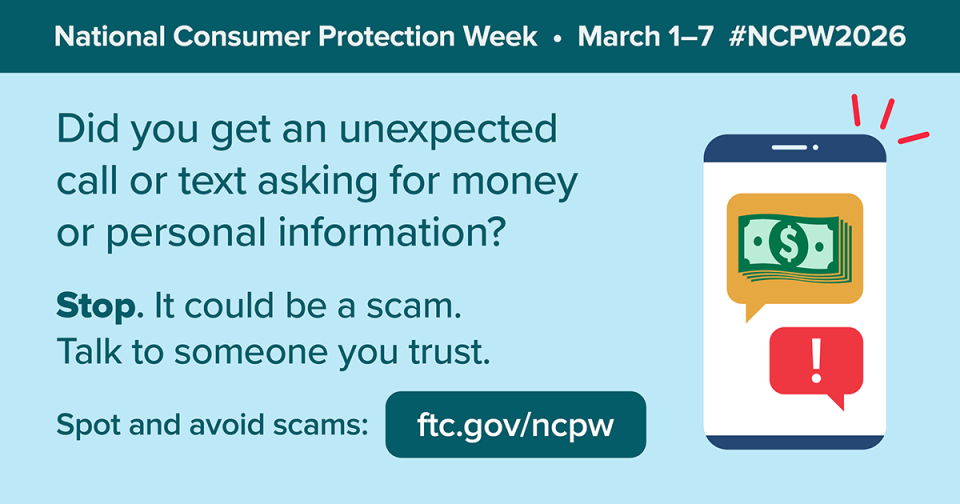
March 1 through 7 is National Consumer Protection Week. It’s an annual initiative sponsored by the Federal Trade Commission, or FTC. It brings together federal, state, and local agencies, along with private and nonprofit partners, to provide resources and educational tools to help people avoid scams.
This week’s campaign reminds people to slow down and verify information before acting. Fraud doesn’t always look dramatic or complicated. It often looks ordinary. A text from a delivery company. A call from someone claiming to be your bank. A message from a grandchild in trouble.
The common theme is urgency – to take immediate action.
Here are tips from the Washington State Department of Financial Intuitions on how to avoid scams:
Common fraud tactics
While schemes change, many rely on the same basic strategies:
- Imposter scams: A caller claims to represent a bank, government agency, law enforcement office, or utility company. They may demand payment or ask for account information.
- Account alerts and phishing texts: Messages warn of “suspicious activity” and direct you to click a link. The goal is to capture your login credentials or personal identification information.
- Investment fraud: Promises of high or guaranteed returns, especially involving cryptocurrency or new trading platforms. Fraudsters often build trust before asking for money. These may even include fake investment platforms that disappear once the scammers have your money.
- Romance scams: Someone builds a relationship online, then requests financial help for an emergency, travel costs, or investment opportunity.
- Payment redirection: A message says you owe money and must pay with gift cards, wire transfers, or cryptocurrency. Legitimate businesses and government agencies don’t demand payment this way.
What to do before you respond
Fraud prevention doesn’t require special tools. It requires a pause. Make time to verify who’s contacting you, what the “emergency” is, and where the money is going.
If you receive an unexpected call, text, or email:
- Don’t click links or open attachments.
- Don’t share account numbers, Social Security numbers, or one-time passcodes.
- Hang up and contact the company directly using a verified phone number from its official website or your account statement.
- Take time to think. Fraud often depends on urgency.
If someone asks you to move money quickly, buy gift cards, send cryptocurrency, or keep the request secret, recognize these as warning signs of potential fraud.
Protecting your financial accounts
Basic steps can help reduce risk:
- Use strong, unique passphrases for financial accounts.
- Enable multi-factor authentication when available.
- Review bank and credit card statements regularly.
- Check your credit reports at AnnualCreditReport.com. You can do this weekly.
- Place a free fraud alert or credit freeze if you suspect identity theft.
These actions won’t eliminate all risk, but they make it harder for someone to misuse your information.
Investment and licensing checks
Before sending money for an investment or working with a financial services provider, verify that the person or company is licensed or registered in your state. Make sure that the investment platform you’re being asked to use is real.
Unsolicited offers for investment need extra examination. Guaranteed returns, limited time offers, and requests to move conversations off established platforms are common red flags. Check to see if your state has an Investment Scam Tracker.
If you’ve already sent money
It’s easier than ever to send money to someone, but this convenience comes at a cost. When sending money through bank transfers, cryptocurrency, or peer-to-peer payment methods, such as PayPal, CashApp, or Venmo, you’re actually giving up your rights to these funds. Sending money through these methods is like handing someone cash, and it can be just as hard to get back.
If you already sent money to a potential scammer, act quickly. Contact your bank or credit union immediately and report the incident to the company involved, if applicable. Consider changing passwords for affected accounts and monitor your credit and account activity to be able to identify any unauthorized transactions.
While it’s normal to feel embarrassed after a scam, people need to report the fraud. Reporting helps identify patterns for law enforcement to pursue and protect others.
You can file a complaint with your state Attorney General’s Office and the FTC. Report internet scams to the FBI.
The Financial Industry Regulatory Authority provides information for people in their “It’s Not Your Fault” handout, and it encourages people to seek help in support groups so they’ll be less likely to be defrauded in the future.
National Consumer Protection Week activities
For activities in your area, contact your local library and Attorney General’s Office in your state. For FTC activities, see the FTC’s National Consumer Protection Week webpage.
Final thoughts
Fraud prevention isn’t about being suspicious of everything. It’s about building habits: Pause. Verify. Don’t send money under pressure.
National Consumer Protection Week is a reminder that consumer protection is a shared responsibility. Regulators enforce laws and investigate complaints. At the end of the day, however, individuals make the final decision to send money or share information.
A brief pause can interrupt a scam. That pause can protect not only your finances, but also your time and peace of mind.


