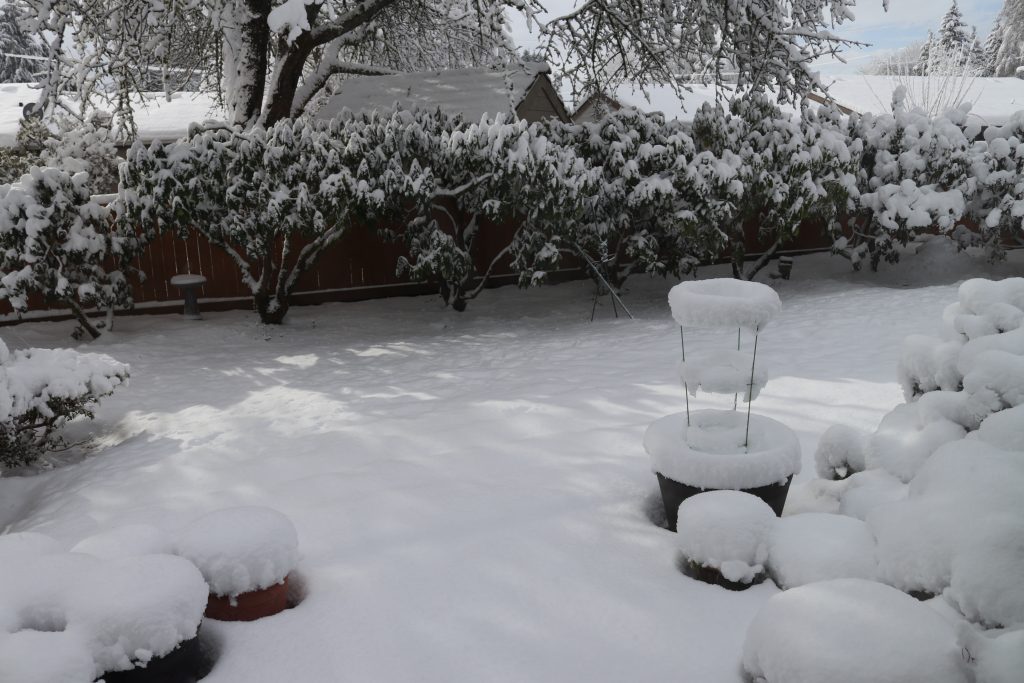
When we headed out of town Friday, we hoped that we’d miss any snow on our trip.
But two to six inches struck parts of the Puget Sound-Bellingham, Wash., area Friday and Saturday. In March. March 28 and 29, to be exact.
On Friday, we had snow mixed with rain, and although snow covered the ground in more places than we would have liked, it wasn’t sticking on Interstate 5.
I-5 was quite slushy coming out of Bellingham and again in the Everett-Marysville area. Seattle was fine, with some snow after that in Kent, but no more slush.
We were happy to make it home, but I wondered as we were slogging through the snow if global warming is causing erratic or extreme weather conditions already.
“Recent climate modeling results indicate that ‘extreme’ weather events may become more common,” according to Extreme Weather, a chapter in the report “Climate Change: Disrupting our Economy, Environment, and Communities” by the Washington State Department of Ecology.”
Rising average temperatures produce a more variable climate system, the report indicates. What can be expected with weather changes? Localized events could include:
- Windstorms.
- Heat waves, droughts.
- Storms with extreme rain or snow.
- Dust storms.
Interesting. I think we’ll just need to learn about this as we go along.
Next week’s posts on Unlocking The Power of Your Money will be on “What Boomer Consumers Need to Know About Prescription Drugs.”