One heat wave after another has swept the country this summer and many more are expected. As global average temperatures increase, heat waves are increasing.
High heat can be dangerous to your health, especially for people with pre-existing health conditions, the elderly, pregnant people, infants, unhoused people, and people in historically marginalized communities.
You and your family can stay safe and enjoy the summer weather by taking precautions during hot weather with these recommendations from the Washington State Health Department and the Centers for Disease Control and Prevention:
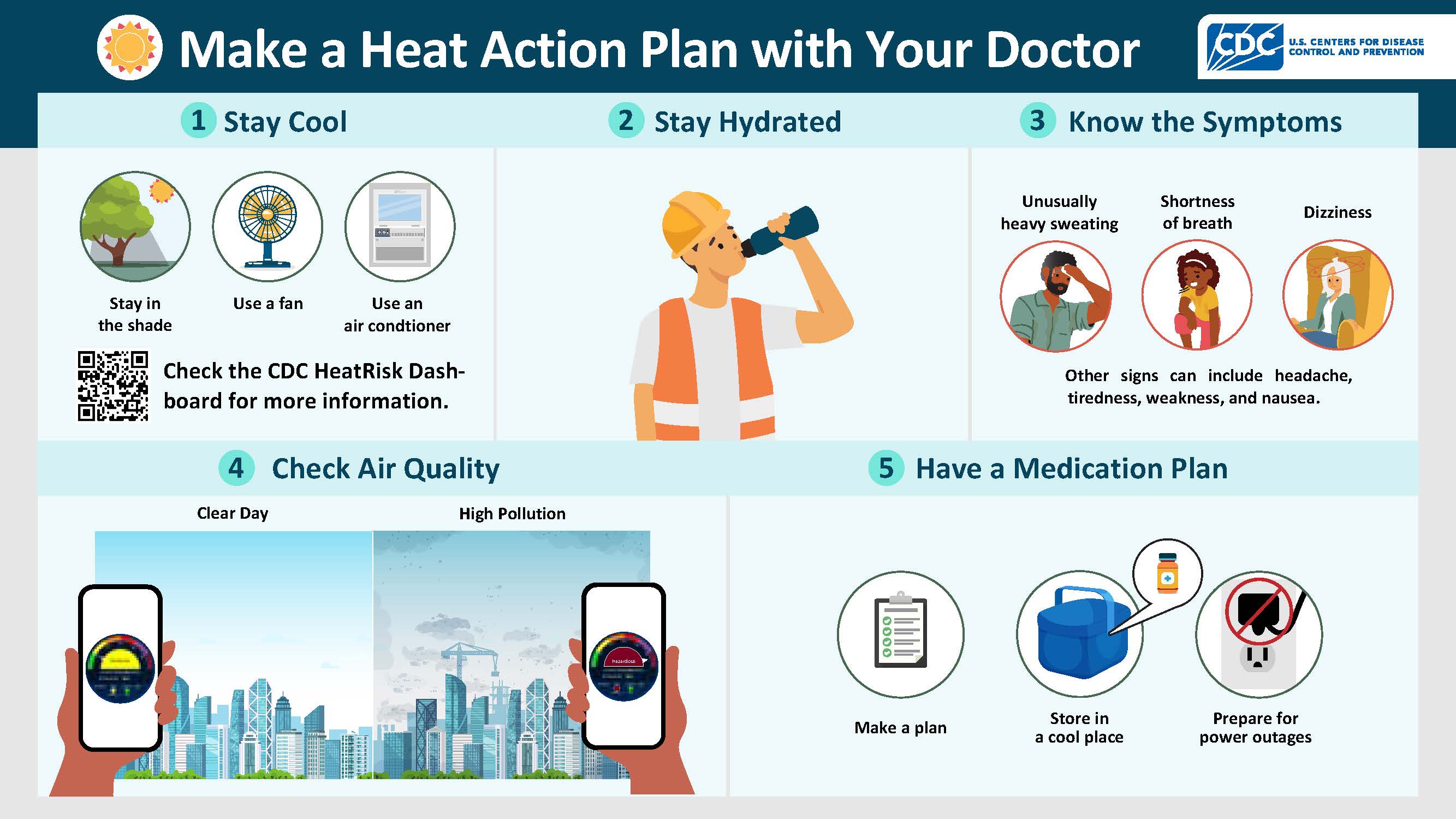
- Stay hydrated. Drink plenty of non-alcoholic fluids and stay out of the sun when possible. If you need to be outside during the high heat, wear a hat, loose clothing, and try to stay in the shade as much as possible. Get somewhere cool quickly if you experience dizziness, nausea, headaches, or muscle cramps.
- Keep your home cool. If you don’t have air conditioning, keep your shades and windows closed during the daytime. Open them in the evening when it’s cooler outside. Use fans to circulate air indoors. However, in temperatures above 90°F, a fan can increase body temperature.
- Visit a cooling center. If your home gets dangerously hot, go to a cooling center in your community such as a library or community center. To find a cooling center, call 2-1-1, visit the National Center for Healthy Housing’s Cooling Centers by State
- Watch for these symptoms of overheating so you’ll know when to get medical care. They can include muscle cramping, unusually heavy sweating, shortness of breath, dizziness, headaches, weakness, and nausea.
- Never leave children or pets in vehicles. Even with windows cracked, the temperature inside a car can rise quickly and become deadly.
- Check on others. Make sure neighbors, friends, and family are safe – especially those who live alone or have health conditions.
- Be cautious around water. Lakes, rivers, and the sea can be a good option to stay cool but avoid diving or swimming in deep water.
- Stay fire-safe. The fire risk is high statewide with wind gusts up to 35 mph in some areas.
For more advice on how to stay safe, visit the National Weather Service website.