
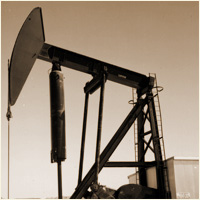
 Rules to address methane emissions from new and existing sources in the oil and gas industry are being finalized by the U.S. Environmental Protection Agency.
For new and modified sources, the EPA is finalizing standards that will reduce methane, volatile organic compounds, and toxic air emissions. The EPA is also starting the process to control emissions from existing sources by issuing a request for public comment that requires companies to provide information to the EPA.
“Together these new actions will protect public health and reduce pollution linked to cancer and other serious health effects while allowing industry to continue to grow and provide a vital source of energy for Americans across the country,” said EPA Administrator Gina McCarthy.
The actions, announced Thursday, are part of the administration’s strategy under President Obama’s Climate Action Plan to reduce methane emissions. They keep the administration on track to achieve its goal of cutting methane emissions from the oil and gas industry by 40 to 45 percent from 2012 levels by 2025, McCarthy said.
However, Public Citizen, a consumer advocacy group, thinks emissions from existing oil and gas operations need to be regulated sooner. The EPA’s request to get information from industry will take time and it could be another several years before a final rule that applies to existing operations is developed.
“The climate simply can’t wait that long,” said Tyson Slocum, director of Public Citizen’s Energy Program. “The EPA can and should start working on a rule to cover existing methane emissions now.”
Research into one of America’s two major oil fracking sites found that the Bakken Shale is leaking 275,000 tons of methane annually, Slocum said.
Methane, the key component of natural gas, is a potent greenhouse gas with a global warming potential more than 25 times greater than carbon dioxide. Methane is the second most common green house gas emitted in the United States from human activities. Nearly one-third of these emissions comes from oil production and the production, transmission, and distribution of natural gas.
The final standards for new and modified sources are expected to reduce 510,000 tons of methane in 2025, the equivalent of reducing 11 million metric tons of carbon dioxide. Natural gas that is recovered as a result of the rule can be used on site or sold.
The EPA estimates the final rule will have climate benefits of $690 million in 2025, which will outweigh estimated costs of $530 million in 2025.
The standards also are expected to reduce 210,000 tons of ozone-forming VOCs in 2025, along with 3,900 tons of air toxics, such as benzene, toluene, ethylbenzene, and xylene.
Ozone is linked to public health effects, including reduced lung function, asthma attacks, asthma development, emergency room visits and hospital admissions, and early death from respiratory and cardiovascular causes. Air toxics are known or suspected to cause cancer and other health effects.
More information is available at https://www3.epa.gov/airquality/oilandgas/index.



