Women’s Equality Day is August 26. On August 26, 1920, women were granted the right to vote when the 19th Amendment to the U.S. Constitution was ratified.
The 19th amendment guarantees all American women the right to vote. Achieving this right required a long and difficult struggle, with victory taking decades of agitation and protest. Beginning in the mid-19th century, several generations of woman suffrage supporters lectured, wrote, marched, lobbied, and practiced civil disobedience to achieve what many Americans considered a radical change of the Constitution. Few early supporters lived to see final victory in 1920.
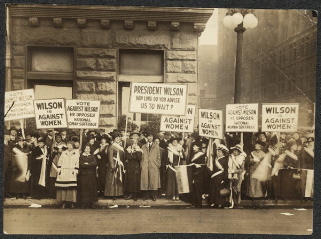
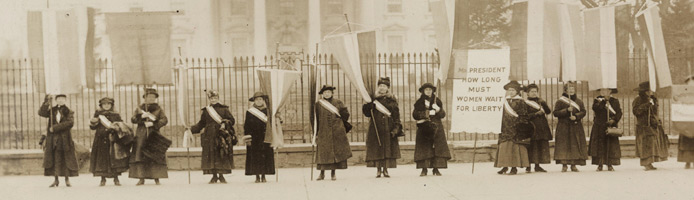
Beginning in the 1800s, women organized, petitioned, and picketed to win the right to vote, but it took them decades to accomplish their purpose. Between 1878, when the amendment was first introduced in Congress, and August 18, 1920, when it was ratified, leaders of voting rights for women worked hard, but strategies for achieving their goal varied. Some pursued a strategy of passing suffrage acts in each state – nine western states adopted woman suffrage legislation by 1912. Others challenged male-only voting laws in the courts. Militant suffragists used tactics such as parades, silent vigils, and hunger strikes. Supporters were often met fierce resistance. Opponents heckled, jailed, and sometimes physically abused them.
By 1916, almost all of the major suffrage organizations were united behind the goal of a constitutional amendment. When New York adopted woman suffrage in 1917 and President Woodrow Wilson changed his position to support an amendment in 1918, the political balance began to shift.
On May 21, 1919, the House of Representatives passed the amendment, and two weeks later, the Senate followed. When Tennessee became the 36th state to ratify the amendment on August 18, 1920, the amendment passed its final hurdle of obtaining the agreement of three-fourths of the states. Secretary of State Bainbridge Colby certified the ratification on August 26, 1920, changing the face of the American electorate forever.
It’s difficult to believe that women weren’t able to vote in America until 1920, and women who worked for equality were often scorned. But in some other countries, it took even longer. In Argentina, it was 1947; Bangladesh, 1972; Cambodia, 1955; Egypt, 1956; Greece, 1952; India, 1950; Iran, 1963; Jordan, 1974; Qatar, 1999; Spain, 1931; Switzerland, 1971; and United Arab Emirates, 2008.
For more details, see the website Women Suffrage and Beyond. It’s article, “The Dates Provided Here Supply Only a Beginning to the Complicated Evolution of Enfranchisement Around the World,” points out that in some countries women and others could vote in national elections, but not local. In addition, in some countries women were granted the vote, but other groups, such as Indigenous women, as well as men, weren’t allowed to vote. Poverty, imprisonment, a transitory lifestyle, and voter suppression also prevent people from voting.