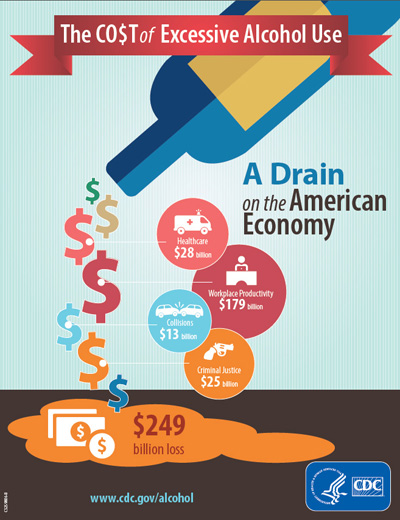
 Excessive alcohol use continues to be a drain on the American economy, according to a study released Thursday by the Centers for Disease Control and Prevention.
Excessive drinking cost the United States $249 billion in 2010, or $2.05 per drink, an increase from $223.5 billion, or $1.90 per drink, in 2006. Most of these costs were due to reduced workplace productivity, crime, and the cost of treating people for health problems caused by excessive drinking.
Binge drinking, defined as drinking five or more drinks on one occasion for men or four or more drinks on one occasion for women, was responsible for most of the costs, 77 percent. Two of every $5 of costs – more than $100 billion – were paid by governments.
“The increase in the costs of excessive drinking from 2006 to 2010 is concerning, particularly given the severe economic recession that occurred during these years,” said Robert Brewer, M.D., head of CDC’s Alcohol Program and one of the authors of the study.
Brewer said prevention strategies can reduce excessive drinking and related costs in states and communities, but they’re not used enough.
Excessive alcohol consumption is responsible for an average of 88,000 deaths each year, including one in 10 deaths among working-age Americans ages 20-64.
Excessive alcohol use cost states and the District of Columbia a median of $3.5 billion in 2010, ranging from $488 million in North Dakota to $35 billion in California.
Washington D.C. had the highest cost per person, $1,526, compared to the $807 national average, and New Mexico had the highest cost per drink, $2.77, compared to the $2.05 national average.
The 2010 estimates are based on changes in the occurrence of alcohol-related problems and the cost of paying for them since 2006.
However, the researchers think that the study underestimates the cost of excessive drinking because information on alcohol is often underreported or unavailable, and the study didn’t include other costs, such as pain and suffering due to alcohol-attributable harms, he said.