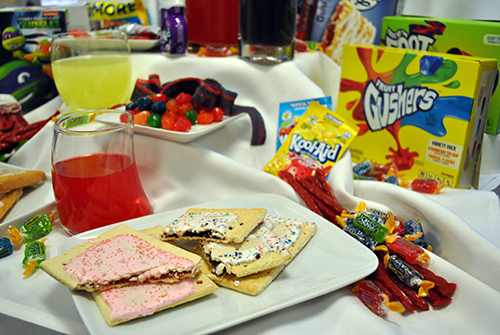
Always check the ingredients label of processed food for synthetic dyes and for high levels of added sugar. If a product contains either, you are better off not buying it, especially for your kids.
About 19 percent of packaged foods and beverages contain synthetic food dyes, according to research evaluating 39,763 U.S. grocery store products. The findings were published recently in the Journal of the Academy of Nutrition and Dietetics.
Synthetic dyes are often used to make products more appealing, especially those marketed to children, but more and more research suggests they may cause or worsen behavioral problems such as hyperactivity and inattention.
Researchers at The George Institute for Global Health, the University of North Carolina, and the Center for Science in the Public Interest assessed ingredient data for packaged foods and beverages produced by the top 25 U.S. food manufacturers. They also looked specifically at the products in the top five food categories most often marketed to children – confectionery, sugar-sweetened beverages, ready meals, breakfast cereals, and baked goods like cakes, cookies, and pastries.
Products in these categories were more likely to contain synthetic dyes – they were found to be present in 28 percent compared to just 11 percent of those in the remaining categories. In addition, the average sugar content of products containing synthetic dyes was 141 percent more than in those without the dyes (33.3g/100g versus 13.8g/100g).
The continued presence of synthetic dyes in the food system is a cause for concern, Elizabeth Dunford, Ph.D., research fellow at The George Institute and adjunct assistant professor at the University of North Carolina, said in a statement.
“Given the accumulation of evidence over the last 40 years pointing to the health harms of synthetic dyes, it’s disappointing to see that they’re still so prevalent in our food system, particularly in products that are designed to appeal to children,” Dunford said.
“The high levels of sugar in these brightly colored products suggests that companies are using synthetic dyes to market sweet foods and beverages, but both ingredients are linked to poor health outcomes,” she said.
In the study, confectionery companies had the most products containing synthetic dyes, with Ferrero, 60 percent, and Mars, 52 percent, being the worst offenders. More than half, 51 percent, of PepsiCo’s energy drinks contained synthetic dyes as well as 79 percent of all sports drinks, regardless of the manufacturer.
Synthetic food dyes are entirely unnecessary in the U.S. food supply but progress towards removing them has been slow, according to Thomas Galligan, Ph.D., principal scientist for food additives and supplements at the Center for Science in the Public Interest, a consumer advocacy organization.
“The FDA recently asked the food industry to voluntarily phase synthetic dyes out of the food supply, but many companies had previously made promises to stop using them and then failed to keep those promises. So, it remains to be seen if food companies will comply with this new request,” Galligan said.
“If the FDA were to require warning labels on synthetically dyed foods, similar to the rule in place since 2010 in the European Union, there would be a much stronger incentive for industry to reformulate,” he said. “Those warnings would also ensure consumers are better able to protect themselves from products sold by companies who choose not to phase dyes out entirely.”
Dunford said it was encouraging to see that dozens of U.S. states have now introduced bills taking aim at synthetic dyes this year, and the results of this research will likely to be immediately useful for policymakers as they progress this work.
He said until the regulatory process catches up with the science, don’t buy processed food with synthetic dyes and high levels of added sugar for yourself or your kids.