Public Citizen, a consumer advocacy organization, is outraged that record criminal fines aren’t stopping drug companies in America from using selling practices that harm consumers.
"The recent $2.3 billion settlement between Pfizer and the U.S. Justice Department for unlawful prescription drug promotion may sound large, but it’s not enough to ensure drug companies will curb their bad behavior," said Sidney Wolfe, M.D., director of Public Citizen’s Health Research Group, in a statement about the settlement.
Pfizer broke the record set by Eli Lilly & Co. in January for what was then described by the Justice Department as the "largest individual corporate criminal fine" in U.S. history. The fine was more than $500 million in criminal penalties for off-label promotion of Zyprexa, a drug used to treat the symptoms of psychotic conditions such as schizophrenia and bipolar disorder.
Pfizer record-breaking criminal fine of $1.2 billion is the largest criminal fine ever imposed in the United States for any matter. The rest of the $2.3 billion represents civil penalties.
The settlement focused mainly on Pfizer's promotion of Bextra, an anti-inflammatory drug pulled from the market in 2005 for safety reasons, reports the article "Pfizer Agrees to Record 2.3 Billion Fine" on The Washington Time’s Web site.
Authorities said Bextra had been approved in 2001 for only three ailments – uterus pain and two forms of arthritis. Pfizer had asked for Food and Drug Administration approval to have Bextra prescribed to treat all types of pain, but the FDA refused because of concerns about it causing blood clots in the heart.
But Pfizer marketed the drug as a general pain reliever anyway, though it remains unclear how many patients fell ill as a result, according to the article.
Public Citizen reports that American drug companies have a long history of criminal activities in selling drugs:
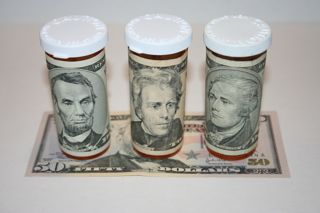
The U.S. pharmaceutical industry, long one of the most profitable in the country, with profits last year of close to $50 billion, has engaged in an unprecedented amount of criminal activity in the past decade, all aimed at increasing sales, often by illegally promoting drugs for diseases for which evidence that benefits outweigh harm is lacking – also known as illegal off-label promotion.
When doctors are induced, either by being bribed or misled by drug companies, to prescribe drugs for such purposes, there is a reasonable chance that the drugs will do more harm than good and patients may be seriously injured or killed by such promotion.
In addition to Pfizer and Eli Lilly (Pfizer also pleaded guilty to criminal charges for off-label promotion of Neurontin in 2004), other drug companies found to have engaged in criminal activity in the past 10 years include Abbott, Schering-Plough, Astra-Zeneca, Purdue, and Bayer, Public Citizen reports.
"Unfortunately, the ever-escalating fines are unlikely to stop drug companies from continuing to bribe doctors because they represent just a fraction of drug company profits and no one has gone to jail," Wolfe said.
"Until corporate titans are forced to fork over a much larger proportion of their illegally gotten profits and are put behind bars, nothing will change," he said.