
![Lighting_sub[1]](https://ritarrobison.com/wp-content/uploads/2025/09/TPImport/6a00e55008157688340162fef5548b970d.jpg "Lighting_sub[1]")
On Jan. 1, new standards took effect that make incandescent light bulbs 25 to 30 percent more efficient. Incandescent light bulbs aren’t being banned, they’re being changed so they’re more energy efficient.
The new light bulbs will cut consumer’s energy bills and reduce emissions from power plants because less energy will be consumed, according to the Consumer Federation of America.
“Contrary to reports, incandescent light are not being banned, they are simply becoming more efficient,” Mel Hall-Crawford, director of the federation’s Energy Projects, said in a statement. “And consumers will have expanded choices, but will need to understand them so that when they go to the store they can buy the product that meets their needs best.”
A guide to help consumers understand the lighting choices they have under the new light bulb law is available from the federation and Consumers Union.
Called “How Many Tips Does it Take to Change a Light Bulb?”, the two-page guide offers information to make selecting a new light bulb simpler.
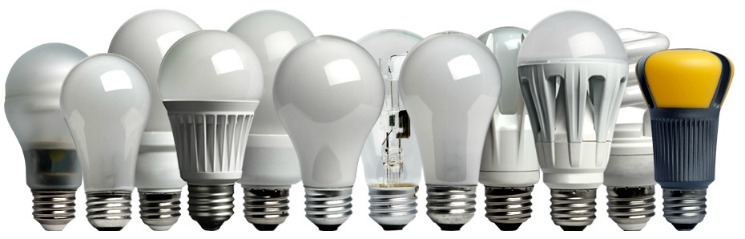
Here are the three choices available to consumers:
- Halogen incandescent – These look like the older bulbs, but use 25 to 30 percent less energy and can last up to three times longer. A new 72 watt energy-saving incandescent bulb, which replaces the old 100 watt bulb, will cost about $1.50 but each one will save about $3 over its lifetime.
- Compact fluorescent lamps – CFLs are the best value. They use about 75 percent less energy than older bulbs and last up to 10 times longer. A $2 CFL saves up to $50 over the bulb’s lifetime.
- Light-Emitting Diodes – LEDs will last up to 25 years, based upon usage of three hours a day, and save 75 percent, or more, in energy costs. However, they cost more than the other choices. Even though LEDs today cost about $25 per bulb, they’ll still save around $150 over their 25-year lifetime. As they become more widely used, it’s expected their prices will go down.
Many consumers have expressed concerns about using CFLs after learning that they contain small amounts of mercury and require special cleanup if they break in the home, such as cutting out the square of carpet where the CFL broke.
The consumer light bulb brochure has this advice:
Even with the small amount of mercury, CFLs actually reduce mercury in the environment because they reduce the amount of mercury produced by power plants. Intact and in use, CFLs release no mercury. However, like nearly everything else in your house, they need to be properly recycled and cleaned up, if broken. Many retailers recycle CFLs for free.
Go to http://www.epa.gov/cfl for more information.
The guide also offers information on bulb brightness, color, dimming, and recessed lighting:
- Watts are a measure of the energy used, not the brightness the bulb gives off. If consumers are trying to replace their old 60 watt incandescent bulb with a bulb that gives off the same amount of light, they should look for one around 800 lumens.
- Consumers should look for 2700 to 3000 K light bulbs, if they want bulbs to match the color of older, traditional incandescents, often described as “warm white.” Light color is measured on the Kelvin temperature scale. Lower K numbers means more yellow light and higher K numbers mean whiter or bluer light. For a whiter light, look for 3500 to 4100 K and for a bluer light, look for 5000 to 6500 K.
- Not every LED or CFL bulb is dimmable. Check the packaging for information on this.
- Pear shaped or spiral CFL bulb shouldn’t be used inside a recessed ceiling can. They won’t shine the light down. Instead, choose an LED, CFL, or halogen reflector or flood light.
Since traditional 100 Watt incandescent light bulbs won’t meet the new light bulb standards, they’ll no longer be available at most stores.
Also see the U.S. Department of Energy’s “New Lighting Standards Begin in 2012” for more information.



The tip that not all CFL’s are dimmable is something that people need to be aware of.
Excellent article.
P.S. I found a place that has a great selection of light bulbs and great prices.
http://www.NorthernLightsUSA.com
USE coupon code BULBS10