By Rita R. Robison
The Federal Trade Commission is charging that the nation's largest third-party billing company placed more than $70 million in bogus "cramming" charges on consumers' phone bills in violation of a previous court order. The FTC is asking a federal court to make the company pay more than $52.6 million, the total amount that the company billed consumers and failed to refund.
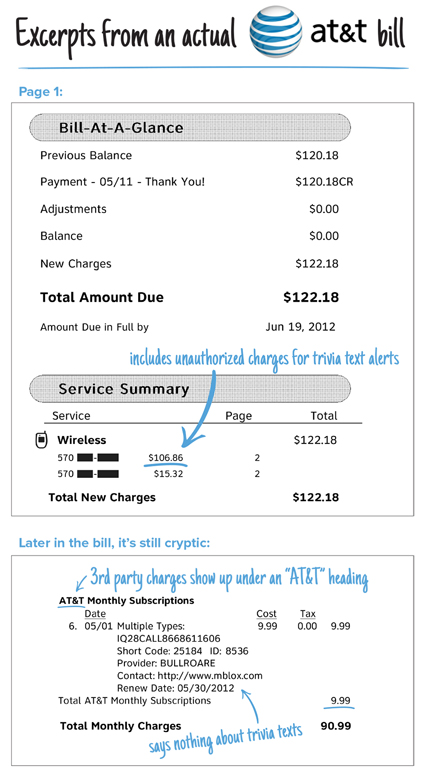
The FTC alleges that Billing Services Group placed charges on nearly 1.2 million telephone lines on behalf of a serial phone crammer. The charges were supposedly for "enhanced services," such as voicemail and streaming video, which consumers never authorized or knew about.
"BSG made it possible for con artists to steal people's hard-earned money by placing charges on phone bills for services they never ordered or used," David Vladeck, director of the FTC's Bureau of Consumer Protection, said in a statement. "Under previous federal court orders, BSG cannot profit from the fraud of others and then deny responsibility for the harm they made possible."
Billing aggregators act as intermediaries between third-party vendors and the local phone companies by contracting to have the local telephone companies collect charges for the vendors' services from consumers. "Cramming" is the placement of unauthorized charges on phone bills.
In a contempt motion, the FTC said BSG failed to investigate either the highly deceptive marketing for the services or whether consumers used them. BSG kept billing for these services despite many complaints from consumers and after major telephone companies refused to do so, the FTC's motion said.
The FTC alleges that by putting the bogus charges on consumers' phone bills, BSG violated the terms of a 1999 settlement with the agency, which prohibits unauthorized billing, misrepresentations to consumers, and billing for vendors who fail to clearly disclose the terms of their services.
The contempt action is the FTC's fourth action on extensive cramming by BSG entities. In addition to the 1999 order, the FTC obtained two other cramming orders against BSG companies: Nationwide Connections Inc., which addressed $34.5 million in charges for collect calls that never occurred, and Enhanced Services Billing Inc., which addressed crammed charges for enhanced services.
From 2006 through 2010, BSG illegally billed consumers for nine crammed "enhanced services," including three voicemail services, one streaming video service, two identity theft protection services, two directory assistance services, and one job skills training service, according to the FTC's motion.
The FTC's contempt motion said that BSG billed tens of thousands of consumers for voicemail boxes each month from July 2009 through March 2010, but consumers used only 209 mailboxes during that time. The motion also stated that BSG billed more than 250,000 consumers for a streaming video service, but only 23 total movies were streamed, some of them by the crammers' employees.
Despite overwhelming evidence of cramming, BSG billed consumers more than $30 million for the voicemail services and more than $12 million for the video service, according to the FTC.