The driving force behind Mother's Day was Anna Jarvis, who
organized observances in Grafton, W.Va., and Philadelphia on May 10, 1908.
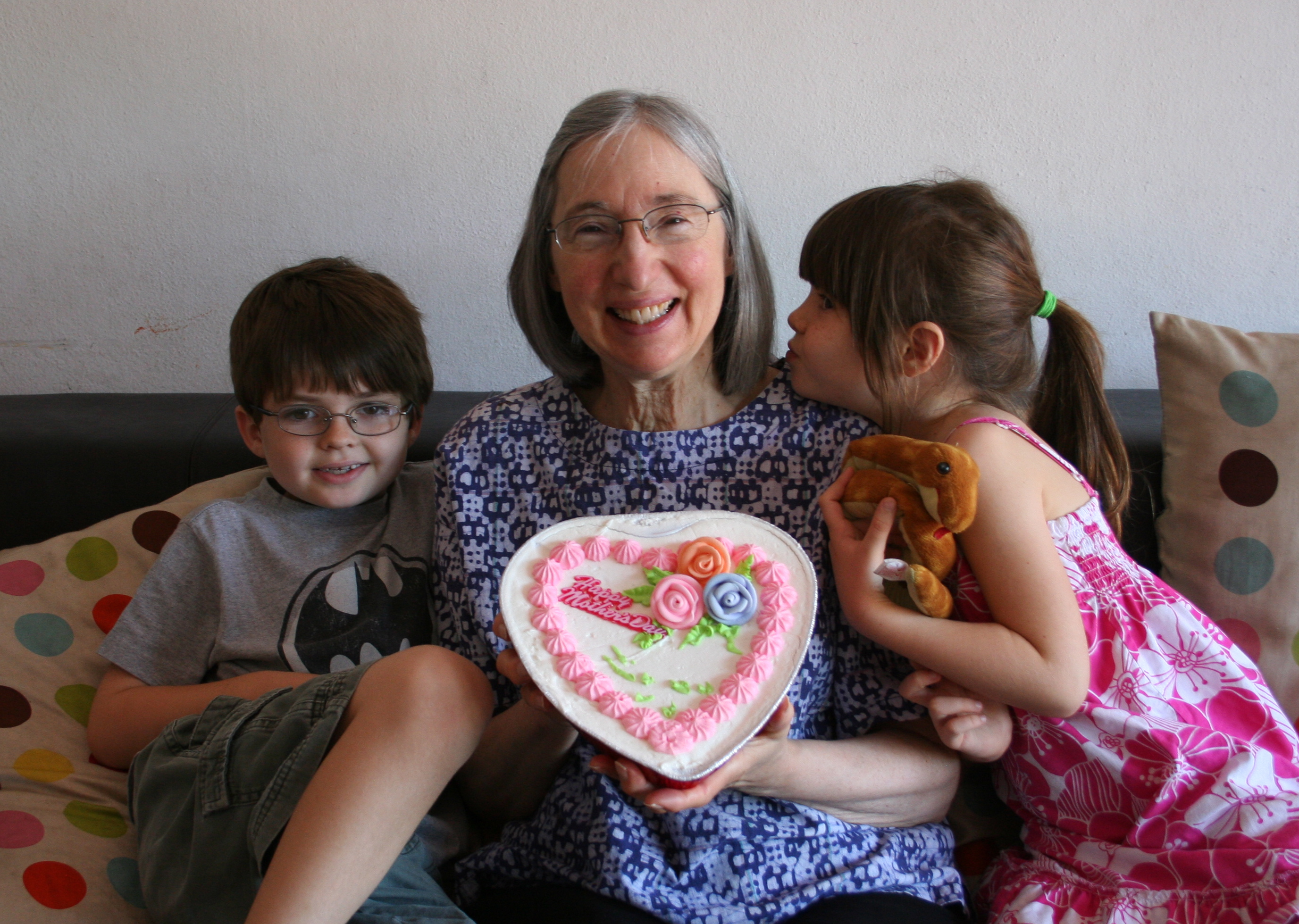 As the annual celebration became popular around the country,
Jarvis asked members of Congress to set aside a day to honor mothers. She
succeeded in 1914, when Congress designated the second Sunday in May as
Mother's Day.
What’s happening for Mother’s Day this year?
Consumers will spend an average of $168.94 on mom, up 11
percent from last year’s $152.52, according to a survey by the National Retail
Federation. Total spending is expected to reach $20.7 billion.
While traditional gifts such as flowers, clothing, and gift
cards will still be popular, many consumers will stretch their budget this year
and treat mom to a tablet, smartphone, or necklace she’s had her eye on.
The survey found 14 percent – the highest in the survey’s
history – of shoppers this Mother’s Day will spend more than $2.3 billion on
electronics, up from $1.6 billion last year. More than one-third of gift givers
will buy jewelry, spending a total of $4.2 billion, up from $3.7 billion last
year.
In addition, gift givers will spend money on a special outing, such as brunch
or dinner, $3.5 billion; flowers, $2.3 billion; gift cards, $2 billion;
clothing or clothing accessories, $1.7 billion; and personal service gifts,
such as a day at the spa, $1.5 billion.
Here are facts and figures from the U.S. Census Bureau on moms
for Mother’s Day this year:
How many mothers
4.1 million
Number
of women between the ages of 15 and 50 who gave birth in the past 12 months.
53%
Percentage
of 15- to 44-year-old women who were mothers in 2010.
81%
Percentage
of women who had become mothers by age 40 to 44 as of 2010. In 1976, 90 percent
of women in that age group had given birth.
2,449
The
fertility rate or estimated number births per 1,000 women in Utah in 2010,
which led the nation. The state with the lowest fertility rate is Rhode Island,
with 1,630.5 births per 1,000 women.
20%
Percentage
of all women age 15 to 44 who have had two children. About 47 percent had no
children, 17 percent had one, 10 percent had three, and about 5 percent had
four or more.
89.7%
Percentage
of all children who lived with their biological mothers in 2012. About 1.2
percent of all children lived with a stepmother.
Recent births
3.954 million
Number
of births registered in the United States in 2011. Of these, 329,797 were to
teens 15 to 19 and 7,651 to women age 45 to 49.
25.4
Average
age of women in 2010 when they gave birth for the first time, up from 25.2
years in 2009.
29.2%
The
percentage of mothers who had given birth in the past 12 months who had a
bachelor's degree or higher and 84 percent of mothers have at least a high
school diploma.
Jacob
and Sophia
The
most popular baby names for boys and girls in 2011.
Stay-at-home moms
5 million
Number
of stay-at-home moms in 2012 – about the same for 2009, 2010, and 2011 – down
from 5.3 million in 2008. In 2012, 24 percent of married-couples with children
under 15 had a stay-at-home mother, up from 21 percent in 2000. In 2007, before
the recession, stay-at-home mothers were found in 24 percent of married-couples
with children under 15 households, about the same for 2012.
Employed moms
62.1%
Percentage
of women age 16 to 50 who had a birth in the past 12 months who were in the
labor force.
Single moms
10.3 million
The
number of single mothers living with children younger than 18 in 2012, up from 3.4
million in 1970.
5.9
million
Number
of custodial mothers who were owed child support in 2009.
36%
Percentage
of births in the past 12 months that were to women age 15 to 50 who were
unmarried, including divorced, widowed, and never married women.
In
2011, 407,873 mothers who had a birth in the past 12 months were living with a
cohabiting partner.
So best wishes to moms everywhere on this important holiday. There’s no job more
difficult or rewarding than being a mom. What mom’s do every day in caring for
their children contributes to the health and wellbeing of our society.