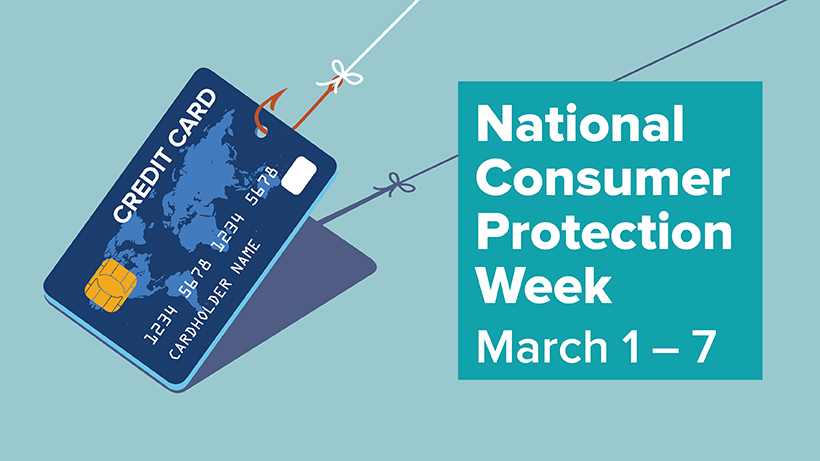
March 6-12 is National Consumer Protection Week.
It’s a time to learn about and share information to help people make more informed buying decisions and recognize, guard against, and report scams and fraud.
Here’s consumer information agencies and groups are offering this week to help you throughout the year:
- The National Consumer Protection Week website offers consumers information about their rights, and how to make informed buying decisions and report scams, identity theft, and unfair business practices. NCPW.gov also provides information on a many topics, including credit and debt, online safety, imposter and other scams, identity theft, and more. The site features a blog to update visitors on the latest consumer protection news, including legal actions, new resources and partner-sponsored NCPW events. Consumers also can get resources and promotional tools for their own consumer education activities, as well as information on filing consumer complaints.
- The Federal Deposit Insurance Corporation is releasing a new cybersecurity brochures for consumers. The brochure includes tips to help users protect and maintain their computer systems and data. In addition to expanded cybersecurity information available online, the FDIC is offering a special edition of the quarterly newsletter “FDIC Consumer News” featuring precautions consumers can take at home and when banking remotely using laptops, desktops, smartphones, and other mobile devices.
- The Consumer Federation of America offers information on banking and credit, consumer protection, insurance, investor protection, and savings and spending.
- Consumer Action has a list of publication it’s handpicked for NCPW to help consumers be informed and in control of their finances, privacy, and consumer rights.
- The Better Business Bureau shares a list of 10 websites that can help consumers protect themselves from fraud.
- AARP Colorado’s videos on foreign lottery, check fraud, grandparent, free lunch, travel, disaster, and tech scams can help keep consumers from getting ripped off by costly and devastating scams.
- U.S. PIRG prepares reports on a wide variety of topics helpful to consumers such as the cost of higher education, campaign financing, unsafe toys, mortgage complaints, the cost of transportation projects, and many more.
- FlexJobs warns consumers of three new job scams targeting work-at-home job seekers. (1) Reshipping Job Scam: Job seekers receive packages usually containing devices such as laptops or iPhones at their home. They test the products, then ship them to an overseas location. The items, however, have been purchased with stolen credit cards – scammers use the job seeker to smuggle the goods out of the country. (2) Post Office Job Scam: Scam artists target people looking for federal or post office jobs as their next victims. The scammers advertise in classified sections of local newspapers, or on sites such as Craigslist, and offer, for a fee, to help job seekers find and apply for federal or post office jobs. (3) Online Interview with a “Real” Company Job Scam: Scammers use the names of real companies to capitalize on the good company’s name and lure unsuspecting job seekers into their scam. Once they’re “hired,” they’re either scammed by providing their private information – such as a Social Security number, bank account info, or both – or they unwittingly become part of a crime by transferring stolen money or goods into or out of the country or across state lines.
- The National Consumer Law Center provides information on arbitration, which it says is a major impediment to consumers being able to settle their disputes fairly.
State agency websites and some local governments also offer valuable information for consumers on their websites.