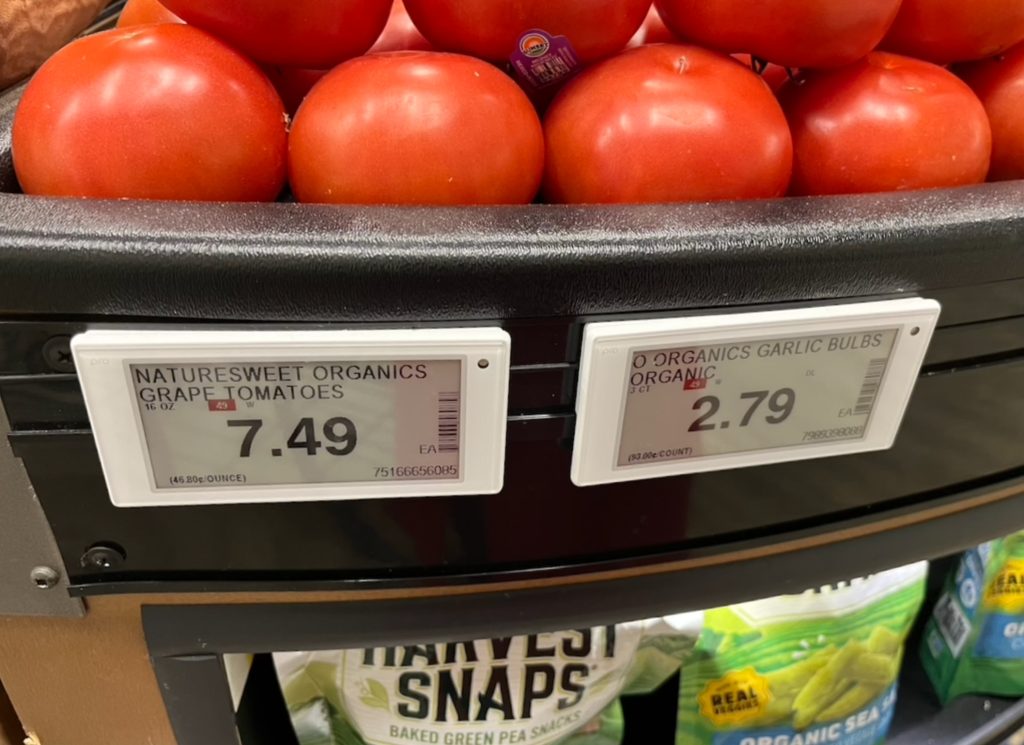
In January, Maryland Governor Wes Moore introduced the Protection From Predatory Pricing Act, a bill that prohibits dynamic pricing and the use of surveillance data to inform individualized pricing in the state’s grocery stores. The bill passed the legislature and the governor has been quoted as saying he can hardly wait to sign it.
“Marylanders deserve to know that the price they see on the shelf is the price they will pay at the register,” Moore said in a statement.
At a time when Marylanders are already stretched by the rising cost of groceries, housing, and everyday necessities, new technologies shouldn’t be used to drive up the bill for working families, he said.
The retail industry has increasingly adopted the use of electronic shelf labels, which allow stores to change prices instantly. Although major retailers say the new technology allows the streamlining of operations and the reduction of labor for manually updating tags, the change to electronic shelf labels enables “dynamic pricing.” With this pricing, the cost of basic household goods could surge based on the time of day, the weather, or granular consumer data – allowing stores to calibrate price increases to extract maximum profits from consumers. Granular consumer data is highly detailed and specific data points about consumers.
The bill, through a hotly debated legislative process, was supported by labor, privacy, and consumer and opposed by industry groups.
However, although Consumer Reports, an advocacy group, applauds the passage of the bill, it says the final draft falls short of adequately protecting consumers.
Several provisions of the bill, as amended by the legislature, undercut its ban on surveillance pricing, Consumer Reports said in a statement, including:
- Applying the ban only to using personal data to set higher prices without establishing any baseline or standard price; with no set standard price, everything can be marketed as a discount.
- Exempting any pricing associated with a loyalty or membership programs – even if the prices offered through a loyalty program are higher.
- Exempting any pricing associated with purchases made on a subscription basis or in association with a subscription service.
In addition, Consumer Reports said, the bill has weak enforcement. Consumers aren’t permitted to sue companies if they’ve been subject to surveillance pricing, a departure from Maryland’s primary consumer protection law. Only the Maryland Attorney General can bring suits, and is required to send companies a notice that they’ve violated the law and give them 45 days to fix violations without further legal ramification.
“Surveillance pricing can drive up the price of food,” said Grace Gedye, senior policy analyst at Consumer Reports. “Retailers have a lot of data about individual shoppers; how often we search for or hover over particular items, whether we live near competitor stores, inferences about our likes and dislikes, our dietary needs, our income, our family size, and more.”
Surveillance pricing allows companies to take advantage of this detailed information and charge you as much as they think you’re individually willing to pay, said Gedye.
“While it’s encouraging to see the Maryland legislature take up this issue, this bill has loopholes that will limit its real-world impact,” she said. “We urge other state legislatures considering personalized pricing legislation to build in stronger consumer protections and avoid loopholes that weakened this bill.”
Consumer Reports recently investigated Kroger’s consumer data practices and found that they were collecting vast data profiles for individual shoppers, with inferences about their income, family size, education level, gender, and more. One shopper who requested their data under a state privacy law received a 62-page profile.
The Maryland Retail Alliance, which strongly opposed the Maryland surveillance pricing bill when it was introduced, removed its opposition after the legislature added several exemptions.
Other states considering legislation against dynamic pricing are Pennsylvania, Arizona, Florida, Hawaii, Oklahoma, Kentucky, Nebraska, Tennessee, Illinois, Vermont, Virginia, and Washington. New York’s Algorithmic Pricing Disclosure Act requires businesses to disclose when they use algorithms to set prices.
To avoid surveillance prices, Kiplinger, a financial website, has these suggestions:
- Delete cookies and cache regularly.
- Use a virtual private network or VPN.
- Be wary of loyalty programs.
- Shop with different devices.
- Don’t make repeated searches.