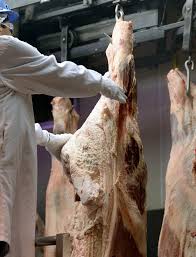
Faster line speeds at hog slaughter plants would endanger workers and the safety of food, Public Citizen, a citizen advocacy organization, said Wednesday. A proposal by the U.S. Department of Agriculture would increase line speeds from about 1,100 hogs per hour to speeds as high as 1,500 hogs, and transfer inspection duties from trained inspectors to plant employees who have received little or no inspection training.
The proposal would expand a pilot program that has been criticized by the federal government and by workers and their advocates.
“The safety of our food and workers should not be left in the hands of the very companies that aim to profit from hog-wild line speeds that are dangerously fast,” said Shanna Devine, worker health and safety advocate for Public Citizen’s Congress Watch. “Meatpacking workers already suffer from disproportionately high injury rates, and extensive documentation demonstrates that the meat industry is not capable of self-policing.”
The USDA should rescind its proposal immediately before further harm is caused to workers and consumers alike, Devine said.
Affidavits from USDA inspectors in 2014 described food safety violations at plants with higher line speeds. Workers reported inadequate training, insufficient time to identify fecal matter and diseases due to the faster line speeds, and pressure from management to overlook contaminated meat.
In addition, the U.S. Occupational Safety and Health Administration has said for more than 30 years that faster line speeds in meatpacking plants result in more workplace injuries. A 1993 OSHA publication recommended that plants lower line speeds to reduce the high rates of injury among meatpacking workers. Since then, the Government Accountability Office has sighted OSHA’s reports and the USDA’s watchdog, the Office of Inspector General, has warned about more food safety threats under the pilot program on which the proposal is based.
Worker and food safety problems are compounded by the meatpacking industry’s pervasive culture of intimidation and silence, as well as management that treats workers as expendable, she said. Meat workers are often people of color and immigrants, and they face risks of termination and threats of deportation for reporting safety concerns or becoming permanently disabled due to injuries that occurred on the line, Devine said, adding that unlike USDA inspectors, plant employees don’t have legal channels to challenge whistleblower retaliation.
In February, Public Citizen and 35 organizations asked the USDA to withdraw the proposal and stop its high-speed slaughter program. More than 60 members of Congress also opposed the program.
“The USDA should abandon this reckless proposal, which will lead to more worker injuries and contaminated food,” said Susan Harley, deputy director for Public Citizen’s Congress Watch. “The swine proposal puts workers and consumers in harm’s way to increase corporate profits and is in direct conflict with the USDA’s mission to ensure safe meat.”
Earlier this year, I wrote about another proposal that would increase the line speeds for slaughtering chickens from 140 per minute to more than 200 per minute.