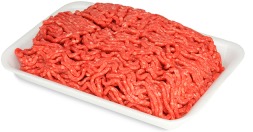
The U.S. Department of Agriculture needs to exercise its authority under the law to set and enforce more rigorous standards to protect consumers from Salmonella contamination in meat and poultry, a report by the Consumer Federation of America recommends.
Illnesses from Salmonella in the United States have remained about the same during the past decade. However, in the European Union, they’ve declined dramatically during the same period, to less than half what they once were, due to a farm-to-fork Salmonella control initiative launched in 2003.
In the last few months, a rash of Salmonella outbreaks linked to meat and poultry has caused hundreds of illnesses.
“USDA needs to develop more rigorous standards for Salmonella, and to establish more effective enforcement,” said Thomas Gremillion, director of the Food Policy Institute at the federation. “This report presents a straightforward roadmap for how to do so.”
The federation’s report explains why the law authorizes federal regulators to treat Salmonella as an adulterant in raw meat and poultry. The USDA has claimed that the law restricts how it can enforce limits on Salmonella contamination in meat and poultry. However, this legal interpretation relies on outdated precedent, according to the federation.
Reforms to reduce Salmonella in raw meat and poultry aren’t only legally authorized, but also economically feasible, according to the report, which explores more rigorous Salmonella control programs in foreign countries, and the barriers to adopting similar reforms in the U.S.
The report urges USDA’s Food Safety and Inspection Service to announce a rule under which the agency will consider raw meat and poultry “adulterated” if it’s contaminated with Salmonella. The report describes the pros and cons associated with five policy options for carrying out such a rule:
- Establishing a zero-tolerance approach to all Salmonella.
- Prohibiting particular Salmonella variations associated with human illness on raw foods.
- Prohibiting Salmonella strains associated with an ongoing outbreak.
- Prohibiting Salmonella resistance to certain medically important antibiotics.
- Prohibiting high loads of Salmonella.
“Any of these policies would protect public health better than the status quo,” said Gremillion.