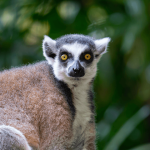
Photo: Wildlife Madagascar
Recently, I was lucky to get to go to San Diego for book signing to raise money for Wildlife Madagascar. The organization was founded in 2023 by my niece Debra Erickson. I was the first member of Wildlife Madagascar.

The speaker for the event was Keriann McGoogan, author of the book “Chasing Lemurs: My Journey into the Heart of Madagascar.”

As a 25-year-old Ph.D. student, she traveled to Madagascar to set up a site where she could later do research.

Madagascar is located off the southeastern coast of Africa, about 250 miles east of Mozambique, in the Indian Ocean. It is the fourth largest island in the world.

The topography of Madagascar is characterized by a rugged and mountainous interior that transitions to valleys and plains towards the coastal regions.

Madagascar has been isolated from mainland Africa and Asia for more than 80 million years and has developed a distinctive flora and fauna, with more than 90 percent of its species endemic to the island nation.

There are more than 100 species of lemurs.

Fifty percent of Madagascar’s forests have been lost since the 1950s.

Kerriann had many challenges getting to and establishing her field site.

Kerriann wanted to find out how lemurs behaved and where they lived.

Her site was remote. She and her team drove to the nearest village. Then they had to walk and camp in the bush. Kasijy is very remote and at the time of her field work, almost no researchers had been there to study the lemurs.

They had to bring food and gear for three months. Zebu, humped cattle, pulled supplies after roads were impassible by vehicles. Then porters were hired.

This is a village Keriann visited. As they made their way through the mountains, cooking was done over an open fire. Rice and beans were served for breakfast, lunch, and dinner. Rice tea was served, too.

This is the first lemur Keriann saw on her Madagascar adventure, a tiny mouse lemur.

After her supervisor returned to Canada, Kerriann was left with two guides, two cooks, and one other assistant. On June 26, 2006, she went out to the sandbar to use the satellite phone to call for help. Andry, the only person on her team who spoke English or French, had a high fever and was trembling. He thought he might have malaria. To find out how Keriann handled the emergency to help Andry, you can order her book from Amazon.

Debra gives an update on Wildlife Madagascar, a conservation organization dedicated to protecting Madagascar’s unique wildlife and habitats. Wildlife Madagascar has more than 500 members from 10 countries.

Wildlife Madagascar has brought three field sites into full operational status. It’s working on developing a fourth site.

In addition to conserving forest lands and protecting wildlife, Wildlife Madagascar has goals for research and working with communities to improve their economic health.

About 95 percent of lemur species are threatened with extinction, making them the most endangered primates in the world. Madagascar is the only country where lemurs are found.

The first two nurseries have been created at La Mananara and ASSR.

Ten lemur species, including the Van der Decken’s sifaka and the aye-aye, are found at Namoroka, along with 21 bat species, including fruit bats, and more than 100 bird species.

At each location, significant infrastructure improvements have been made.

After the presentations, guests enjoyed a dinner of homemade chili and cornbread.

Books also were signed.
Last year’s book for the book signing event featured “Lemurs of Madagascar.” This is one of the authors Tim Eppley, Ph.D. Order the book here. Read the article I wrote about him after the event. Eppley is chief conservation officer for Wildlife Madagascar.
Go to the Wildlife Madagascar website and become a member for $25. If you can, sign up to be a monthly donor, which helps the organization know how much money it can count on each month.