 Being a consumer journalist is helpful because you learn valuable things. When I was writing my weekly newsletter of financial tips, I ran across a Consumer Reports article on how to protect yourself from the coronavirus when grocery shopping.
In addition to shopping when it’s less busy and using a credit or debit card, Consumer Reports recommends washing nonporous containers and washing produce with soap and water. It said simple rubbing with soap and water can kill the coronavirus because it tears apart its outer barrier. Consumer Reports also said washing your fruit and vegetables with soap and water should eliminate any live virus. It recommends:
For hard-skinned produce, scrub skins or peels with a soft-bristled vegetable brush, using dish or hand soap and warm water. For other types of produce, including leafy greens, soak in soapy water for 10 to 15 minutes, then rinse thoroughly.
On a National Public Radio program, a scientist said the coronavirus lasts on stainless steel and plastic for up to 72 hours and on cardboard for up to 24 hours.
So, it seemed to me that I should take the time to wash my groceries. Here are my tips for this time consuming process:
- Clean off your counters and have your dishwasher empty before you go shopping. That’s because you need to have room to work and any dirty dishes can go right in the dishwasher.
- Use disposable gloves and paper towels. Get a paper bag to throw the used paper towels in so you can put them in the garbage when you’re finished. Have a different paper bag to put the grocery bags in so they can go in the recycling, if you have it. I usually reuse plastic bags and take reusable grocery bags to the grocery store. However, this time, due to the coronavirus, I used new plastic bags in the store and bought paper bags. In my community, they cost 5 cents each.
- Get a dishpan, bowl, or pan and fill it with warm soapy water.
- Open the cupboards and refrigerator handle in the same spot every time you open them because you’ll need to wash the areas you’ve touched.
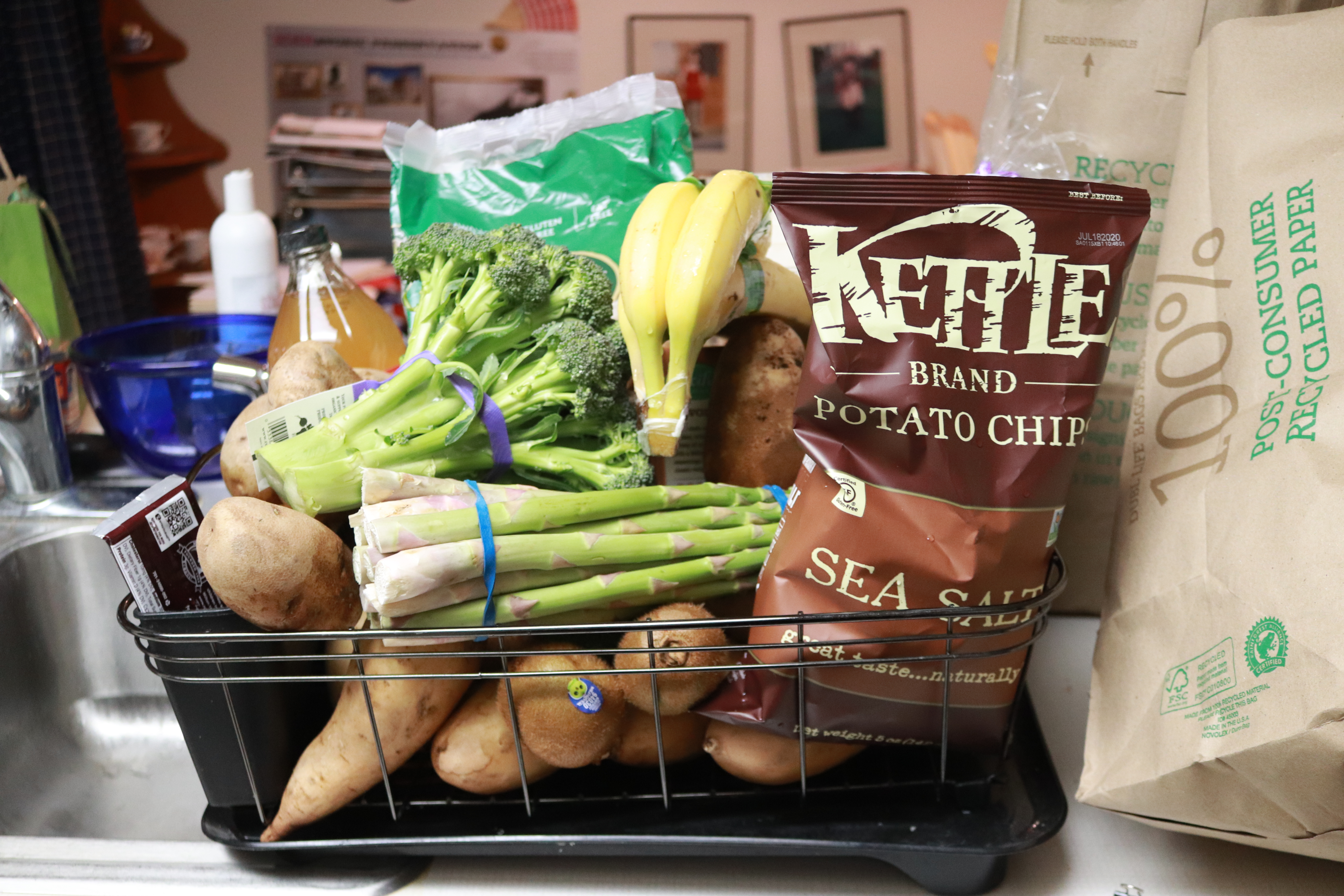
- Start with the nonporous items because they’re the easiest. I dunked my mine in the soapy water, rinsed them, and them put them in the dish drainer. However, when I reread the directions, I see that I should have rubbed the nonporous items. I had cans of food, potato chips, wine bottles, bottles of juice, pancake mix, bottles of vinegar, and cartons of rice milk.
- Rub shiny cardboard items with a paper towel dipped soapy water that you’ve squeezed most of the soapy water out of. Dry with a paper towel. Put in the cupboard.
- Dunk potatoes in the soapy water, scrub them with a brush, rinse very well, dry, and store. I didn’t scrub the bananas and kiwis, but maybe I should have. I just dunked them in the warm soapy water, rinsed, and dried them.
- Dunk asparagus and broccoli in soapy water, rinse very well, dry, and store.
- Pour berries out of the plastic container into a clean storage container and throw away the plastic container. I made a mistake here. I bought blackberries. I used the damp, soapy paper towel to wipe off the plastic container. Then, I rinsed the berries very well. However, when I ate them, I could taste the soap.
- Take eggs out of the paper container and put them in slots in the refrigerator or in an empty paper container that you’ve been meaning to recycle or take back to the store (if your store takes them). Put the container in the recycling bin.
- Check out what to do with frozen items. I bought frozen stew meat, and I put it in the freezer without wiping it off. I also bought bacon, which was wrapped in plastic, and put it in the freezer.
- Wash the counters and cupboard and refrigerator handles with soapy water when you’re finished.
- Put the paper bag filled with paper towels and the one filled with plastic bags in the garbage.
- Put the bag of grocery bags in the recycling or garbage. I usually use them to put garbage in, but due to the coronavirus, I’m not reusing them.
It took me more than two hours to wash 10 bags of groceries. It was a big job, but I guess I’ll keep doing it because I trust recommendations from Consumer Reports.
I had about two weeks’ worth of groceries, but I went Monday to buy more because I may need to stay home for a month.
I’m in the age group that’s not supposed to go out. I’ll have groceries delivered from now on.
It was very surprising to me that no one in the grocery store or the co-op was wearing a mask. At the co-op, the man who checked out my groceries was wearing disposable gloves. No one at Safeway had disposable gloves.
At the credit union, only one of the tellers was wearing a mask. The teller who helped me wore disposable gloves as was the teller wearing a mask.
In both places, I asked one of the employees to request to the manager that disposable gloves be provided to employees. Normally, I’d talk to the manager, but I wanted to get home.
I also skipped buying a lottery ticket. I haven’t won anything in months, so skipping a purchase Monday wouldn’t have made any difference.