
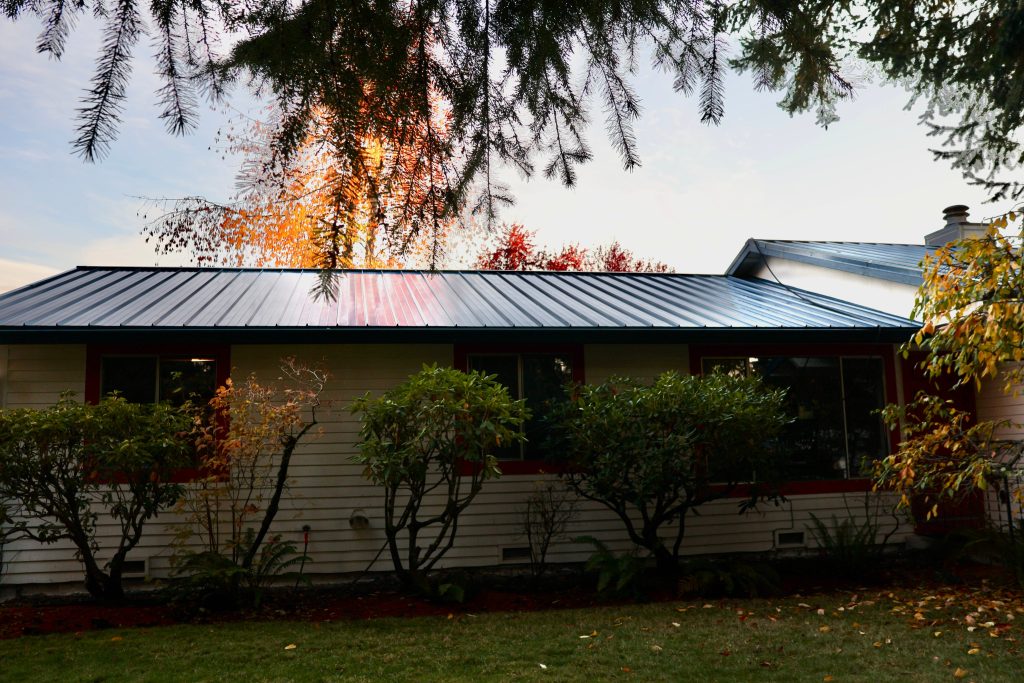
Tuesday, I got lucky. A local roofing company finally came and cleaned my metal roof.
I have a hard time getting them to schedule the job. Their first priority is installing new roofs because they make more money. Since it’s rainy in the Seattle area, they want to be installing roofs on good weather days. Therefore, cleaning is left to rainy days.
I’ve tried to find other companies to do the job. Most have said they would use a pressure washer. That doesn’t work. The warranty for my standing seam metal roof says the use of a pressure washer for cleaning would invalidate the warranty.
My roof looks beautiful now. It’s been three years since it’s been cleaned. I wish the company would come and clean it every year, but getting it scheduled is difficult. I must have called them 20 times or more this year.
A roof is an important part of protecting you and your home from harsh, winter weather. Snow, ice, wind, and water can cause damage to a roof that hasn’t been properly taken care of.
To get your roof ready for winter:
Inspect the roof for any loose, damaged, or missing shingles. They can cause water leaks that will damage your home. Look for moss or dark spots, which may mean there are moisture problems.
Replace any missing or damaged shingles right away. Only undertake repairs if you can do them safely. Use proper safety gear such as a harness. Falls from a roof can cause serious injuries and even death. Hire a roofing company if you can’t complete the repairs yourself. Schedule the repairs before winter comes.
Clean the gutters and downspouts. If the gutters are clogged, water can back up under the shingles or onto the roof leading to ice dams during freezing weather. Leaves, debris, and dirt can block gutters, which means they can’t direct water away from the roof and foundation.
Trim overhanging tree branches. They can drop leaves and branches into the gutters, scrape against the roof, and break off during storms and cause roof damage. Cut off any branches that are within 6 to 10 feet of your roof.
Check flashings and seals. The flashing is the metal at the joints. Make sure it’s secure and replace any damaged or deteriorated flashing. The base of the chimney, the edge of dormers, and around skylights, flues, and plumbing are often trouble spots.
Inspect the attic. Look for signs of water damage such as brown spots, peeling paint, and mildew smells.
Check roof ventilation. Make sure it’s intact and free of debris.
Examine the ridge vent. They run along roof peaks and need to be checked for wind damage.
Clean off roof debris. Leaves and branches can trap moisture and promote moss or algae growth. They also can prevent rain and melting snow from draining off the roof causing water or ice damage.
Check the chimney for cracks or lose bricks. Rain and snow can make minor issues worse. Repair any problem areas to prevent further damage.
I’m glad roofers got my roof cleaned this week. If there had been any problems, I could have scheduled repairs.



