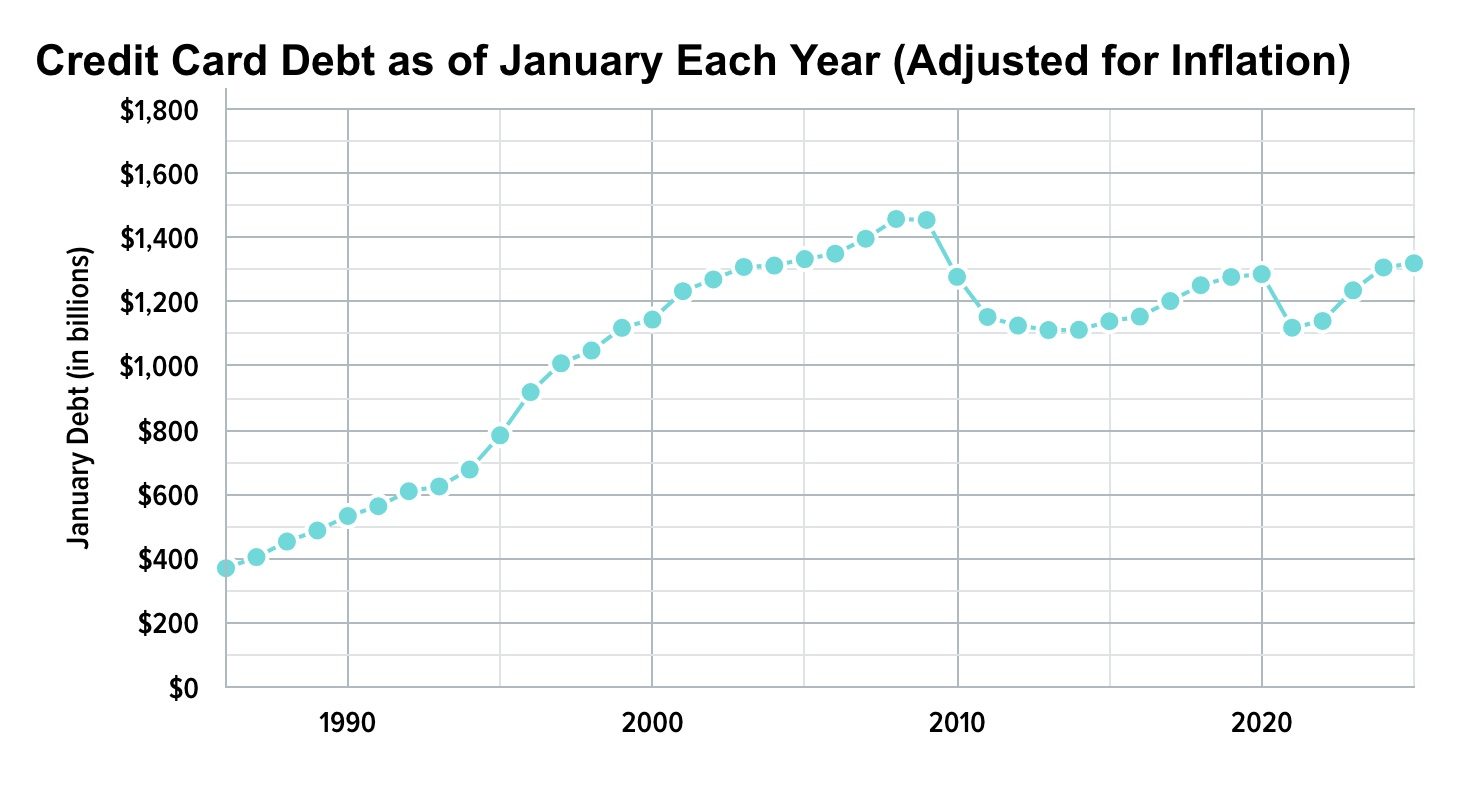
Consumers added $86 billion in credit card debt during 2025, an increase that was about 75 percent larger than the increase in 2024, according to a report by WalletHub, a personal finance website.
The $86 billion was about 9 percent below the record high.
“Credit card debt is surging back in a big way,” John Kiernan, WalletHub editor, said in a statement.
Kiernan said consumers managed to keep things together for much of 2025, but the expensive holiday season seemed to have doomed them.
“We racked up a whopping $73 billion in credit card debt during the fourth quarter of the year alone, pushing our total for the year to roughly $86 billion in new debt,” he said.
The average household credit card balance was $11,507 at the end of 2025, after adjusting for inflation. That’s $1,596 below the record high.
With high credit card debt, consumers should prioritize reducing debt in this difficult economy, made even more volatile by the War in Iraq.
In its report, WalletHub offers these suggestions for reducing debt:
· Make a budget and stick to it
Rank-order your expenses – including debt payments, emergency fund contributions, and other savings – and trim the fat, if necessary. Once you develop your budget, make sure to stick to it. Using a budget app can make the process easier to manage.
· Build an emergency fund
Your goal should be to gradually save about a year’s worth of after-tax income. Set aside a small amount every month until you have a nice cushion.
· Reevaluate your job situation
In some cases, budgeting and planning won’t be enough to solve your debt problems. You may need to explore higher-paying job opportunities or consider getting new skills to make yourself more marketable.
· Repay your most expensive debt first
Most people with serious credit card debt have multiple balances. If that’s the case, try the “avalanche method.” That means putting the majority of your monthly debt payment toward the balance with the highest interest rate and making the minimum payment required on the rest. After your most expensive debt is paid off, repeat the process until you’re debt-free.
When you reduce your debts, you’ll be better able to achieve your financial goals, including having a financial cushion during tough economic times.