The U.S. Consumer Product Safety Commission, or CPSC, is limping along under Trump’s administration, with the result being less enforcement of the agency’s rules and a reduced willingness to move forward with a positive safety agenda for the American people.
Neck floats rule

The agency announced Thursday that it has approved a consumer product safety standard to improve the safety of neck floats, an water toy for use by children ages 1 to 4. The new federal mandatory standard is aimed at preventing deaths and injuries to infants from drowning.
Neck floats are ring-shaped tubes that wrap around a child’s neck and are designed to allow the child’s head to float above the water while supporting their body.
The CPSC has received reports of 115 incidents involving neck floats, including two reports of infant deaths and two hospitalization injuries, between January 2019 and January 2024.
“Neck floats have always been a suspect product, offering caregivers a false sense of security,” CPSC Acting Chairman Peter A. Feldman said in a statement. “This rule is consistent with CPSC’s mandate to protect the most vulnerable and gives us stronger tools to combat drowning – the leading cause of death among children ages 1 to 4.”
The rule takes effect 180 days after publication in the Federal Register.
Water beads rule
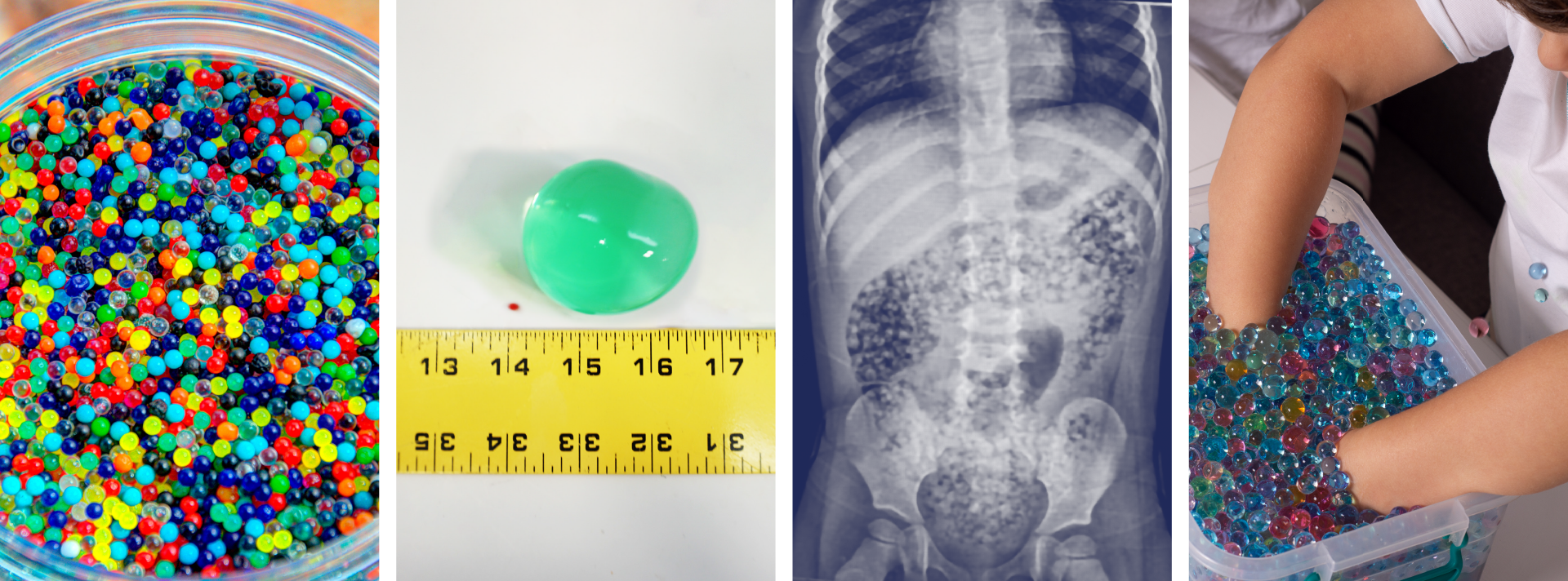
The CPSC also announced Thursday that it has approved a standard for water bead toys, various shaped liquid absorbent polymers, which expand when soaked in liquid.
The new rule is aimed at reducing the risk of injury or death associated with children ingesting, inserting into their ear or nose, or aspirating or choking on water bead toys.
It sets a maximum expansion size limit to prevent the beads from becoming large enough to cause problems, establishes limits on the amount of allowable acrylamide to reduce toxicity risks, and requires warning labels.
“China has flooded our market with hazardous water bead toys that have already cost lives,” said Feldman.
From 2017 to 2022, an estimated 6,300 water bead-related ingestion injuries were treated in U.S. emergency departments. There was one reported death of a 10-month-old girl in 2023 due to water bead ingestion.
The rule takes effect 90 days after publication in the Federal Register.
Rules withdrawn
While these two new regulations should be applauded, on Wednesday the CPSC announced it will withdraw at least 10 existing and pending rulemakings. The agency said in a statement that they “no longer align with agency priorities,” and fail to advance safety.
Feldman said the move signals a fundamental shift under the CPSC’s new leadership and going forward, the agency will act where mandatory standards are necessary and the evidence shows federal intervention will meaningfully advance safety.
“We will not squander limited resources on rules that diminish consumer choice or hand unfair market advantages to foreign competitors at the expense of American consumers and manufacturers,” he said
The CPSC is withdrawing proposed rules intended to mitigate product safety dangers, including hazards posed by:
- Table saws.
- Recreational off-highway vehicles.
- Debris penetration through the floorboard or wheel well of off-highway vehicles.
- Aerosol duster products.
The agency is also rescinding its guidance on the value of statistical life, reducing how much the agency will value the worth of a human life in its deliberations and rulemaking.
In addition, earlier this year, the CPSC concluded its review on the safety on gas stoves, deciding it won’t regulate gas stove emissions or ban the stoves.
“The withdrawal of vital safety rulemakings is not grounded in evidence or morality, but in politics and cruelty,” Daniel Greene, the senior director of consumer protections and product safety for the National Consumers League, a consumer advocacy group, said in a statement. “Hazardous table saws, toxic aerosol dusters, and structurally weak recreational vehicles are a choice, not an inevitability.”
Greene said the CPSC chose less safety and more amputations, impalements, and poisonings.
“It’s time for Congress to do what the CPSC won’t – put safety first and require these safety standards by law.”
The fate of the CPSC in the Trump administration’s regulatory scheme is still undetermined. It has proposed eliminating the CPSC and transferring the agency’s functions to Health and Human Services Department.
Consumer and health groups oppose the proposal. They say the change would jeopardize consumer protections and create bureaucratic hurdles that would delay critical safety actions.
President Trump also is exerting his authority over the CPSC, as he has with other independent agencies, by firing three Democratic CPSC commissioners.