The average price of a new car is more than $50,000, the highest in history, placing added stress on car shoppers to make sure they’re making a smart choice on a model that will hold up well over the long term and be safe.
“Affordability continues to be a top concern for Americans, with prices rising on everything from groceries to cars,” Phil Radford, president and CEO of Consumer Reports, a consumer testing and advocacy organization, said in a statement.
For its 2026 Automotive Report Card, Consumer Reports road tested more than 200 new vehicles, reviewed safety performance, and analyzed reliability and owner satisfaction data from its member surveys – which included data on about 380,000 vehicles – to calculate overall car brand rankings.
Visitors to CR.org/cars can view each brand to see where it ranks on new car reliability, used car reliability, owner satisfaction, road test score, and maintenance and repair costs. They can also use AskCR to answers questions about their next car purchase.
In addition, Consumer Reports’ members will be able to get more data with access to the organization’s full and updated ratings of cars, trucks, and SUVs, which can be used to compare and models.
Consumer Reports provided the following summary of its analysis:
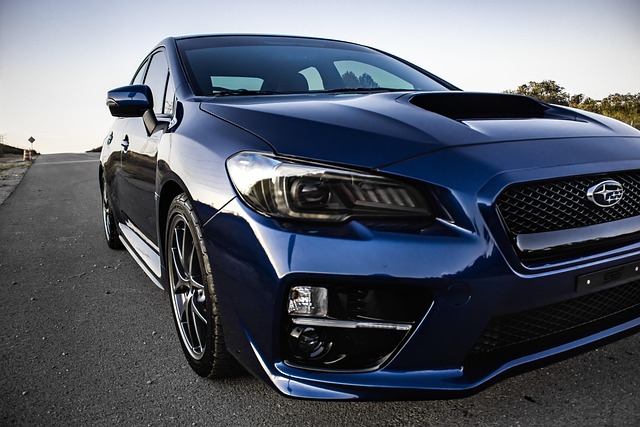
Subaru remains number one overall brand
Subaru is the top brand in Consumer Report’s 2026 Overall Brand Report Card Rankings for the second year in a row, and the third time in five years. BMW is again the runner-up by less than a point. Following in the top 10 are Porsche, Honda, Toyota, Lexus, Lincoln, Hyundai, Acura, and Tesla.
Lincoln, the highest-ranked domestic brand, made the biggest jump this year, climbing 17 positions the No. 7 spot due to its reliability scores. Audi dropped the most from last year, falling back 10 spots to No. 16.
Five of the top 10 overall brands are mainstream brands, meaning car shoppers don’t have to pay a luxury car price to get a high-quality vehicle.
The bottom five brands remain largely unchanged from last year: Dodge, GMC, Land Rover, Rivian, and Jeep. Jeep is last for the third year in a row due to below-average brand reliability, the lowest average road test score in Consumer Reports’ testing, and the lowest scoring brand for owner satisfaction.
Toyota wins for reliability in strong showing for Asian brands
Toyota is the most reliable brand in Consumer Reports’ latest Annual Auto Reliability Survey for the first time since 2022, narrowly edging out last year’s winner, Subaru. Improved reliability of the Camry, Tacoma, and Tundra, along with a solid initial showing for the redesigned 4Runner, combined to put Toyota back to the top spot, according to Consumer Reports’ analysts. Seven of the top 10 brands in the organization’s reliability rankings are headquartered in Asia, with Subaru, Lexus, Honda, Nissan, Acura, and Kia joining Toyota.
“Our surveys continue to show that the slow and steady approach to vehicle redesigns pays dividends for reliability, while more aggressive changes and the introduction of new technologies often lead to setbacks,” Jake Fisher, senior director of auto testing for Consumer Reports, said. “For reliability-conscious car shoppers, the best bet is to steer clear of newly-introduced or newly-redesigned vehicles in their initial model year, as that’s when they are almost always the most problematic.”
The news was not good for Mazda, which fell out of the top 10 to 14th place this year. The brand continues to experience problems with both the conventional and PHEV, or plug-in hybrid electric vehicles, versions of the CX-70 and CX-90 SUVs, with all models scoring below average or well-below-average.
Genesis fared even worse, sliding to No. 21 and lacking a single model with an average or better score for reliability.
Every year, Consumer Reports asks its members about potential trouble areas they’ve had with their vehicles in the previous 12 months. This year’s survey covers up to 20 problem areas, including engine, electric motors, transmission, in-car electronics, and more.
Consumer Reports uses that feedback from consumers to predict reliability ratings for new cars from every major mainstream model. This year, the organization gathered data on about 380,000 vehicles from the 2000 to 2025 model years, with a few newly introduced 2026 models.
The reliability predictions for 2026 models are based on each model’s overall reliability for the past three years, if the model hasn’t been redesigned during that time. If there’s insufficient data on a model in any given model year, Consumer Reports uses the brand reliability score in addition to that model’s new car prediction.
Ford and Tesla make big gains while Stellantis, other domestic brands struggle
Consumer Reports’ 2026 Auto Reliability Survey findings are mixed for U.S.-based manufacturers. Buick, as usual, ranks highest among them, coming in at 8th overall. Only the Enclave has below-average reliability.
Tesla is in 9th place, its highest ever placement in Consumer Reports’ rankings, due to improved reliability performance across its vehicles. Only the Cybertruck has a below-average score. Tesla appears to be resolving its build quality issues, while its powertrain reliability remains a standout among EVs.
Ford is the 11th-ranked brand, its best showing in 15 years. The F-150, F-150 Hybrid, and F-150 Lightning have improved from below-average to average for reliability.
Chevrolet, No. 17, and Cadillac, No. 18, are midpack, with the Chevrolet Equinox scoring well below average and the Cadillac Lyriq scoring below average.
Lincoln, No. 20, Chrysler, No. 22, GMC, No. 23, Jeep, No. 24, Ram, No. 25, and last-place Rivian are all in the bottom third of the rankings. The Lincoln Corsair PHEV, Chrysler Pacifica Hybrid, GMC Acadia, Jeep Grand Cherokee PHEV, Ram 1500, and Rivian R1T are all among the least reliable vehicles in this year’s survey.
BMW stands out among European brands
BMW is this year’s most reliable European brand, ranking fifth overall. All of its models have average or better predicted reliability scores.
Audi landed in the 13th spot. The Q4 E-Tron has declining reliability. Owners reported problems with the climate system, electrical accessories, in-car electronics, and some EV battery malfunctions and charging issues.
Volvo is in 15th place. The XC60 PHEV has a below-average reliability score, with owners citing problems with the EV battery, electric motor, drive system, climate system, electrical accessories, and in-car electronics.
Volkswagen ranks 16th. Both the Taos and Jetta are the least-reliable models in their respective categories.
Mercedes-Benz is the lowest-ranked European brand, ranking 19th. The E-Class and GLS are at the bottom of their respective categories for reliability.
Due to insufficient data, Consumer Reports doesn’t rank Alfa Romeo, Dodge, Fiat, Infiniti, Jaguar, Land Rover, Lucid, Maserati, Mini, Mitsubishi, and Porsche.
Hybrids are most reliable amid continued growing pains for plug-ins and EVs
When it comes to the reliability of electrified powertrains, hybrids continue to stand out. On average, hybrids have about 15 percent fewer problems than internal combustion engine cars, a significant factor for the growing number of Americans who are buying hybrids. A record 1.6 million were sold last year, according to the U.S. Department of Energy.
Of about 30 hybrids for which Consumer Reports has enough data, only the Hyundai Sonata Hybrid, Lincoln Nautilus Hybrid, and Mazda CX-50 Hybrid have below-average predicted reliability scores.
Consumer Reports’ survey shows both EVs and PHEVs continue to experience growing pains. On average, they have about 80 percent more problems than internal combustion engine cars. For half the brands in this year’s rankings, the least reliable car is a plug-in hybrid or fully electric vehicle. Seven of the 10 least reliable cars are either PHEVs or EVs, with issues related to EV battery, charging, and drive systems being among the commonly reported problems.
“With so many newly introduced EVs and PHEVs, along with the still relative newness of the technology, these growing pains were inevitable,” Fisher said. “However, we are seeing evidence in our survey that some EVs are improving as they age, and there are some reliable models available.”
More than a dozen EVs have an average or better score for predicted reliability, including models from Tesla, Ford, Toyota, Lexus, Subaru, and Hyundai. The Tesla Model Y is the most reliable EV. The Rivian R1T is the least reliable.
For more information on Consumer Reports’ 2026 Automotive Report Card findings, visit CR.org/cars.