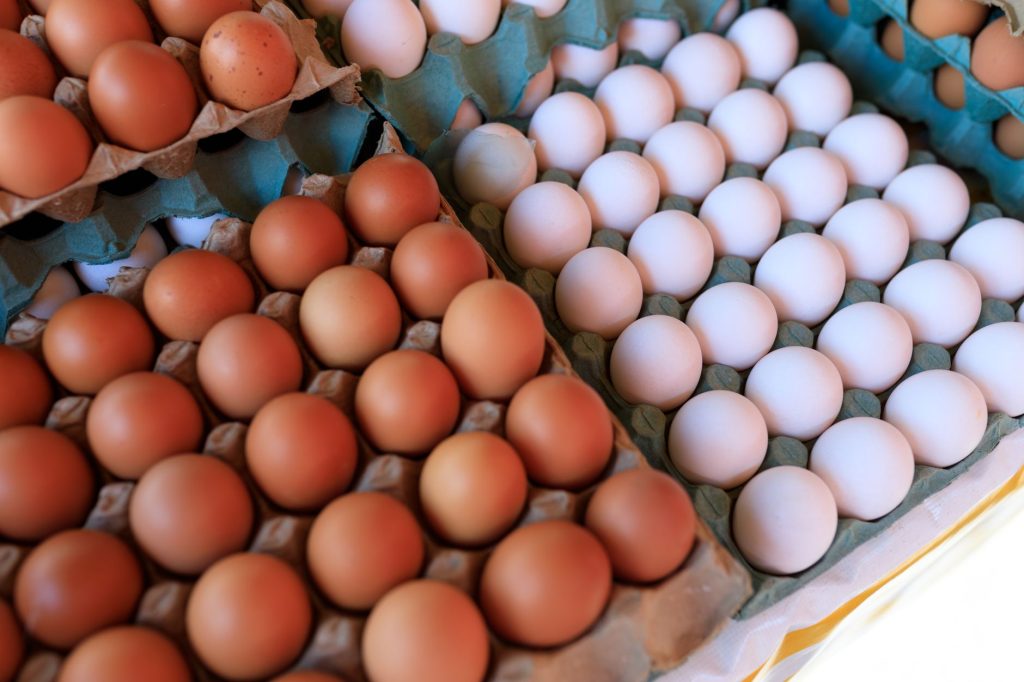
Egg producers Cal-Maine Foods, Versova, and Hickman’s have agreed to a settlement to resolve allegations from 17 attorneys general and the U.S. Department of Justice that they conspired to raise the cost of eggs nationwide.
As part of the settlement, the egg producers will pay $3.3 million to the states, agree to refrain from all conduct illegally conspiring to raise egg prices, and will donate more than 53 million eggs to food banks in the coalition states.
“As Californians scrambled to feed their families, three egg producers conspired to act illegally and hatched a plan to raise the cost of eggs nationwide,” California Attorney General Rob Bonta said in a statement.
Bonta said his office and its federal and state partners stepped in and California food banks will receive 8.9 million eggs.
From 2022 to 2025, egg prices nationwide underwent dramatic price increases, and in March 2025, the U.S. Department of Justice’s undertook an investigate on whether egg producers conspired to increase egg prices in violation of antitrust laws.
The investigation revealed that the parties hatched a plan to manipulate the market for egg pricing by coordinating to submit bids unlikely to be executed and inflated bids in order to drive up egg price quotes published by Urner Barry, a benchmark pricing service widely used in egg supply contracts.
For example, in December 2022, Hickman’s CEO emailed Versova and Cal-Maine executives urging them to submit “strong bids, early and often” to push prices higher. All three companies then submitted dozens of bids at higher prices, which led to Urner Barry increasing its price quotes.
By manipulating the Urner Barry benchmark, the companies artificially inflated the price of eggs paid by retailers and consumers across the nation.
Senator Jack Reed, D-RI, said that the egg price fixing settlement is a step forward, but doesn’t do enough to fix the broader issue and seems inadequate. Reed wants DOJ lawyers to show their math and be transparent about how they reached the final settlement figures.
“After years of calling for government probes and action, it is heartening to see that some industrial egg producers are being publicly named and shamed for manipulative practices,” Reed said in a statement. “They did real economic damage to consumers and farmers across the country.”
He said while he appreciate the hard work of investigators and attorneys, it sounded like the settlement, though well-intentioned, could be “soft boiled” and let bad actors off the hook too easy.
Reed said that during the egg price-spike period, Cal-Maine reported roughly $1.2 billion in profits – a four-fold increase over the previous year – and it also took $44 million in U.S. taxpayer support through avian influenza compensation payments. But Cal-Maine’s share of the proposed settlement is only about $1.5 million and allows them to deny wrongdoing, despite the payment.
“Instead of a light slap on the wrist, the industry needs real reform and more transparency when it comes to pricing practices,” said Reed. “American consumers should not have to pay unfairly high prices due to anticompetitive behaviors.
He said factory farms and big agri-businesses try to distort prices while manipulating public opinion, too, adding they tried to blame “eggflation” on animal welfare standards and avian influenza when the real root cause seems to be flat out greed and collusion.
“Congress should take concrete steps to help lower prices, protect consumers and small businesses, and ensure fairness in the marketplace,” Reed said. “Weak settlements leave taxpayers holding the bag and picking up the majority of the tab.”
In addition to California and the DOJ, other states joining the lawsuit and settlement are New York, Arizona, Colorado, Connecticut, Florida, Hawaii, Iowa, Maryland, Minnesota, North Carolina, Ohio, Pennsylvania, Texas, Utah, Vermont, and Wisconsin.