
This year, I had a nice crop of mulberries from my mulberry tree. Unlike last year, when I didn’t see many.
Even though the mulberries mature at the same time as my raspberry patch comes into full production, I’m able to eat all of the fresh fruit.
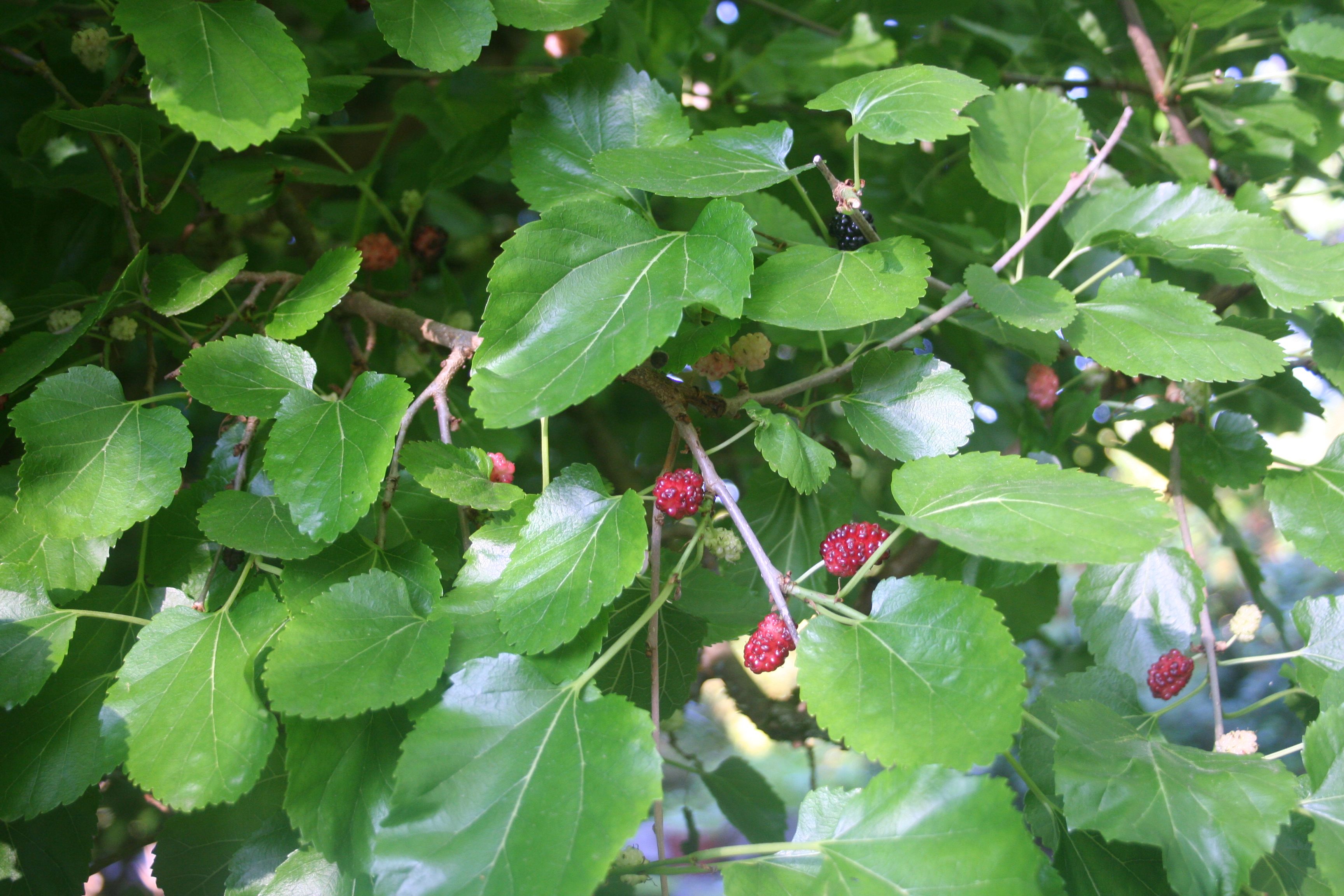
But, I’ve often wondered, “What do people do with mulberries?”
There are two common mulberry tree species, the native red mulberry (Morus rubra), and the Asian white mulberry (Morus alba), according to “Identifying and Harvesting Edible and Medicinal Plants in Wild (and Not So Wild) Places.”
The red mulberry has red unripe berries. They darken to black, with reddish undertones, when they’re ready to eat.
Other very similar, edible species include the Texas mulberry (Morus microphylla), and the black mulberry (Morus nigra).
Ripe mulberries come in different colors: red, white, pink, and black. These colors are attributed to two different species and their hybrids.
You can put a drop cloth under a mulberry tree, shake it, and then pick up the fruit. Do this on a nice day proceeded by sunny weather, because rain washes away berries’ flavor.
Use mulberries immediately. They won’t last more than a couple of days in the refrigerator. They soon ferment or get moldy, probably because of their high water content and thin skins. This is why you rarely seem them in stores. You can eat, cook, dry, and freeze mulberries.
Some recipes are:
Mulberry Crumble – The Wild Vegetarian Cookbook
Mulberry-Papaya Salad – “The Wild Vegetarian Cookbook”
Sattoo (porridge) – “The Wild Vegetarian Cookbook”
Mulberry Jam – Pick Your Own
Mulberry Bakewell Tart and Mulberry Gin – Telegraph
Mulberry Coulis – Trinity College Cambridge
Mulberry Pie – Cooks.com



