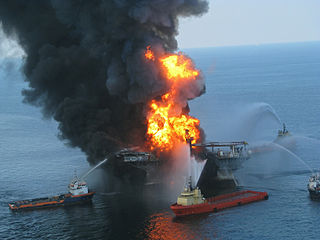
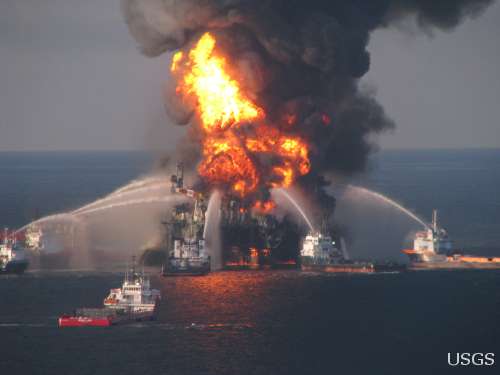
 The U.S. Department of Justice joined five Gulf states Monday in announcing a settlement to resolve a lawsuit against BP arising from the April 20, 2010 Macondo well blowout and the massive oil spill that followed in the Gulf of Mexico.
The settlement resolves the governments’ civil claims under the Clean Water Act and natural resources damage claims under the Oil Pollution Act, as well as economic damage claims of the five Gulf states and local governments.
It is worth $20.8 billion and is the largest settlement in the department’s history.
In addition, the Deepwater Horizon Trustees Council, made up of representatives of the five Gulf states and four federal agencies, has published a draft damage assessment and restoration plan and a draft environmental impact statement.
The plan includes an assessment of natural resource damage resulting from the spill and provides a plan for how the trustees will use the money from BP to restore the Gulf environment.
“Building on prior actions against BP and its subsidiaries by the Department of Justice, this historic resolution is a strong and fitting response to the worst environmental disaster in American history,” said Attorney General Loretta Lynch. “BP is receiving the punishment it deserves, while also providing critical compensation for the injuries it caused to the environment and the economy of the Gulf region.”
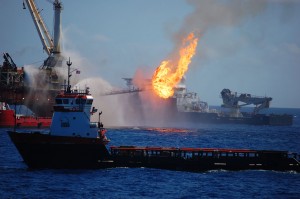
Eleven men aboard the Deepwater Horizon drilling rig were killed in the Macondo well blowout. The explosion and fire destroyed the rig and sent more than three million barrels of oil into the Gulf of Mexico in nearly three months.
Deep ocean water currents carried oil hundreds of miles away from the blown-out well, resulting in oil slicks that extended across more than 43,000 square miles, affecting water quality and exposing aquatic plants and wildlife to harmful chemicals.
Oil was deposited onto at least 400 square miles of the sea floor and washed up onto more than 1,300 miles of shoreline from Texas to Florida.
The spill damaged and temporarily closed fisheries vital to the Gulf economy, oiled hundreds of miles of beaches, coastal wetlands and marshes, and killed thousands of birds and other marine wildlife.
On Dec. 15, 2010, Attorney General Eric Holder announced a civil lawsuit against BP and several co-defendants. The federal government won the lawsuit, which proved that the spill was caused by BP’s negligence.
The Gulf States – Alabama, Florida, Louisiana, Mississippi, and Texas – also filed civil claims against BP relating to the spill, including claims for economic losses and natural resource damages.
Under the terms of a consent decree, BP will pay:
- $5.5 billion federal Clean Water Act penalty, 80 percent of which will go to restoration efforts in the Gulf region under the Deepwater statute, the RESTORE Act. This is the largest civil penalty in the history of environmental law.
- $8.1 billion in natural resource damages, including $1 billion BP already committed to pay for early restoration, for use by the federal and state trustees in restoring resources. BP will also pay up to an additional $700 million to address any later-discovered natural resource conditions that were unknown at the time of the agreement and to assist in adaptive management needs.
- $600 million for other claims, including claims for reimbursement of federal and state natural resource damage assessment costs.
The payments will be made over time, McCarthy said.
In addition, BP has entered into separate agreements to pay $4.9 billion to the five Gulf states and up to a total of $1 billion to several hundred local governments to settle claims for economic damages they’ve suffered as a result of the spill.
Notice of the consent decree and draft damage assessment and restoration plan have been published in the federal register. Both will be available for public comment for 60 days.
To comment on the consent decree, see: http://www.justice.gov/enrd/deepwater-horizon. To comment on the draft damage assessment and restoration plan and draft environmental impact statement, see: www.gulfspillrestoration.noaa.gov.
Public meetings will be offered in the Gulf region and Washington, D.C., to get comments on the proposed consent decree and the draft restoration plan.
Earlier settlements
The settlements announced Monday are in addition to several earlier federal criminal and civil settlements claims for the Deepwater Horizon disaster:
On Feb. 17, 2012, MOEX Offshore 2007, which had a 10 percent stake in the well, agreed to settle its liability for the oil spill in a settlement with the U.S. for $90 million. About $45 million of it was dedicated to benefit the Gulf in the form of penalties, as well as coastal and habitat protection projects.
On Jan. 29, 2013, BP Exploration and Production Inc. pleaded guilty to illegal conduct leading to and after the 2010 Deepwater Horizon disaster and was sentenced to pay $4 billion in criminal fines, penalties, and restitution, including $2.4 billion for natural resource restoration.
On Feb. 14, 2013, Transocean Deepwater Inc., the Deepwater Horizon’s owner and operator, pleaded guilty to violating the Clean Water Act and was sentenced to pay $400 million in criminal fines and penalties for its conduct related to the disaster. A separate civil settlement imposed a record $1 billion Clean Water Act penalty on Transocean and required the company to take measures to improve its performance and prevent future spills.