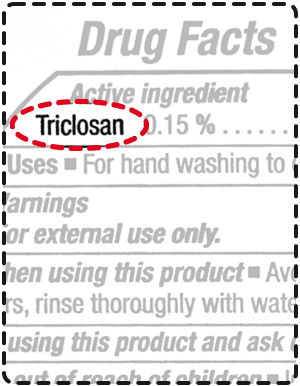
 Triclosan, an antimicrobial and antifungal agent found in many consumer products, can disrupt bacterial communities found in the gut, a study by scientists from Oregon State University shows.
It was first used as a hospital scrub in the 1970s. Now is one of the most common antimicrobial agents in the world, found in shampoos, deodorants, toothpastes, mouthwashes, kitchen utensils, cutting boards, toys, bedding, socks, and trash bags. It continues to be used in medical settings and can be absorbed through the skin.
“There has been a legacy of concern about exposure to microbial pathogens, which has led to increased use of these antimicrobial products,” said Thomas Sharpton, an assistant professor of microbiology and statistics in the OSU Colleges of Science and Agricultural Sciences, and author on the study.
“However, there’s now a growing awareness of the importance of the bacteria in our gut microbiome for human health, and the overuse of antibiotics that can lead to the rise of ‘superbugs,’” Sharpton said. “There are consequences to constantly trying to kill the bacteria in the world around us, aspects we’re just beginning to understand.”
In the study, researchers found that triclosan exposure caused rapid changes in both the diversity and composition of the microorganisms in laboratory animals. Scientists believe that compromising of the bacteria in the intestinal tract may contribute to the development or severity of disease.
Some bacteria were more susceptible to the impact of triclosan than others, such as the family Enterobacteriaceae and others were more resilient, such as the genus Pseudomonas, the researchers said.
“Clearly there may be situations where antibacterial agents are needed,” said Christopher Gaulke, lead author on the study and a postdoctoral microbiology researcher in the OSU College of Science.
“However, scientists now have evidence that intestinal bacteria may have metabolic, cardiovascular, autoimmune, and neurological impacts, and concerns about overuse of these agents are valid,” Gaulke said. “Cumulative impacts are also possible. We need to do significantly more evaluation of their effects, some of which might be dramatic and long lasting.”
The gut-associated microorganisms perform vital functions for human health, prevent colonization with pathogens, stimulate the development of the immune system, and produce micronutrients needed by the body. Dysfunction of these microorganism has been associated with human disease, including diabetes, heart disease, arthritis, and malnutrition, the scientists said in their study.
Triclosan has been a concern because it’s so widely used, and it’s also readily absorbed through the skin and gastrointestinal tracts, showing up in urine, feces, and breast milk. It’s also been associated with endocrine disruption in fish and rats, may act as a liver tumor promoter, and can alter inflammatory responses, the researchers said.