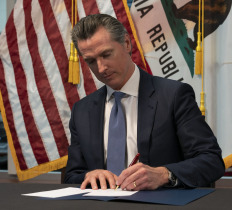
Residence of California will get help selecting more healthy food in the supermarket if Gov. Gavin Newsom signs a bill that would create a certified “non-ultra-processed” food label for packaged food products.
Assembly Bill 2244 would develop a state certification program for products that aren’t ultra-processed food, or UPF. If enacted, it would create a new standardized and government-backed seal for non-UPF.
It would also require some of the largest grocery stores to highlight these products in store so they’re easier for shoppers to identify.
“Parents shouldn’t need a Ph.D. in chemistry to understand what they’re feeding their kids,” Assemblymember Jesse Gabriel, D-Encino, who wrote the bill, said in a statement.
“AB 2244 will empower consumers with clear, trustworthy information and make it easier for them to locate healthier foods that are free from harmful additives,” he added. “This new seal doesn’t limit consumer choice, it just makes informed choice possible.”
A new standard for healthier food
Under AB 2244, the state would create a standardized label bearing the phrase “Non-Ultraprocessed Certified.” Products wouldn’t be permitted to carry the new label if they’re classified as UPF, under state law.
Some types of food, such as substances or additives used to manipulate taste and quality, wouldn’t qualify for the new label. These food chemicals, such as dyes, flavor enhancers, non-sugar sweeteners, and processing aids, are used to make food hyperpalatable and irresistible.
If Newson signs AB 2244, the California Department of Public Health would oversee approved agents’ independent certification of products that meet the state’s non-UPF standard and qualify to use the label.
AB 2244 would direct the department to accredit these third-party agents no later than June 1, 2029. It would also require product recertification at least every three years.
“This is about setting a higher bar for what we consider healthy food and helping consumers make wise choices,” Bernadette Del Chiaro, senior vice president for California for the Environmental Working Group, or EWG, an advocacy organization, said.
Del Chiaro said consumers deserve labels they can trust, and families deserve a simple way to tell which foods are closer to what comes from a kitchen rather than a factory.
“If enacted, the bill would establish a state-verified seal for foods free from the additives, emulsifiers, food dyes and flavors that have come to define the modern American diet,” she added.
Transparency and accountability
The bill includes these oversight and transparency measures:
- Certification agents need to register with the state and disclose all certified products.
- The state can audit certification records at any time.
- The state would maintain a public, online list of certified products.
- Misuse of the label would be illegal and subject to enforcement.
Making healthier choices easier
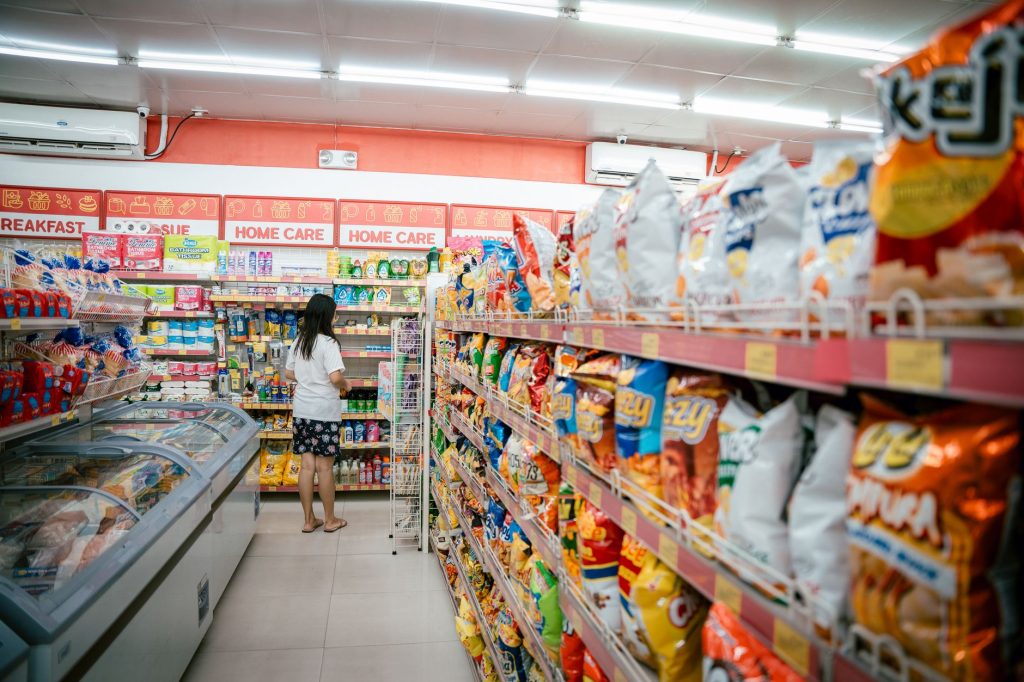
In addition to creating the label, the bill would require large food retailers to display certified products carrying the label in a way that’s easy for consumers to identify, such as through special signage or physical separation within the store.
This requirement would apply to any grocery store that sells more than 25 individual non-UPF-certified product types and brings in more than $10 million in annual sales.
Addressing the rise of UPF
UPF are industrially manufactured, chemically modified products often made with harmful additives to enhance taste, texture, appearance, and shelf life.
In the United States, these foods make up more than two-thirds of children’s diets and more than half the typical adult diet.
Food specialists say ultra-processed food and drinks, especially soda, are engineered to trick people into consuming more than they want.
Scientific research has linked diets high in UPF to serious health harms, including cancer, heart disease, Type 2 diabetes, metabolic disorders such as Chron’s disease and fatty liver disease, and mental health issues.
Obesity is chief among the health problems linked to UPF. Rates of obesity in the U.S. and globally have skyrocketed in along with the rising UPF consumption.
Help for consumers
Despite these concerns, consumers have no clear, standard labeling system to help them identify UPF.
With federal regulators slow to update oversight of food additives and processing, states are increasingly taking action to protect public health.
AB 2244 builds on California’s leadership in addressing harmful food chemicals and improving transparency for consumers, Del Chiaro said.
“Because companies are not required to disclose an ingredient’s purpose, it can be really difficult even for experts, even for people like me who have a doctoral degree in nutrition, to look at a food package and determine whether a food is ultra-processed or not,” said Alyssa Moran, ScD, MPH, deputy director of the Center for Food and Nutrition Policy at the University of Pennsylvania.
Consumers can take a look at EWG’s Food Scores database to find products that are less processed. Food Scores also flags unhealthy ultra-processed food and drinks and can help identify alternatives.