Saturday, I went to the new Trader Joe’s on the east side of town. It’s smaller than the westside Trader Joe’s that’s been there for a couple of decades.
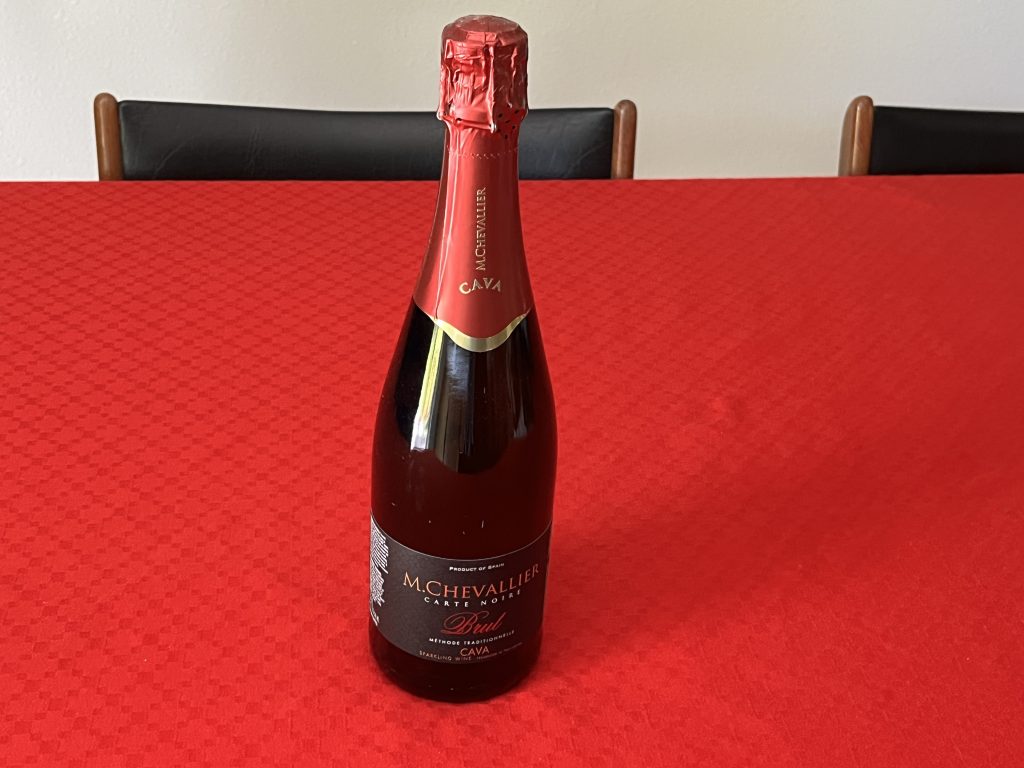
Since my friends are coming on Friday to visit with a friend who moved away but has returned for a visit, I thought I’d get some cava.
I love cava, the champagne of Spain. My daughter lives in Madrid, and she introduced me to cava years ago.
I looked through the sparkling wine section at the new Trader Joe’s. I didn’t see any cava. I went to the customer service station and asked if they had any. A young woman said no. I replied the other store carries it. She said, as other staff at the new Trader Joe’s had told me, since they’re a smaller store, they don’t carry as many items.
Since I was short of time getting ready for my friend’s visit, I went back to the sparkling wine section. I found a shelf tag for cava, but it looked like they were out of it. I reached back into the space and found one, lone bottle of cava.
I took it back to the customer service. The woman who helped me admitted she didn’t know what cava was. The man, who was sitting beside her, said he thought cava was a potato.
It’s a good thing I was persistent.
Cava is a sparkling wine from Spain. Either white or rosé, Macabeo, Parellada, and Xarel·lo are the most popular and traditional grape varieties for producing cava. Chardonnay and Malvasia are also used. Authorized red grapes are Garnacha tinta, Monastrell, Trepat, and Pinot Noir. Only wines produced in the traditional method can be labelled “cava”; those produced by other processes may are called “sparkling wines.”
About 95 percent of cava is produced in the Penedes area of Catalonia, Spain. The two major producers are Cordoniu and Freixenet.
Cava is the Catalan word for cave or cellar.
Cava starts out in giant stainless steel vats full of freshly squeezed grape juice like other wines. Each type of grape juice undergoes one fermentation in these large vats, where natural sugars convert into alcohol.
After the first fermentation, the wine is mixed, with each winemaker creating their specific blend. The bottle is capped with a bottle cap similar to those found on beer bottles.
Winemakers add sugar and yeast into the bottle. The wine then undergoes a second fermentation inside the bottle. This is when cava gets its bubbles.
Millions of bottles are stored in underground caves in racks with the necks pointed down. I’ve been to Cordoniu and Freixenet. One has a train that visitors can ride through the caves where cava is undergoing it’s second fermentation.
After at least nine months, the cava processing is complete. Winemakers carefully remove the yeast, add more sugars, except in the brut nature variety, which has no added sugars, insert a cork, and the wine is ready for sale.
Cava is best right after corking. You don’t want to save it for years, like some wines.
I highly recommend cava. Like one of the pourers told us when we visited a cava winery: Keep cava on hand to enjoy daily or when friends stop by. No need to save it for special occasions.